Sunday 10th August 2025
Why the US economy may be stronger than you think
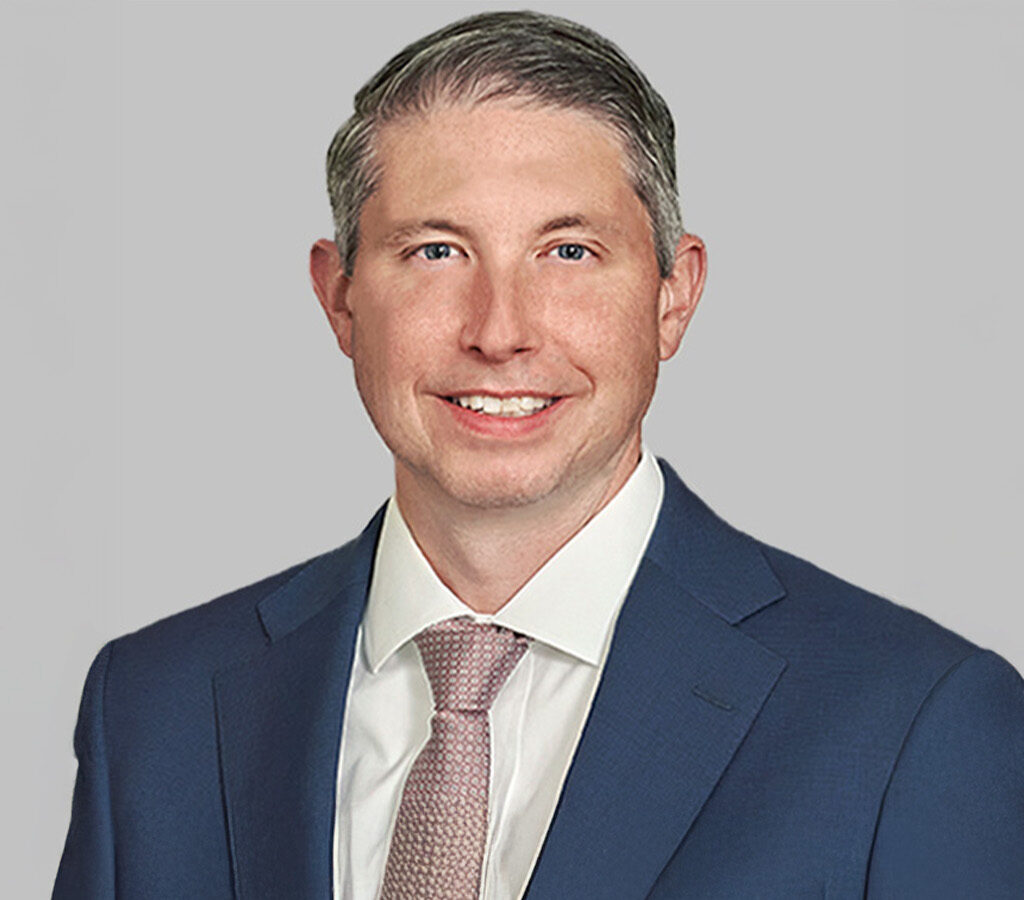
At a time marked by geopolitical upheaval, tariff wars, and questions around global trade structures, Jeffrey Schulze, investment strategist at ClearBridge Investments, offers a strikingly optimistic view of the economic horizon.
Speaking with The Inside Adviser on a recent visit to Australia, Schulze articulated a vision for the US economy that differentiates itself from the prevailing gloom that dominates much of the commentary. Schulze doesn’t mind being reminded of this: “When you find yourself camped in the consensus, that’s when you should worry,” he says.
The Inside Adviser: Jeffrey, ClearBridge believes that the US economy and corporate profits are likely to “accelerate’ over the the next 12 months. It’s quite an optimistic view, particularly when compared to the prevailing narrative around global trade turmoil and economic uncertainty. How do you reconcile that with the current backdrop?
Jeffrey Schulze: It really comes down to one word: clarity. After four months of having no visibility on trade policy, we’re finally beginning to see the rules of engagement. That clarity is unlocking corporate animal spirits, and in particular, a capex wave. The One Big Beautiful Bill Act brings down the cash tax rate on investments in structures, equipment, and R&D expensing. With the goalposts no longer moving, I believe we’ll see an uptick in corporate capex and hiring – both of which have been on ‘pause.’
The Inside Adviser: There’s widespread lamentation over the shift away from decades-old global trade structures. But playing ‘devil’s advocate,’ why do we so reverently cling to the status quo? Is there always another way of doing things?
Schulze: You’re right – it’s a regime shift. As the US retreats from its post-WWII leadership role, we’re seeing tariffs become part of the new normal. But it’s important to understand that this isn’t necessarily catastrophic. The burden of tariffs is shared – exporters, US companies, and consumers all absorb some of the cost. That’s different from a value-added tax (VAT) system, that you tend to see around the globe, where the consumer bears the full brunt of the price increase in a particular product. In the case of tariffs, the pain is shared across a number of participants up and down the value chain.
Ultimately, I think the global economy can handle it. Because of the tax revenue that it generates for the government – even after the Trump administration – given the US’ fiscal position, tariff revenue is going to be very difficult to replace.
The Inside Adviser: If tariffs are here to stay, what can companies realistically do to mitigate the impact?
Schulze: Never underestimate corporate America. Once businesses understand the landscape and the rules of engagement, they’ll adapt. Whether it’s through cost-cutting, productivity gains, or shifting supply chains, there are many ways to preserve margins. While Q2 saw optimism in earnings commentary in terms of companies handling tariffs, the real test will come in Q3 and Q4 as companies work through inventories and feel the full brunt of tariffs, and what that does to their cost of goods. That will be the real litmus test. But ultimately, given the combination of the fiscal impulse from the One Big, Beautiful Bill over the next 12 months, a likely Fed rate-cutting cycle, and clarity on trade – those are potent forces for economic re-acceleration in 2026, and an earnings environment that’s pretty durable and can keep the market moving forward.
The Inside Adviser: Many big names – Nike, Adidas, Walmart, Caterpillar, to name a few – have warned of price hikes and hits to revenue and margins, from tariffs. Are they simply weathering the storm quietly beneath the headlines?
Schulze: In many cases, yes. Consumer goods firms are clearly feeling the pressure, and their share prices reflect that. But other sectors, like financials, which are more domestically and service-oriented, are largely shielded. From a market perspective, this creates opportunities for selective investment. Overall, I believe the broader market can handle the impact.
The Inside Adviser: Let’s talk inflation. Tariffs are inflationary by nature. Will this alter the Fed’s approach?
Schulze: That’s the most critical point right now. I view the pick-up in inflation as a one-time price increase. Tariffs are akin to a tax and ultimately going to reduce aggregate demand. W are seeing the initial signs of impact in core goods inflation – CPI showed its first uptick since February, it was broad-based, notably in areas like apparel and appliances. But there’s also cooling in core services like lodging-away-from-home, and airfares; it’s a trade-off. My forecast is that core personal consumption expenditure (PCE) inflation could reach 3 per cent–3.2 per cent before declining again, continuing the disinflationary trend we’ve seen over the past few years.
The Inside Adviser: Given that, what’s your near-term view on Fed policy?
Schulze: The July payrolls report was a game-changer. Negative revisions knocked the three-month average job creation down to just 35,000 – that’s essentially ‘stall speed.’ There’s not much of a buffer for future disappointments. That puts the “full employment” leg of the Fed’s dual mandate at risk. But the July report wasn’t all doom and gloom – the report showed steady wage gains and a pick-up in average weekly hours, both of which should help support spending. I believe the Fed will cut rates in September and again twice more in Q4. The labour market is weaker than it appeared, and policy is now clearly restrictive. We don’t see a slowing labor market as recessionary at this juncture – our Anatomy of a Recession (AOR) indicator remains expansionary.
The Inside Adviser: Let’s fast-forward to a year from now. If tariffs are embedded, and rate cuts underway, will this storm prove to have been overblown?
Schulze: I think so. Markets sold off after the ‘Liberation Day’ announcements, pricing-in the growth slowdown we’re now seeing. But looking to 2026, there are several tailwinds: a weaker dollar boosting S&P 500 earnings, positive operating leverage as wage growth moderates, and the fiscal impact of the investment bill. You also have AI democratisation on the horizon – models are getting cheaper, more specialised, and broadly integrated. We expect strong earnings growth and continued equity market resilience.
The Inside Adviser: Some countries, like Japan and the EU, have pledged major US investments in return for tariff relief. Is that enforceable?
Schulze: It’s symbolic more than anything. Governments can’t compel private companies to invest in specific geographies. I don’t expect those commitments to be legally binding or meaningfully enforced.
The Inside Adviser: On geopolitics – how much does that weigh on your outlook?
Schulze: Historically, markets look through geopolitical shocks. Since the Korean War, if you bought the market on the day of a major geopolitical event, returns over the next one, three, and six months were generally positive. That said, I do expect geopolitical risk to remain elevated as the US withdraws from its traditional leadership role.
The Inside Adviser: Energy policy has been a Trump talking point. Will that meaningfully lower business costs?
Schulze: Probably not. US energy companies are focused on shareholder returns, not ramping up production. Even with the administration opening federal lands for drilling, supply responses have been modest. Natural gas is the exception, given its bottlenecked nature. I think energy policy is more about shielding consumers than directly benefiting businesses.
The Inside Adviser: Final thoughts on valuations and market concentration?
Schulze: At 22 times forward earnings, valuations are elevated but sustainable in an environment of strong earnings and rate cuts. Historically, that setup leads to multiple expansion, not contraction. As for concentration risk, when the top 10 S&P 500 stocks make up more than 24 per cent of the index – currently it’s 38 per cent – the equal-weighted index tends to outperform by over 5 per cent annually, on average. That makes this a great time for active managers to shine. I think people will be surprised at just how resilient the economy – and the markets – really are. Should a pullback emerge, we believe long-term investors would be rewarded by deploying ‘dry powder’ into weakness, given our expectation that the economy – and by extension, corporate profits – are likely to accelerate over the next 12 months.

James is an experienced senior journalist and editor of The Inside Network's publications.