Thursday 21st August 2025
Where to find private credit’s best yield-for-risk
The most compelling opportunities in private credit can often be in the more niche exposures, says manager Oaktree.
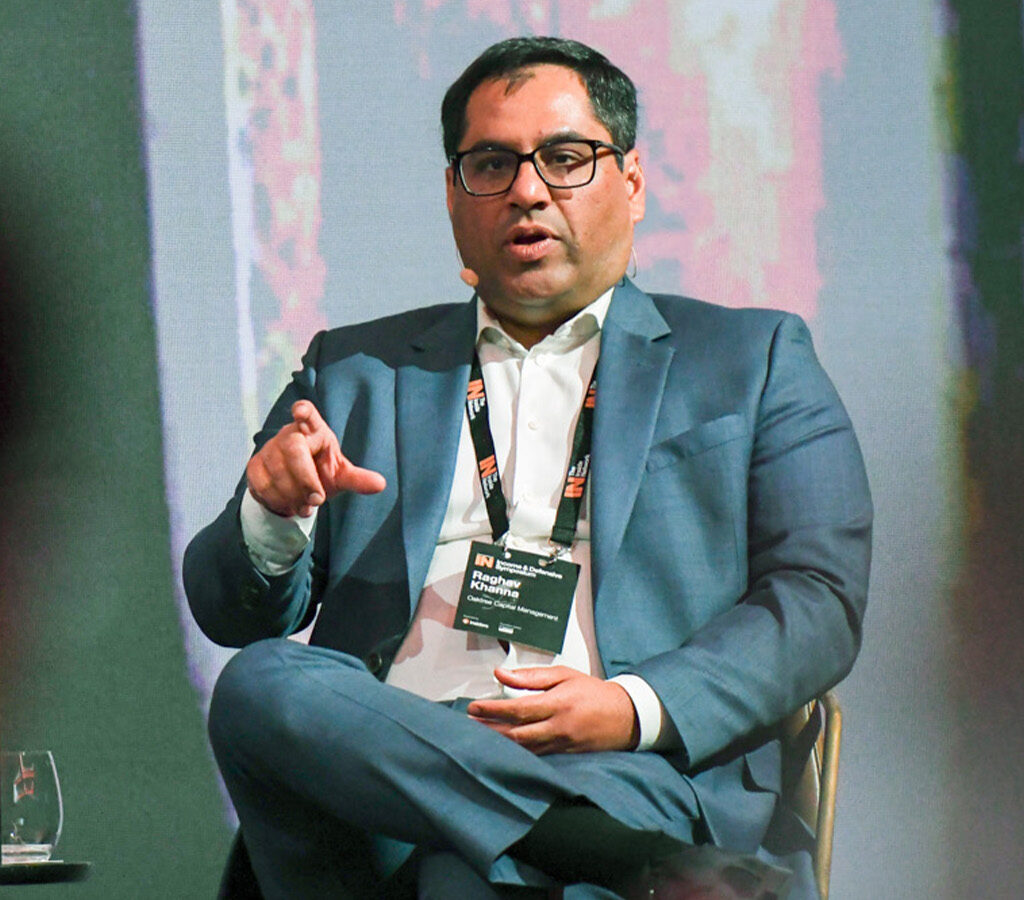
Private credit’s appeal lies in its ability to deliver equity-like returns with debt-like risk, but Raghav Khanna, managing director at Oaktree, warned delegates at The Inside Network’s Income & Defensive Symposium that not all parts of the market are created equal. He noted that certain less-trafficked and structurally complex sectors may present attractive characteristics, including higher yields and potential risk mitigation.
Oaktree, founded in 1995, has lived through multiple crises from the dotcom bust to the pandemic. “The unified philosophy that binds everything we do with credit is primacy of risk control,” Khanna said. That means rigorous risk management, mitigation and maximising recoveries when problems emerge. The firm’s flagship Strategic Credit strategy, launched in 2022, blends sponsored and non-sponsored lending, capital solutions and liquid credit to potentially provide both high current income and capital appreciation.
Khanna emphasised the firm’s contrarian approach. During the COVID-19 sell-off in March and April 2020, many players stood still or were forced sellers. “At that time, as an institution, we were buying a billion dollars of risk a week,” he recalled. This ability to act when others retreat, he said, is why large institutional clients see Oaktree as a diversifying counterbalance to their more beta-driven portfolios*.
Finding genuine inefficiencies is central to that approach. Khanna highlighted niche segments such as life sciences lending, non-sponsor lending, capital solutions and infrastructure lending. Certain sectors, he said, may exhibit characteristics such as relatively higher yields, tighter covenants, lower leverage, and larger equity cushions compared to mainstream private credit. “Certain segments may currently exhibit higher yield relative to risk compared to broader beta exposures, though outcomes can vary depending on market conditions,” he said.
Macroeconomic conditions are “OK” in many respects, but Khanna sees a disconnect between asset valuations and underlying risks. “Regardless of which market you look at, assets are trading at multiples higher than their historical averages,” he noted. Oaktree’s response has been defensive positioning: 90 per cent of the portfolio is senior-secured with an average 55 per cent equity cushion, and the strategy is holding liquidity ready to deploy in the next dislocation.
On a global basis, Khanna sees selective appeal in Europe, where risk feels lower and returns have improved relative to the US. In certain asset-backed finance and life-sciences transactions, Oaktree has observed yield differentials of 200 to 400 basis points compared to traditional private credit, along with structural features such as tighter covenants and lower leverage. Life-sciences transactions, he stressed, are post-approval, commercially active businesses rather than venture plays, making them less correlated to GDP and an effective portfolio diversifier.
Asset-backed finance also ranks highly. Unlike corporate loans against EBITDA, these deals are secured by contractual cashflows from loans, leases or receivables that amortise quickly. “You de-risk your position very rapidly,” Khanna explained, adding that banks are retreating from some of the unrated and lower-investment-grade segments, leaving space for specialised credit managers.
Non-sponsor lending is another sweet spot. Oaktree’s typical borrower is a listed public company with an enterprise value of $500 million to $2 billion, too small for the high-yield or syndicated loan markets and often overlooked by banks. With limited competition, these deals can command 600 to 800 basis points over base rates, large equity cushions and occasional equity warrants. “It’s just a very interesting return profile with very large equity cushions, just because it’s not a well-formed market,” Khanna said.
He argued that private credit offers attractive relative value. Current yields in select transactions range from approximately 9 to 10 per cent, paid in cash, which may exceed those observed in broader liquid credit markets. These yields are comparable to historical equity returns, although they involve different risk profiles. Income levels may vary depending on market conditions, and the floating-rate structure of many deals could be advantageous in a sustained high-rate environment, but may also reduce returns if rates decline.
Addressing a common criticism, Khanna pointed to early 2022–2024 as a test case^. When fears of stagflation widened high-yield spreads from 400 basis points to over 600 basis points, private credit portfolios marked down modestly based on company fundamentals, while liquid credit sold-off heavily on sentiment. Two years later, spreads had round-tripped. “Private credit gave you the same outcome over that two-year period without all the volatility,” he said, arguing it showed the stability of fundamentals-driven valuation.
For Khanna, the message to investors is to focus on segments where structure, covenants and equity support skew the yield-for-risk in their favour. That means being ready to pivot as windows open and close quickly, and doing the groundwork to act fast when markets dislocate. “In any given market, there’s probably two or three sub-sectors that are really interesting,” he said, “and the others you might get faulty”.
In the current cycle, Oaktree’s picks, life sciences, asset-backed finance, and non-sponsor lending, all share those attributes. For income-focused investors exploring beyond traditional private-credit segments, Khanna suggested that certain niche areas may present opportunities for relatively higher returns and potentially greater resilience, although outcomes depend on market conditions and individual deal structures.
* diversification does not guarantee returns or prevent losses
^ The case-study discussions are provided for informational purposes only and are intended to illustrate the investment process. This does not constitute a recommendation nor investment advice and should not be used as the basis for any investment decision. This is not a representation that an investment in the securities described were or will be profitable.

Laurence Parker-Brown is head of content at The Inside Network and managing editor of The Inside Adviser and Investor Strategy News.