Monday 9th September 2024
What’s really behind the ASX’s ‘unbelievable’ small cap anomaly

Australian small cap managers are some of the most successful active managers in the world – and charge like it. But their apparently anomalous outcomes might have a relatively simple explanation, according to Invesco.
One of the biggest anomalies in the Australian equity market – possibly the world – is the performance of Australian small cap managers. It’s been a good anomaly for anybody who bought them; over the last 23 years, the median active small cap manager has generated almost six per cent of active returns. That’s “unbelievable – very sustainable, but unbelievable”, according to Scott Bennett, director of factor investing and multi-asset strategies at Invesco.
There’s no other peer group of active managers generating that level of excess return in the whole world, and Australian small cap managers charge accordingly – often without hurdles or high water marks, either. So is there just something in the water? Sort of.
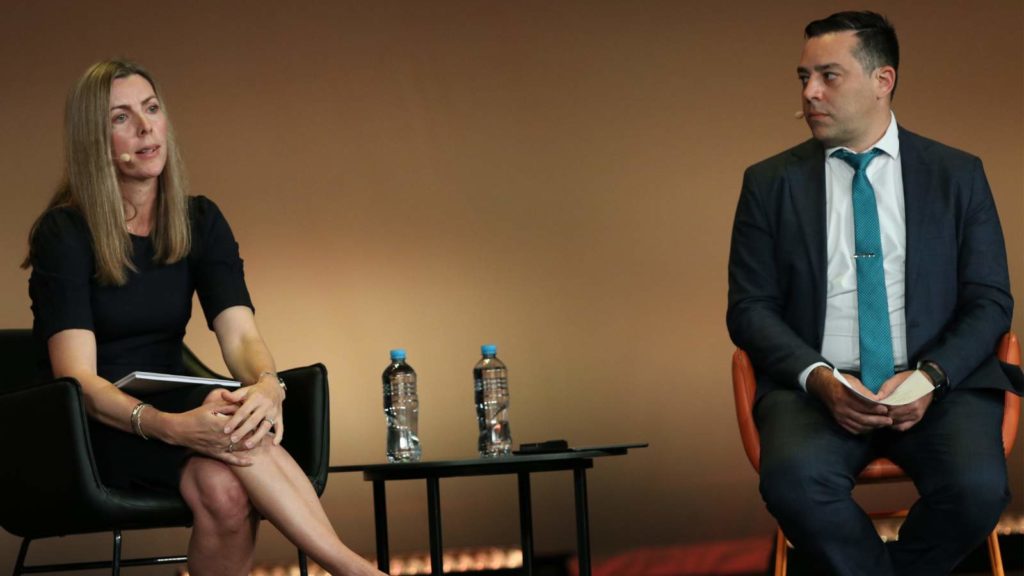
“If you’ve got a large cap index, successful companies get promoted up and poor performing companies get demoted,” Bennett told The Inside Network’s Investment Leaders Forum in Queenstown, New Zealand. “For small cap indices it works the other way around. You get companies that are doing really, really well and growing very, very strongly – and they get promoted out. And what comes in is companies doing really, really poorly.”
What that leads to is a lot of “fallen angels” dominating an index already infested with zombie companies (which aren’t generating a profit and haven’t for some time) and “glamours” – companies that are effectively no growth but which have retained their high valuations, and with them the appearance of being successful. All of those are beating up the beta in small caps, Bennet said, making passive exposure to the universe a risky prospect and creating seemingly anomalous active management outcomes.
“I think for most people, if you were to talk about these concepts at a pub or backyard barbecue, nobody would put up their hand and say ‘I want to invest in a company that’s not making a profit, or a company that’s not growing, or a company with an excessive valuation’,” Bennett said. “These are not statistical items; these are just basic common sense, and it shows that the common sense approach makes a lot of sense. But these issues are much more prevalent in the Australian market than they are in any other part of the world.”
They can also effectively be solved for with factor exposures, given each represents a kind of dark side to some of the most well-known factors. Fallen angels are anti-momentum; zombie companies are anti-quality; glamours are anti-value; and a momentum quality value (MQV) small cap portfolio gets you fairly close to the outperformance offered by the median active small cap manager.
“What we’re doing with this portfolio is really, really simple: we’re avoiding those companies that are not making any money; we’re avoiding overvalued companies; and we’re avoiding companies that have little to no growth,” Bennett said. “They’re not complex, sophisticated investment ideas – they’re basically the foundations of modern investing.”
“So while active small cap returns are impressive – and I’m not going to say they’re easy – maybe I’ll say they’re not as difficult as they first appear.”

Lachlan is editor of Investor Strategy News and has extensive experience covering institutional investment.