Monday 27th February 2023
US inflation hammers local stocks
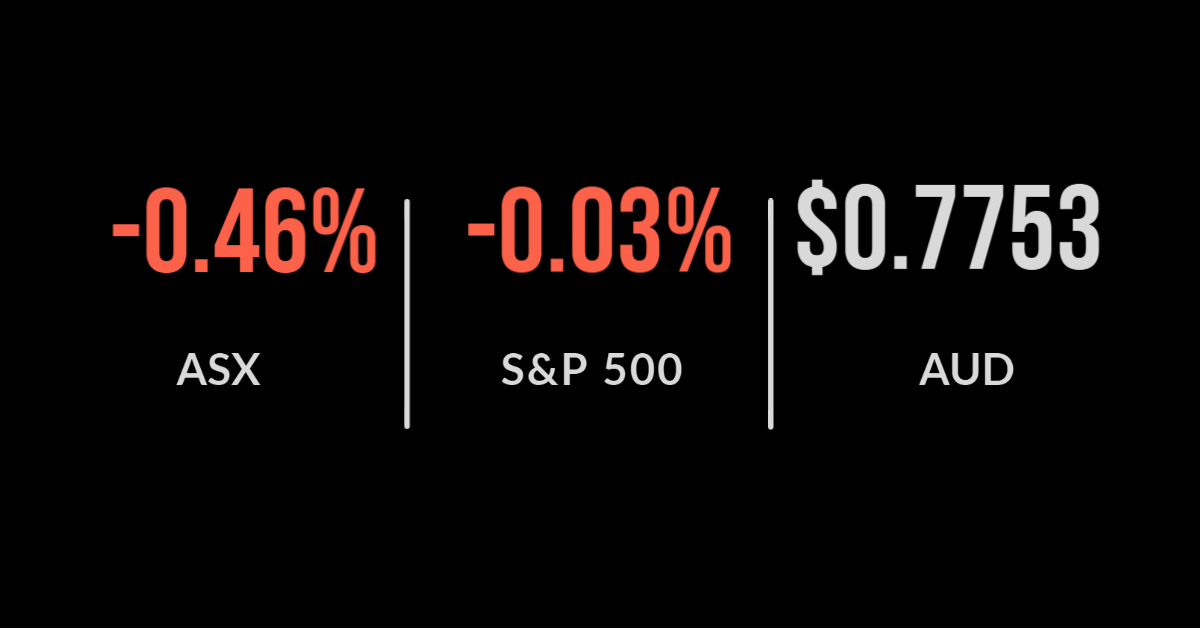
Local investors had the weekend to digest Friday night’s alarming report of the Federal Reserve’s preferred inflation metric, and they decided they didn’t like it.
On Friday night Australian time, the US personal consumption expenditure (PCE) figure showed that US consumer spending rose 4.7 per cent in the year to January, well above the market expectation of 4.3 per cent. The hotter-than-expected inflation number indicates that the US economy is much more resilient than expected, which in turn indicates that the Fed could return to a 50 basis-point rate hike at its March meeting, after raising rates by half that amount this month.
That’s not what share investors want to hear, and the Australian market dropped its bundle to the tune of its worst losing day in almost eight weeks. The S&P/ASX200 index finished Monday down 82.2 points, or 1.1 per cent, to 7,224.8, while the broader All Ordinaries dropped 93.1 points, or 1.2 per cent, to 7,419.6.
Mining was the hardest-hit sector, dropping 3.2 per cent to follow its 3 per cent slide last week. BHP slipped $1.39, or 3 per cent, to $44.55; Rio Tinto retreated $3.46, or 2.9 per cent; and Fortescue Metals dropped 81 cents, or 4.1 per cent, to $20.81.
In lithium, Allkem plunged 72 cents, or 6.1 per cent, to $11.16, while fellow producer Pilbara Minerals fell 33 cents, or 7.3 per cent, to $4.20. Among the project developers, Core Lithium slipped 3.5 cents, or 3.6 per cent, to 93 cents; Lake Resources lost 3 cents, or 4.9 per cent, to 58 cents; Liontown Resources retreated 5 cents, or 2.7 per cent; and Piedmont Lithium gave up 5 cents, or 5.3 per cent, to 89 cents.
In the coal space, Whitehaven Coal eased 7 cents, or 1 per cent, to $7.23; Coronado Global Resources gave up 3 cents, or 1.6 per cent, to $1.87, but Yancoal gained 3 cents, or 0.5 per cent, to $6.17 and New Hope Corporation advanced 2 cents, or 0.4 per cent, to $5.40. Stanmore Resources slid 24 cents, or 6.3 per cent, to $3.56 in what seemed a perverse reaction to the company’s stunning profit result, which saw a hundredfold rise in net profit in the year ended December 31, from $US7 million in 2021 to $US727 million ($1.08 billion) in 2022, on the back of surging coal prices. The stock has been rising strongly in 2023, up 24.5 per cent even after today’s fall, and the market took the chance to take some profits.
Woodside wows with earnings
In energy, Woodside Energy gained 53 cents, or 1.5 per cent, to $35.13, after reporting that it more than trebled its full-year net profit to $US6.5 billion ($9.7 billion), after taking over BHP’s petroleum business. The company’s revenue was up 142 per cent, to $US16.8 billion ($25 billion), with sales of 168.9 million barrels of oil equivalent, and a realised price of $US98.4 per barrel of oil equivalent, up 63 per cent on 2021. The company’s unit production cost was just $US8.10 per barrel of oil equivalent.
In the same sector, Santos was down 12 cents, or 1.7 per cent, to $6.89; and Beach Energy slipped 1.5 cents, or 1 per cent, to $1.42.
Among the industrials, engineering services group Downer EDI sank 94 cents, or 23.7 per cent, after the company’s interim net profits fell 21 per cent to $68.1 million, and it cut its annual profit guidance for the second time in two months and slashed its dividend.
In the big-bank world, National Australia Bank gained 14 cents, or 0.5 per cent, to $29.99; ANZ was up 4 cents to $24.83; Commonwealth Bank rose 17 cents, or 0.2 per cent, to $101.39; and Westpac added 6 cents, or 0.3 per cent, to $22.73. CSL slid $1.69, or 0.6 per cent, to $297.79, while Telstra was down 2 cents, or 0.5 per cent, to $4.16.
Nasdaq leads US gauges higher
The broad S&P 500 index advanced 12.2 points, or 0.3 per cent, to 3,982.24, the 30-stock Dow Jones Industrial Average gained 72.2 points, or 0.2 per cent, to 32,889.09, and uptown at Times Square, the Nasdaq Composite Index ended 72 points, or 0.6 per cent, higher at 11,466.98. Electric vehicles were front and centre, with Tesla rising almost 5.5 per cent on news that its German plant hit a production rate of 4,000 vehicles a week ahead of schedule and shares of EV start-up Fisker surged more than 30 per cent after the company maintained its 2023 vehicle production target and said it spent less than expected in 2022.
In the bond market, the US 10-year yield eased 3.1 basis points to 3.918 per cent, while the 2-year yield retreated 2.1 basis points to 4.784 per cent.
European markets generally closed higher after their worst week of the year, while sterling gained almost 1 per cent against the greenback after the UK signed a new trade deal with the European Union, designed to remedy problems caused by the Northern Ireland Protocol.
On the commodities front, gold gained US$5.31, or 0.3 per cent, to US$1,817.17 an ounce, the global benchmark Brent crude oil grade fell 82 cents, or 1 per cent, to US$82.34 a barrel, and US West Texas Intermediate crude gave up 61 cents, or 0.8 per cent, to US$75.71 a barrel.
The Australian dollar is buying 67.32 US cents this morning, up from 67.05 cents at the local close on Monday.

James is an experienced senior journalist and editor of The Inside Network's publications.