Wednesday 10th December 2025
Turning fear into function: Why allocating to volatility can reinforce portfolios
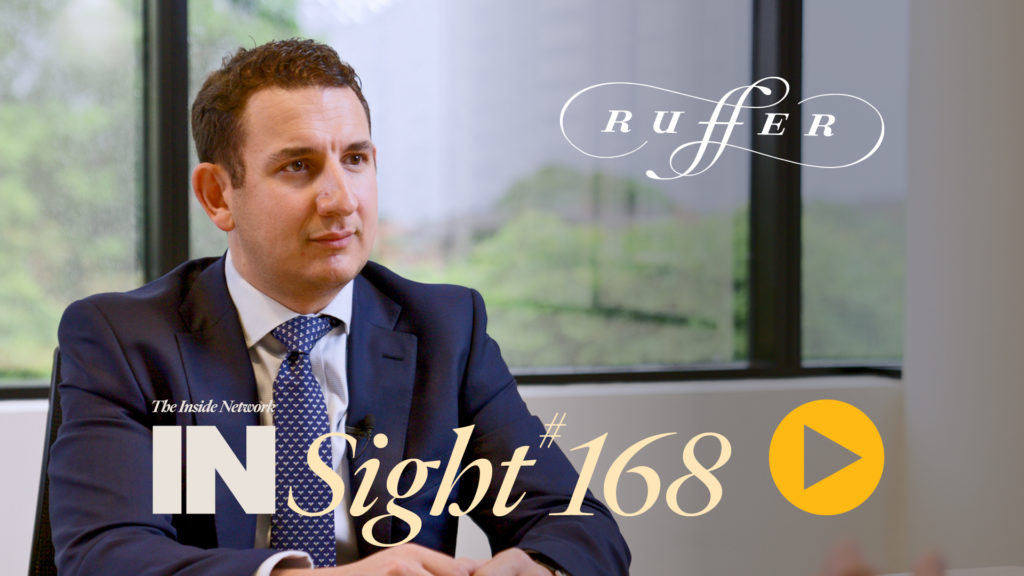
For advisers seeking true diversification and resilience in the face of market shocks, volatility is not a risk to avoid but a resource to harness, an untapped asset class that turns panic into performance.
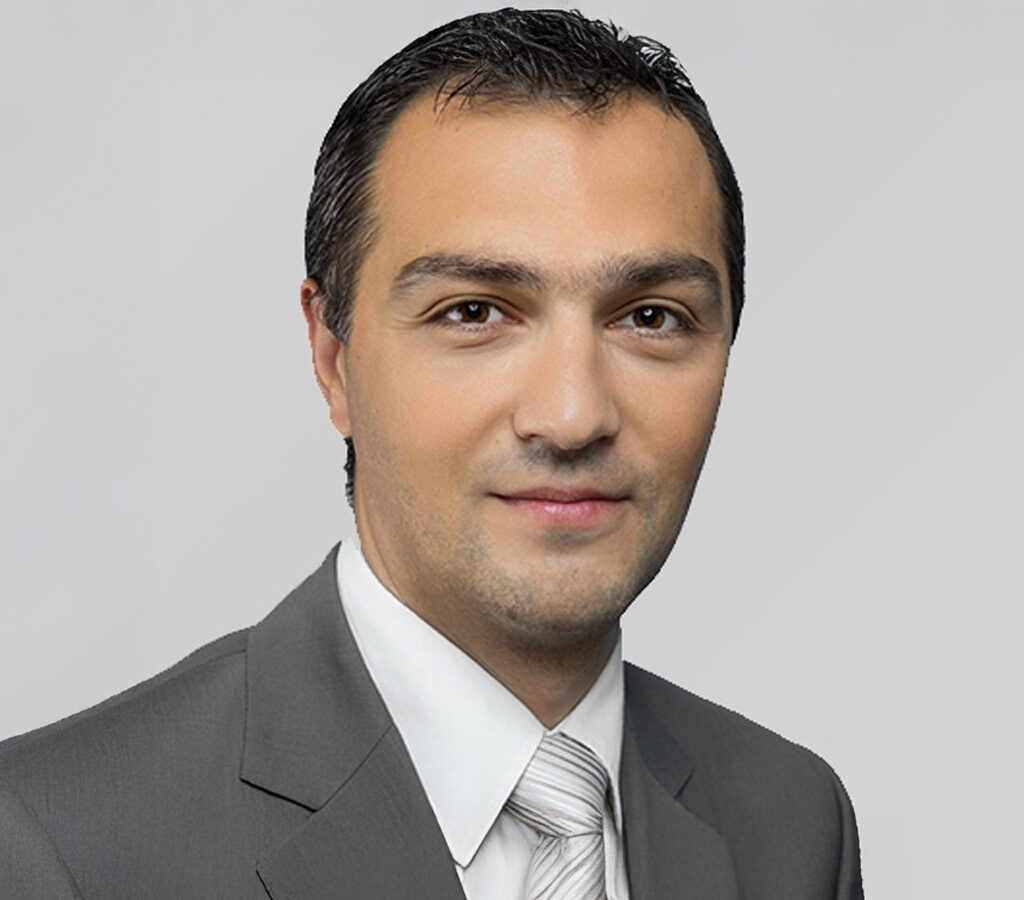
For most advisers, volatility is the enemy, an avatar of fear and instability. But for Gilbert Keskin, head of convexity solutions at Amundi, volatility is a misunderstood opportunity. “Volatility is mostly perceived as a risk indicator,” he says. “But what if it could be harnessed as an asset class in itself?”
Keskin has spent more than two decades developing tools and models at Europe’s largest asset manager, exploring volatility not as a hazard, but as a source of protection, diversification and liquidity. “We decided, actually almost 20 years ago, to use it as a source of performance,” he says. “The idea was to transform periods of stress into opportunities for returns.”
This approach is not theoretical. Amundi’s volatility strategy, launched in 2005, has weathered the Global Financial Crisis, the COVID pandemic, and more recently, unexpected geopolitical shocks. But it is the rationale behind the strategy that deserves closer attention from financial advisers.
Portfolio protection
“Volatility spikes when there is turmoil in the market,” Keskin explains. “Which means it’s good to have some exposure to volatility in a portfolio to protect against downside risk.”
Importantly, Amundi’s strategy focuses not on realised or historical volatility, but on implied volatility, the market’s forecast of future instability. Using options on global indices such as the S&P 500, Euro Stoxx 50 and Nikkei 225, Amundi seeks to profit from changes in the market’s expectation of risk. “We are looking at option prices, measuring what is anticipated in the market, and deciding whether we want to be long or short volatility,” Keskin says. This allows for an actively managed hedge that adjusts based on perceived rather than retrospective risk.
In April 2025, when implied volatility surged from 17 per cent to 24 per cent amid geopolitical stress, Keskin’s strategy delivered meaningful returns. “We reduced our exposure by half during the spike, and although volatility receded afterwards, we managed not to give back all our gains,” he recalls.
Diversification
Historically, volatility has been negatively correlated with equities – a relationship that has remained intact even as other correlations fray. “You can see that the correlation between the VIX (the Chicago Board Options Exchange’s CBOE Volatility Index) and the S&P 500 is negative,” says Keskin. “That brings diversification and protection at the same time.”
This point has grown more relevant since 2022, when bonds and equities both fell in tandem, shaking the traditional diversification logic of the 60/40 portfolio. “2022 was a great example of the correlation between fixed income and equity turning positive,” Keskin notes. “You cannot always think of fixed income as a hedge anymore.”
Volatility, on the other hand, retained its inverse relationship with equities throughout the turmoil, offering a rare source of consistent portfolio ballast. “Our strategy has close to zero correlation with fixed income, and a strong negative correlation with equities and even with traditional hedge fund strategies,” Keskin says.
Liquidity
Despite the sophisticated derivatives at its core, Amundi’s volatility strategy is remarkably liquid. “The fund is extremely cash rich, with around 70 per cent of assets in money market instruments,” says Keskin. “We use listed options on very liquid indices, which allows us to offer daily liquidity, even during periods of stress.”
This was tested in 2008, when the fund’s assets halved in a matter of weeks as investors took profits. “The fund did a 25 per cent return in 2008,” he says. “Investors were redeeming to cover losses elsewhere. But we remained liquid and operational.”
In practical terms, this means advisers do not have to worry about the vehicle freezing redemptions during a crisis, a key concern when building client portfolios that must remain flexible.
Active management
A passive approach to volatility, such as holding VIX futures or volatility-linked ETFs, comes with significant drag. “Holding volatility has a negative carry,” Keskin warns. “It costs you, even without a market move.” The solution? Active exposure to medium-term volatility expectations, primarily through one-year options. “We think of it like duration. A one-point rise in implied volatility can generate a 1 per cent return, depending on our exposure,” he explains.
Keskin’s model is to remain long volatility in general, but not dogmatically so. “Most of the time we are long, but not always,” he says. “We actively manage exposures across maturities to reduce the cost of carry, and we may go short on short-term maturities, but never more than 10 per cent of our exposure.”
This active management allows the strategy to reduce its downside during bull markets and periods of calm, while maintaining enough exposure to benefit during sell-offs.
Timing
Keskin is the first to acknowledge that volatility strategies involve a dimension of tactical deployment. “This is not an always-outperform product,” he says. “In quiet markets with low volatility, returns can be negative. But our aim is to cash-out during shocks and mitigate the carry cost in calm periods.”
Indeed, a 20-year track record shows the fund delivering strong returns during severe downturns, modest performance during sideways markets, and slightly negative returns in bullish environments. “When the MSCI World is up 20 per cent, our fund may be down a couple of percentage points. But when markets fall more than 10 per cent, we typically make double-digit positive returns,” he says.
Advisers can choose to allocate tactically or strategically. “Some clients come in and out, trying to time volatility,” says Keskin. “Others allocate 10 per cent of a balanced portfolio and leave it there. Either way, we’ve shown that it enhances Sharpe ratio across all market conditions.” (The Sharpe ration measures an investment’s risk-adjusted return, showing how much extra return you get for taking on extra risk.)
Execution
What Keskin and his team at Amundi have built is not a speculative trading tool, but a utility. “It’s not about alpha,” he says plainly. “It’s about risk management, about protection. And increasingly, it’s about value extraction from fear.”
For financial advisers, that makes the volatility allocation worth revisiting, not as a hedge-of-last-resort, but as a cornerstone of modern, multi-asset portfolio construction.

Laurence Parker-Brown is head of content at The Inside Network and managing editor of The Inside Adviser and Investor Strategy News.