Monday 7th November 2022
The quest to move from a linear model to a 'circular economy'

The continuation of an economic world built on linear consumption, LGT Crestone's Rachel Etherington says, will further burgeoning social and economic issues that threaten to destabilize the global system.
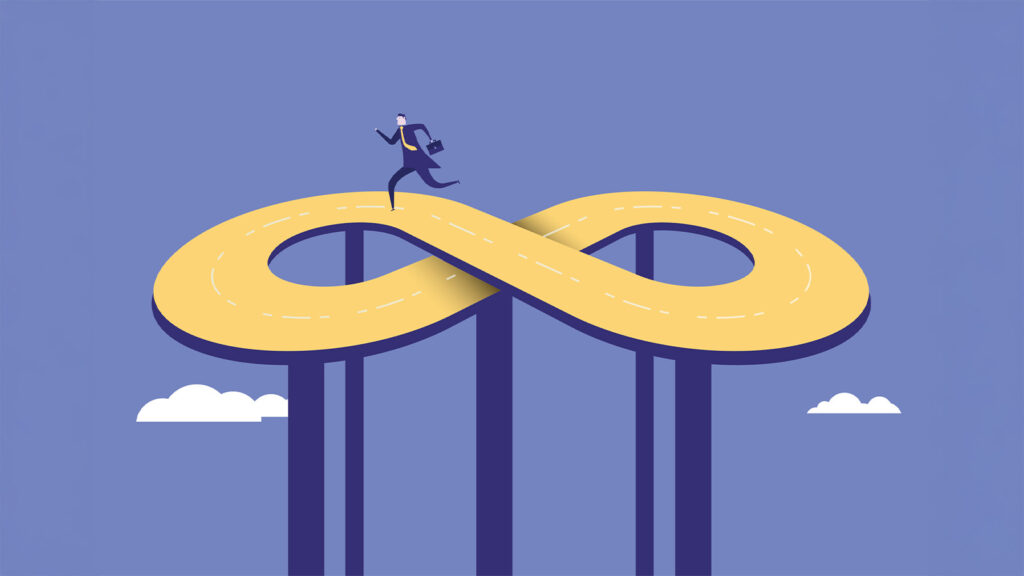
The economic world needs to adopt a framework for progress that dispenses with the current “linear consumption” model and moves towards a a low-waste “circular economy”, according to LGT Crestone partner and investment adviser Rachel Etherington.
The continuation of an economic world built on linear consumption, she says, will further burgeoning social and economic issues that threaten to destabilize the global system.
At the heart of the issue, Etherington believes, is the need for all people to live within the means of our planet.
“We need to decouple economic growth from resource use and move from a linear consumption model in which we take materials from the earth, make products from them, and eventually throw them away as waste, to a circular model [whereby] we stop waste being produced in the first place and minimise our damage to natural resources, thus enabling them to regenerate,” she tells The Inside Adviser.
Etherington, who sits on the board of the Australian Centre for Corporate Responsibility and will appear at The Inside Network‘s inaugural ESG event Yesterday, Today, Tomorrow in Tasmania this month, is a regular and prominent speaker on climate change, investment and governance issues. The circular economics framework is a key part of her belief platform.
“At its very essence, the idea of ecological economics is one of living within planetary boundaries,” she explains. “We are fundamentally reliant on the environment at a social and economic level… one third of medicines come from nature, including over 70 per cent of cancer drugs.”
Humans are using up natural resources at twice the rate that they can be replenished, she notes. Seventy per cent of species populations have been lost since the 1970s, 85 per cent of wetland ecosystems have gone and 50 per cent of coral reefs have been destroyed.
“Not only is this a great loss in itself, with a rapidly expanding and heavily consuming global population, it is leading to significant social and economic issues,” she says.
Recent extreme weather events – estimated to cost up $1 trillion by 2023 – highlight the immediate costs, but the future health of our environment presents the real danger.
For advisers addressing the sustainability paradigm, the need for robust assessment of investment has become paramount to counter the recent rise of greenwashing – even more so than the guidance of respected ratings and standards agencies such as the Principles for Responsible Investment and the International Sustainability Standards Board.
“I do believe that the compliance and regulatory advances will be helpful, but nothing will be a substitute for deep and detailed analysis by those stewarding clients’ money,” Etherington says.