Monday 2nd February 2026
The great wealth handover: why advisers cannot afford to sit this one out
The greatest wealth transfer in Australia’s history is already underway, and advisers who are not actively embedded in family succession risk watching their clients’ money walk out the door.
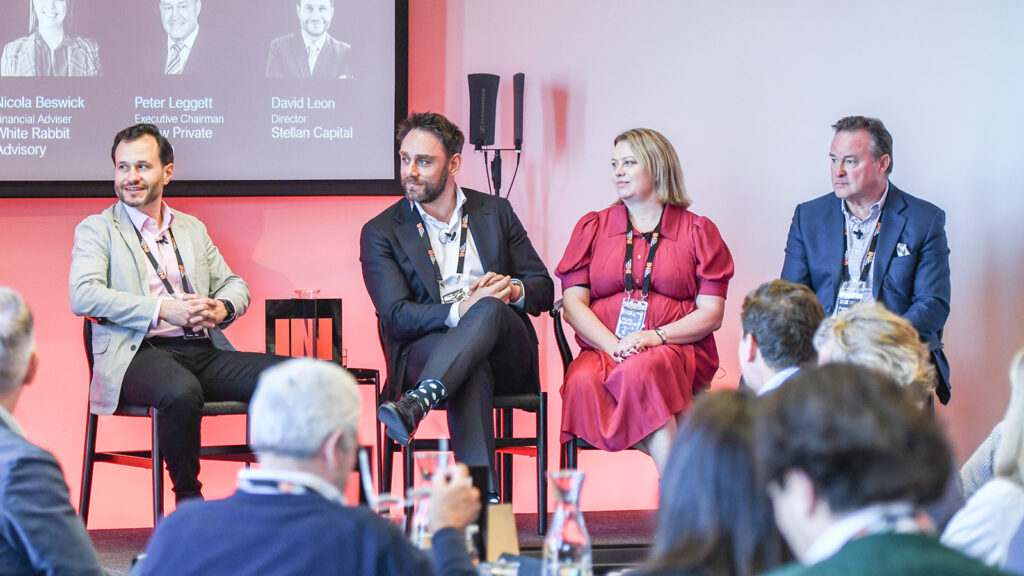
The inter-generational transfer of wealth is no longer a theoretical future event, it is happening now, and at scale. For advisers, this represents both the biggest commercial opportunity of the next two decades and the greatest existential risk to incumbent business models. As Peter Leggett, chairman of Arrow Private Wealth, puts it bluntly, “it’s actually happening, it’s not something that’s in the future, it’s already now.”
Money in transition, not money at rest
Australia has entered an era of what Leggett describes as “money in transition.” The youngest baby boomers are now in their 60s, longevity has materially extended retirement horizons and wealth is moving through families in more complex and prolonged ways than ever before. Men today are living, on average, 8.6 years longer than they were 40 years ago, reshaping how and when capital is deployed.
This longevity dividend means advisers can no longer afford to treat estate planning as a postscript. Wealth transfer is no longer a matter of “wait till you die and then we’ll work out what’s in the will.” Clients want to talk about transferring wealth while they are alive, with intent and with impact.
“We are living in a world of longevity, and that changes everything about how families think about wealth,” says Leggett.
Family succession as a core discipline
At Arrow, Leggett says inter-generational advice sits at the centre of the firm’s proposition, framed as family succession planning. It spans affluent families and business owners alike, both cohorts navigating retirement, downsizing, business exits and, increasingly, their own inheritances from parents now in their 80s and 90s.
What is striking is the consistency of client concerns. Deep research, Leggett notes, shows two questions dominate. “Help me preserve my wealth” and “help me protect my wealth.” Close behind is a third, more nuanced request: show me how to transfer my wealth while I’m still alive.
The business-owner blind spot
For advisers willing to engage, business owners represent one of the most under-served and opportunity-rich segments of the wealth transfer landscape. Over the next 25 to 30 years, an extraordinary volume of capital will transition out of private businesses. Yet many accountants and advisers are still not having structured conversations about preparing, structuring and transferring that wealth for family outcomes.
This silence is not benign. It leaves a vacuum into which sophisticated advisers can step, provided they are prepared to broaden their remit beyond investments and into family dynamics, governance and purpose.
“This is one of the most extraordinary opportunities for advice businesses, and many professionals are simply not having the conversation.”
Peter Leggett, chairman and chief investment officer, Arrow Private Wealth
The spouse problem that advisers created
Leggett is unsparing in his assessment of one of the industry’s most persistent failures. For decades, advice has been male-dominated, with the male client treated as the principal relationship. The consequences are stark. US research suggests that following a death event, 92 per cent of investment funds leave the incumbent adviser.
Where does that money go? In about 64 per cent of cases, it goes to the surviving spouse, most often a woman, who has no meaningful relationship with the adviser she has just inherited. This is not a market anomaly, it is a structural weakness.
Three generations, one relationship
The challenge does not stop with spouses. Advisers must also ask whether they are consciously building relationships with their clients’ children, and even grandchildren. Increasingly, grandparents are thinking strategically about how to support younger generations, whether through education costs, early housing assistance or structured gifts.
These are the conversations clients want to have; but in Leggett’s experience, they are not having them with most of their professional advisers.
“Our clients want to talk about family, but they’re not having those conversations with the people they pay,” he says.
Performance is not the point
One of the great traps for advisers, Leggett argues, is an obsession with performance and products. While portfolios still matter, they are rarely what sits in clients’ hearts and minds. Values-based conversations, long promised by the industry, remain poorly executed.
For many affluent families, the reality is confronting: individuals could live to 120 or beyond and still never run out of capital. The real questions are about meaning, impact and alignment across generations.
Today’s clients, not tomorrow’s
The younger generation is not an abstract future market, it is today’s audience. They engage differently, communicate differently and expect advisers to meet them where they are, including through technology and social platforms. Firms that fail to adapt risk irrelevance long before the wealth actually changes hands.
Hitting the nerve
Leggett recounts a recent session with a dozen small and medium business owners, most of whom he had never met. The topic was inter-generational wealth transfer, with a secondary focus on tax and government policy. At the end of the session, five participants asked for follow-up meetings.
The reason was simple. The discussion hit a nerve. These business owners were thinking deeply about their wealth and their families, but no one in their existing professional network was engaging them on it.
“They’re thinking about it, but they’re not being engaged by their professional people,” he says.
The trusted adviser, finally defined
Clients, regardless of age, are looking for a trusted adviser to sit at the centre of their world. In theory, this should be the adviser. In practice, Leggett argues, most other professions are failing to fill that role, leaving the field open.
But occupying the centre requires more than technical competence. It requires orchestration.
Building the elite team
A modern private wealth firm, in Leggett’s view, needs an elite team around the client. That might include medical specialists, retirement psychologists or other niche experts who address life transitions alongside financial ones.
This is vastly broader than traditional financial planning, but it reflects the reality that clients are living. Money is in transition because life is in transition.
Why this matters now
The inter-generational wealth transfer will define the advice profession for the next generation. Firms that continue to compete primarily on performance will watch assets walk out the door. Those that engage families, values and succession will embed themselves for decades.
This is not a compliance exercise or a marketing theme. It is a structural shift in what clients expect and what advisers must deliver.
Join the conversation
Because this topic is so critical, The Inside Network is hosting an INPractice Online Masterclass on intergenerational wealth transfer on 13 February.
The wealth is already moving. The only question is whether advisers are moving with it.

Laurence Parker-Brown is head of content at The Inside Network and managing editor of The Inside Adviser and Investor Strategy News.