Monday 16th June 2025
The generational opportunity in commercial real estate
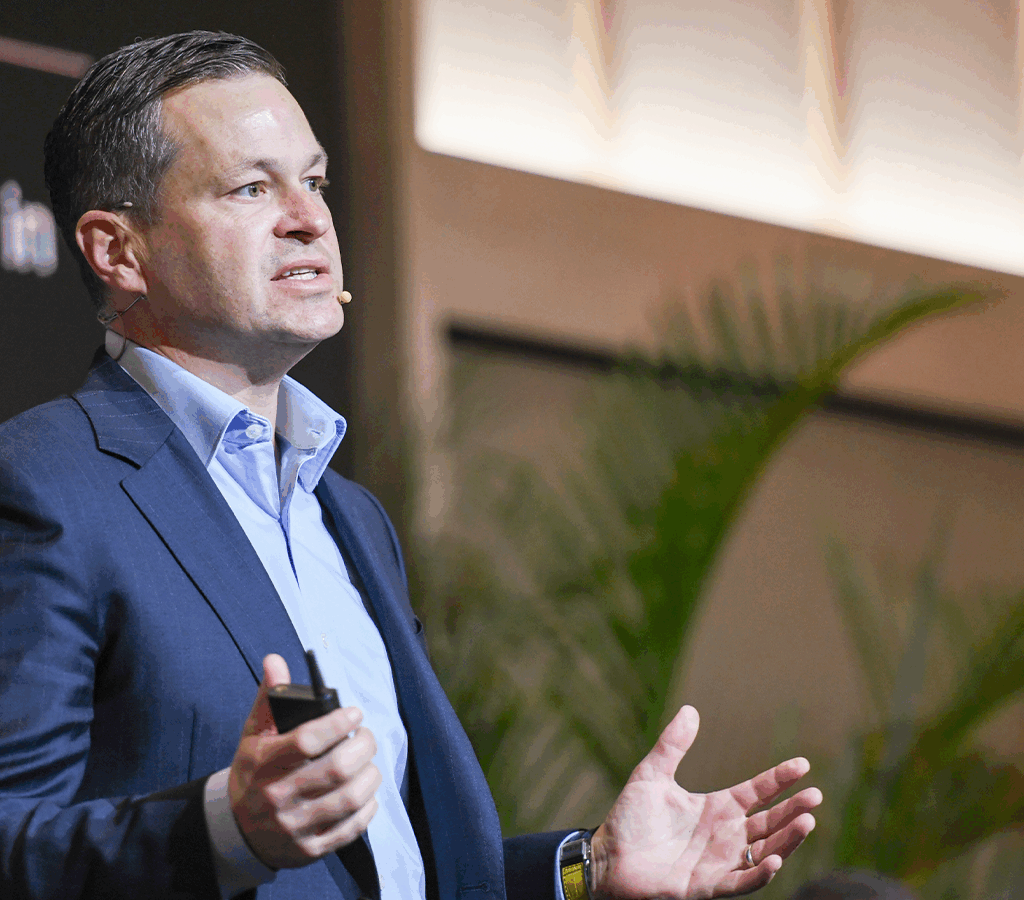
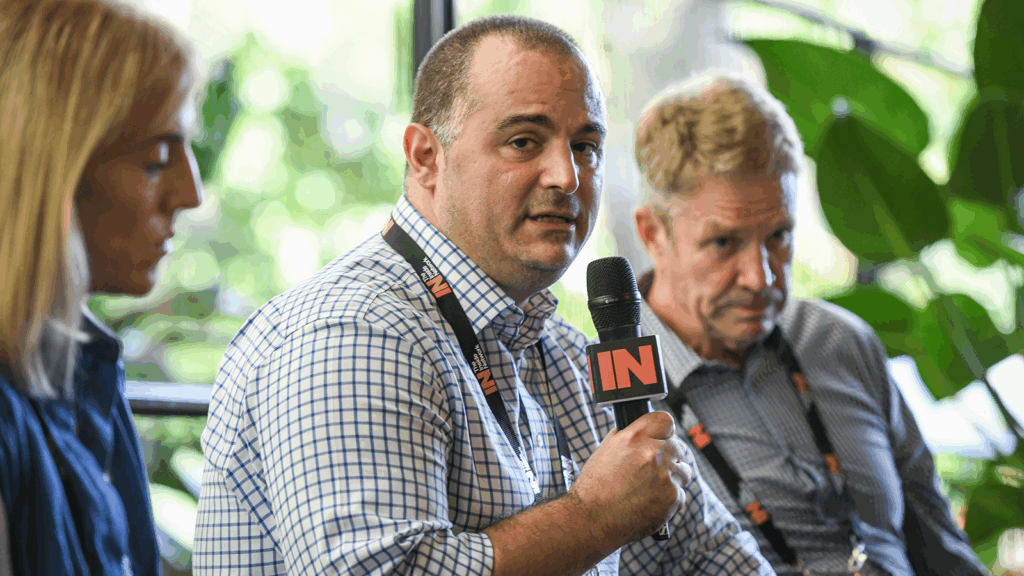
There was an unmistakable clarity to Steve Bennett’s message at The Inside Network’s Equities & Growth Symposium: office real estate, long cast as the problem child of post-pandemic investing, is once again in play — and in a big way.
Reports of the death of office property in the wake of the work-from-home revolution have been constant since the COVID-19 pandemic, but that doom was never seriously in prospect, according to Charter Hall’s Bennett.
The leader of Charter Hall’s Direct business brought data, conviction and a sharp macro perspective to his defence of a sector many advisers have neglected. For those willing to look past headlines and into the fundamentals, the opportunity, he argued, is not just cyclical — it’s generational.
Bennett opened his address by acknowledging the discomfort in the room. The office market has been out of favour, and for good reason: valuations have fallen, working patterns have shifted, and many investors have questioned whether the asset class will ever be the same. But what’s playing out now, Bennett said, is not a crisis but a reset. “We’re seeing some of the best risk-adjusted returns in core real estate in this country that I’ve seen in my entire career,” he declared, pointing to the convergence of declining interest rates, favourable supply-demand dynamics, and deeply reset valuations.
That reset has been significant. Bennett pointed to two sharp valuation corrections in Australian office real estate over the last 20 years — the GFC and the current cycle. Yet while the GFC was a credit event that caused an immediate stop, today’s downturn has been slower, driven by the steady grind of interest rate increases. The result? Office values have declined by around 25 per cent on average, but when leverage is factored-in, many funds have seen their unit prices fall by closer to 40 per cent. “It’s been the toughest two-and-a-half years in office valuations in more than two decades,” he said.
But as with every correction, the decline creates an entry point. Bennett stressed that not all office assets are equal. The bifurcation between prime and secondary assets is now stark, with tenants decisively favouring high-quality spaces. “Tenants are voting with their feet,” he said, pointing to buildings with strong amenity, public transport access, and natural light. These are the assets attracting demand — and rental — growth, while secondary stock continues to struggle. In an era of hybrid work, the logic is intuitive: if you want people back in the office, it had better be worth their commute.
Beyond quality, Bennett identified another driver of future returns: a looming supply shortage. “This is a real sleeper issue,” he warned. While residential housing supply has attracted national attention, commercial development has quietly fallen off a cliff. Forecast completions for the next five years are 35 per cent lower than the previous five. Delays, cancellations and skyrocketing build costs are now systemic. As new construction dries up, demand continues to build, buoyed by population growth — particularly among skilled migrants who, as Bennett noted with a smile, “tend to work in office buildings.”
He illustrated the point with two case studies from Charter Hall’s portfolio. In both Sydney and Brisbane, he demonstrated that the replacement cost for key office assets was 44 to 50 per cent higher than their current book value. When it costs $144 million to build a property currently valued at $100 million, new supply becomes uneconomic. The upshot: existing landlords stand to benefit as scarcity pushes rents higher. “Either developers don’t build, or rents have to rise dramatically. And both outcomes are good for the owners of existing stock,” he said.
There are signs that the market is already responding. Institutional investors, particularly offshore pension and sovereign wealth funds, are returning to the sector. Transaction volumes have picked up, particularly in Sydney and Brisbane, and pricing appears to be stabilising. Bennett noted that core assets are now delivering total returns in the 12 to 13 per cent range — without the development or leasing risk normally required to reach that level. “That’s something I haven’t seen in my career,” he added.
For advisers, the question is not just ‘why office?,’ but ‘how.’ Bennett was quick to differentiate between listed property stocks and direct real estate. The former is liquid, volatile, and often sentiment-driven; the latter, he argued, is stable, income-producing, and diversifying. “It should be in the illiquid part of your client’s portfolio,” he said. With yields around 8 per cent and capital growth potential of 4 per cent–5 per cent, Bennett believes commercial property offers a compelling complement to equities and fixed income — particularly as interest rates begin to fall and the appeal of cash and credit diminishes.
That said, he was realistic about the structural constraints. Commercial property isn’t for everyone. Minimum terms are typically five years, and liquidity is limited. Investors need to understand whether they prefer single-asset syndicates or diversified funds, and weigh considerations such as dilution from acquisition costs, tenant risk, and fund structure. But for those with the patience and the profile, Bennett believes the time is now. “If you are ever going to look at commercial property,” he said, “I think now’s as good a time as any in the last couple of decades.”
Bennett closed on a note of cautious optimism. “I’m glad I’m standing up here now, not 12 months ago,” he admitted. The uncertainty around valuations has largely played-out, and the macroeconomic backdrop is becoming increasingly supportive. For Charter Hall, which manages one of the largest portfolios in the country, the message to advisers is consistent: office isn’t dead. It’s misunderstood. And for those willing to look beyond sentiment and into fundamentals, the future looks surprisingly bright.

James is an experienced senior journalist and editor of The Inside Network's publications.