Sunday 7th September 2025
The end of the (government debt) world as we know it?
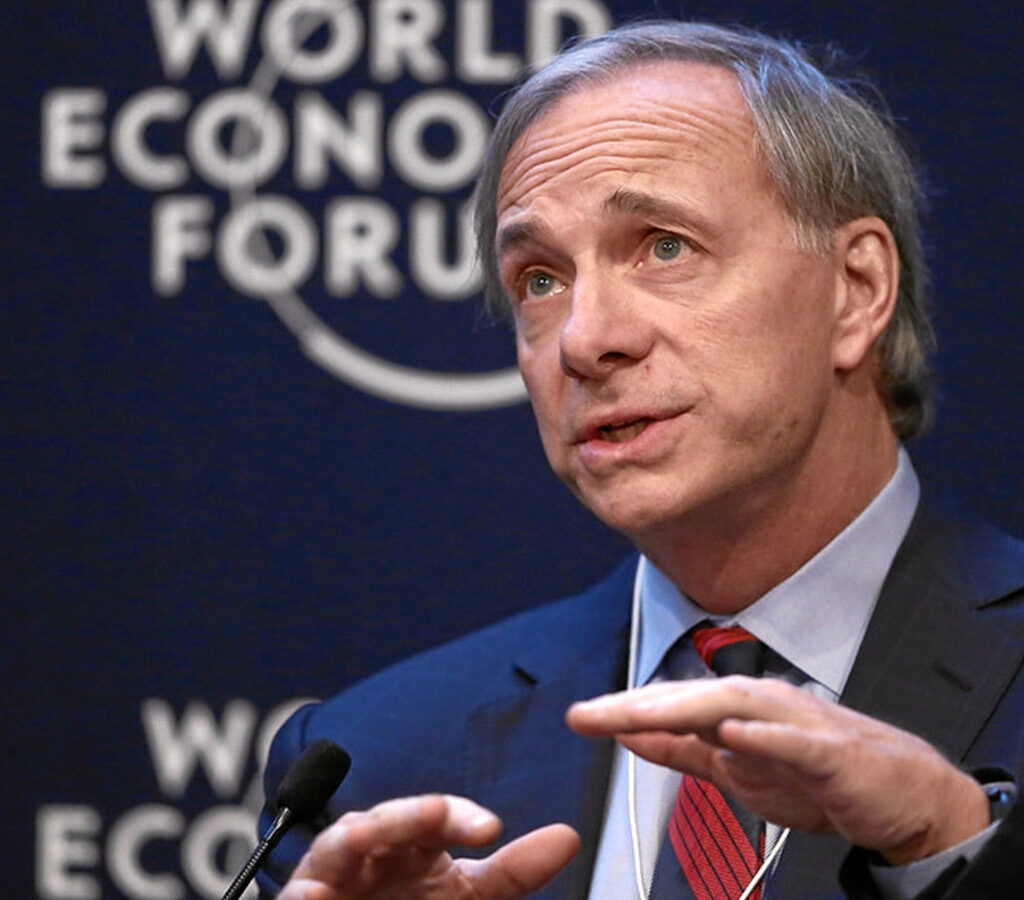
When Bridgewater Associates founder Ray Dalio speaks, the investment world usually takes note. He certainly gave the markets food for thought last week.
All the talk last week was around the comments of Ray Dalio, widely renowned as one of the world’s greatest investors, and founder of Bridgewater Associates, a massive US hedge fund.
Speaking to the Financial Times, Dalio posited that the latest breaching of the US government’s self-imposed ‘debt ceiling’ marked the beginning of the end for the US dollar, with the US government suggesting the world faced an ‘imminent debt crisis’. The comments came ahead of the launch of Dalio’s latest book, How Countries Go Broke, and remains true to form in light of his ongoing concerns about the US economy.
While calling for an end to the financial world as we know it is common, what does this mean for retirees and most investors? First, we need to understand what we are talking about.
The first question, is what is the debt ceiling?
The debt ceiling is a legal limit set by US Congress on the total amount of money the US government can borrow to meet its obligations. These include social security and keeping publicly funded institutions, national parks and the like, operating. Interestingly, once the debt ceiling is reached, the US Treasury, responsible for balancing the government budget, is no longer able to issue new bonds to pay its bills, that is, according to Google.
The problem Dalio highlights is that the cost of the interest the US Government pays on its total debt, (which totals close to US$37 trillion) begins to make up more of the governments costs than the delivery of its services, meaning it could run out of money. Servicing the US’ debt costs Washington $1 trillion a year.
Dalio’s solution, and that of most traditional economists, is to raise taxes, increase revenue, cut costs by spending less, and keep interest rates low so the debt is easier to fund. It kind of makes sense, particularly if the US government’s balance sheet worked the same as yours and mine.
Why should we care?
We are expected to care because if everything goes as Dalio suggests, the US bond market may become dysfunctional: there could come a time when no-one is willing to buy US government bonds and as a result, interest rates could increase around the world. Similarly, the demand for US dollars would reduce as a result and the country could ‘default’ on its debt. It all sounds fairly concerning, but could this really happen?
In recent years, every time the debt ceiling has been hit, the US Congress has managed to negotiate an extension, and while markets were volatile for a time, they have settled and refocused on what was important, earnings growth and the economy.
What is MMT or MMP?
The question of debt ceilings always brings back the conversation around Modern Monetary Theory, or Modern Monetary Policy as it should probably be known. The economic framework suggests that for countries that issue their own currency, like the US and Japan for example, there is no real limit to the amount of debt that they can have outstanding, as in the worst-case scenario. more money can be created to pay off the debt.
This has been the case in the US and Japan for several decades now and it was also on show around the world during the onset of the pandemic, when central banks’ balance sheets were expanded quickly. The approach explains that central banks will ALWAYS buy bonds issued by their governments, stepping in if there are no other buyers, with the inflationary impacts of too much money going into too few resources or sectors the only real limitation.
In this way, government balance sheets do not act the same way as household budgets. The government doesn’t have to have cash in the bank before paying social security benefits, nor does it need to be balance inflows to outflows every year.
What does this mean for gold?
Gold has been one of the standout investments in recent years, despite being misunderstood and avoided by financial advisers and investors alike, for ‘not providing an income’
It has seen a second wind in 2025 as concerns about technology valuations, inflation, and more recently, the US government’s debt levels came back into focus. Why? Gold isn’t a perfect inflation hedge as many explained it to be, but more so a ‘volatility, uncertainty or risk’ hedge, which people turn to when there is nowhere else to go.

Drew is editor of The Inside Network's publications and a principal adviser at Wattle Partners.