Monday 20th September 2021
The devil is in the detail
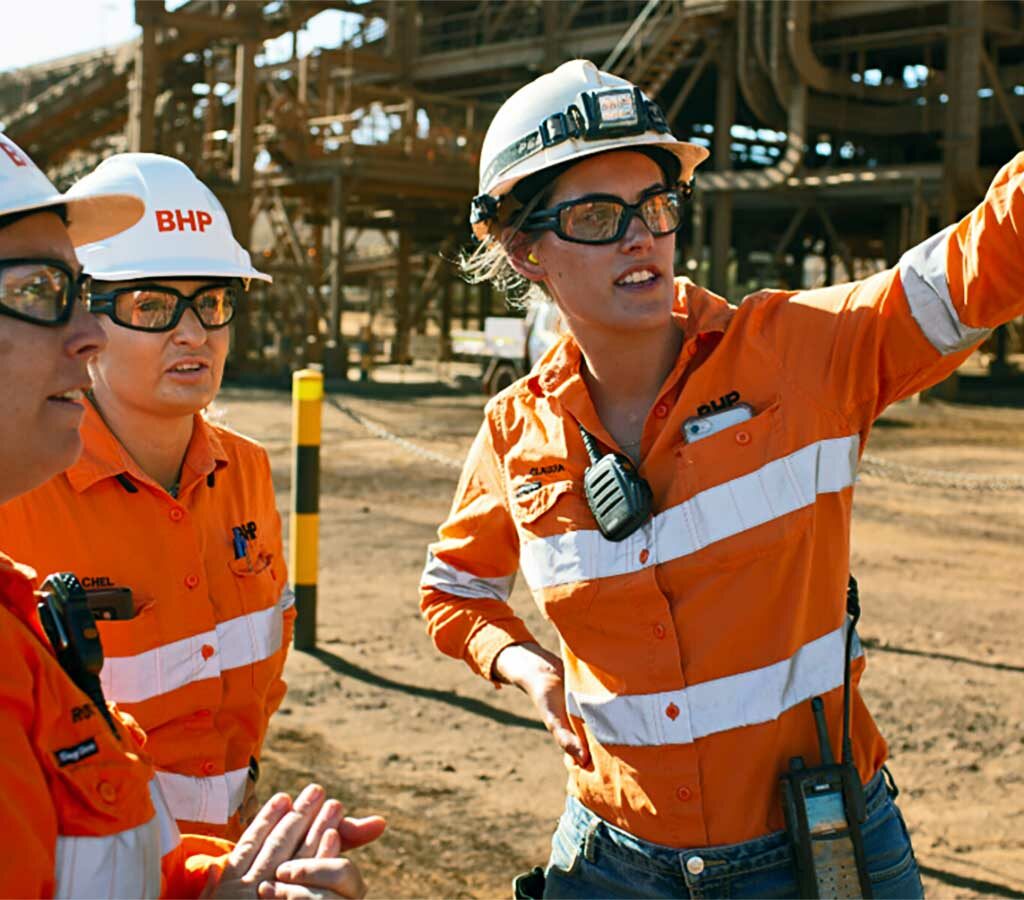
BHP has been the most talked-about company in recent weeks, for both good and bad reasons.
Investors had first to digest the massive merger deal with Woodside Petroleum (ASX: WPL). Then it was the the decision to delist from the London Stock Exchange dual-listing and bring the listing home to the ASX. The highlight, no doubt, was the significant increase in the dividend and hopes of further capital returns. What followed was a significant fall in the iron ore price, pushed lower by steel production curbs in China, that have seen the share price move into a correction.
The decision to delist from the LSE, while the one that likely received the least attention, may well be the most impactful for many investors in Australia. In my view, the change highlights what is an under-appreciated risk evident in a growing range of investors’ portfolios.
The risk is to the growing cohort of investors and financial advisers that have moved towards a low-cost, indexed or passive approach for managing their portfolios. The many people moving to this approach, with the largest ETFs in Australia tracking the S&P/ASX200 index, are potentially gaining far less diversification than they may have expected.
In the finance industry this is known as concentration risk. While having a high-conviction portfolio can be a positive for those seeking long-term compounding growth from backing good companies, the difficulties of market cap-based indexing is creating a growing issue that BHP’s decision has exposed.
Consider for instance that if the BHP delisting is approved and it returns to Australia, its market capitalisation on the ASX will increase. As a result, the Big Australian is set to grow from 7 per cent of the S&P/ASX200 to between 11 and 12 per cent according to several market analysts. Interestingly, according to Richard Longmire of Invesco Australia, “this is not without precedence, think NewsCorp exceeding 20% index weight in the 1990s.”
Either way, this would mean that BHP once again becomes Australia’s largest listed company. By comparison, Apple and Microsoft’s share of the S&P500 is just 6 per cent each. Holding 12 per cent in a single stock may be considered sufficient diversification, but in my view, it seems to place too much reliance on a single, cyclical, company to determine my returns in the years ahead. This is even more apparent when you include CSL, at 8 per cent, CBA at 6 per cent and both Westpac and National Australia Bank at 4 per cent.
According to estimates, the ultimate result is that the mining sector would represent 24 per cent of the S&P/ASX200 and the ETFs that track it, with the financial sector remaining at 28 percent. That is over half of your investment in just two sectors, both of which are trading near multi-year highs.
The popularity of indexing has surged because it provides a low-cost option to ensure you receive the ‘market’ return and remove the threat of under-performing. Yet with such a large exposure to just a few sectors, investing in the S&P/ASX200 very much feels like an active decision to buy two sectors, then a passive one; in my view at least.
So, what’s the solution?
There are quite a few depending on your risk tolerance:
- Consider alternative indexing approaches such as equal-weighting each holding;
- Consider strategies that embrace ‘factors’ other than size;
- Consider sector-based strategies – such as top 20, ex-50, small-cap and income;
- Seek diversification outside Australia.
On the topic of equal weightings, Longmire suggests these “can address the idiosyncratic risk issue faced with index-dominant companies, but introduces other risks that are difficult to manage, such as outsized exposures to specific factors; like a gold mining company.” Sector-based strategies, he says, are also “complex to build,” with the preferred option being to focus on factors other than size.
“Stocks and ultimately the market are an amalgam of factor exposures such as growing earnings (momentum), sustainability of those earnings (quality) and reasonable valuation (value). With data more available and richer than ever, a more elegant portfolio can be built with a robust ‘factor’-based approach.”
Which approach are you taking? I would love to hear your feedback.

Drew is editor of The Inside Network's publications and a principal adviser at Wattle Partners.