Friday 20th June 2025
The art of investing: Why fundamentals, not fashion, will win the next cycle

Paul Moore, chief investment officer of PM Capital, has never been shy about challenging market orthodoxy; and at a recent lunch hosted by The Inside Network, he was in iconoclastic form.
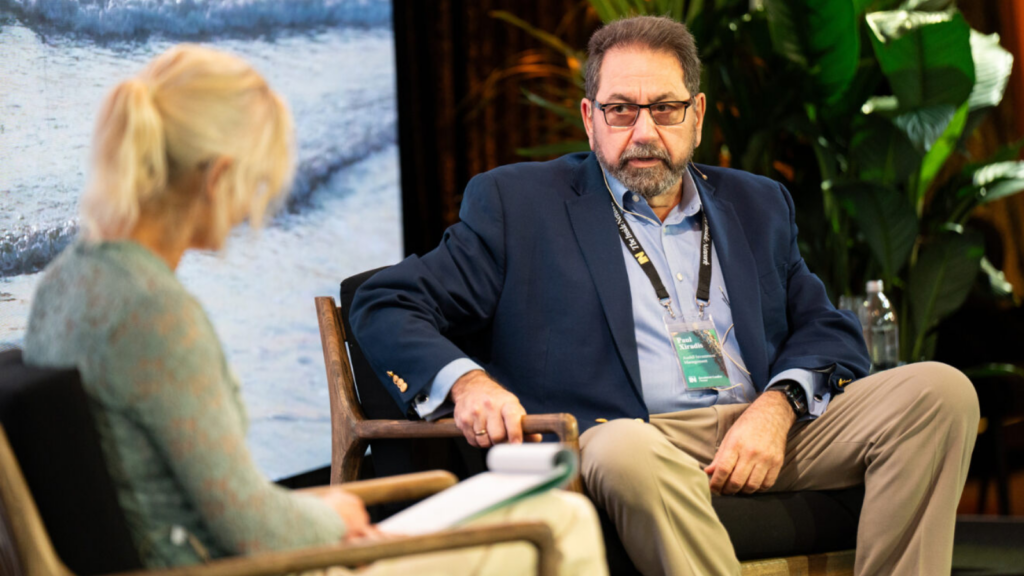
Speaking to an adviser lunch hosted by The Inside Network recently, PM Capital’s Paul Moore (pictured) laid bare what he believes to be the uncomfortable truth facing investors today: markets are saturated with passive capital; career-driven fund managers are failing to navigate full cycles; and too few are willing to be patient enough to let great investments play out to their full potential.
Moore began by warning advisers about the dangerous complacency driven by the rise of passive investing. “The industry constantly references ‘risk,’ well, passive investing has contributed to the greatest concentration of risk,” he said, referring to the dominance of index-tracking investment strategies, which see industry superannuation funds pouring billions into the same large-cap stocks without regard to earnings growth and true valuation. Moore pointed specifically to the extreme valuation of Commonwealth Bank of Australia, now trading at a multiple higher than Apple and Microsoft. “CBA currently sells at 26–27 times next year’s expected earnings. That is a similar multiple to Apple and Microsoft, higher than Meta, and much higher than Google.”
While many see passive investing as a risk-reducing strategy, Moore argued it is actually reinforcing mispricing and creating market dislocations. “As advisers, you have two great opportunities,” he explained. “One, to diversify from Australia to overseas; and two, when you’re overseas, to diversify from the US, and in particular, the top 10, into the industrial world, at acceptable valuations.” He believes markets like Europe and emerging economies present far better value than the tech-heavy US indices.
Moore’s philosophy is anchored in valuation. “When we buy something, we are very clear on the conditions under which we will sell, which is another important part of the equation that most fund managers don’t focus on,” he noted. This approach is not just theory — it’s been proven through decades of practice. Moore highlighted his firm’s long-term investment in global brewing companies, which began in 2003 when valuations were low. “I bought into brewing in 2003 and I already knew when I was going to sell my brewing investments… when the brewing companies were selling on 20 times earnings.”
This disciplined approach paid off handsomely, but Moore warned that very few fund managers have the patience or longevity to see such strategies through. “The problem with that is most fund managers never get through one good cycle to learn the lessons… I reckon to really be an investor you need a couple of cycles, which is 20 years.”
Moore cautioned advisers not to let short-term performance fool them or their clients. “Clients always project what their most recent experience was. That’s why it’s a little bit dangerous at the moment because the most recent experience is very, very good.” He urged advisers to reset client expectations, reminding them that market returns are likely to be more modest going forward, and that patience and discipline will be essential.
He explained that mispricing opportunities often arise during periods of severe market dislocation — whether triggered by geopolitical conflict, policy shifts, or investor panic. “It’s amazing how markets move in 10-year cycles — stocks are cheap for a decade, they become expensive, and then cheap again for ten years. That’s crazy. And that’s where having 40 years in the market really helps,” Moore reflected, pointing again to his experience navigating multiple cycles.
While geopolitical noise is grabbing headlines at present, Moore believes it is critical to stay grounded in fundamentals. “The trick is having the patience to let it play out, because along the way there’s some big ups and downs, and the market keeps trying to get you out of that position.” Whether it’s Middle East turmoil, US-China tensions, the fallout from Russia’s invasion of Ukraine, or policy shifts in Europe, Moore warned advisers to avoid reacting to headlines and instead focus on valuations and business quality.
Moore expressed particular concern about the short-term thinking driven by career risk. “Too many fund managers are playing career defence, not genuine investing,” he warned. Without the courage to hold through volatility, many professional investors end up selling great businesses too early or crowding into fashionable trades at the top of the market.
Returning to the brewing industry example, Moore explained that the best opportunities require conviction and the ability to act when others are fearful. “When we buy, we already know under what conditions we will sell,” he reiterated, emphasising the importance of entering positions with a clear valuation framework and exit strategy. This approach, he argued, is the hallmark of true active management.
Moore also stressed that investing is not about predicting short-term market moves, but about positioning capital in undervalued assets with long-term potential. “As long as the fundamentals align to the thesis, you need to let it play out, and be patient, because you’ll never know when other people get interested,” he said. Timing the market is impossible, but valuations provide a durable compass.
Highlighting the dislocations caused by passive flows, Moore pointed out that not all parts of the market are expensive. “Despite the market being at an all-time high, there are some really interesting valuations,” he explained. His firm’s portfolio trades at around 11 times earnings, well below market averages, reflecting a deliberate ‘barbell’ strategy that targets both value and growth.
In closing, Moore urged advisers to revisit their client portfolios with a critical eye. “You’ve got to diversify away from Australia. You’ve got to diversify out of the US. And above all, you’ve got to stick to fundamental investing.” He left the audience with a reminder that true investing is not about chasing the crowd, but about identifying mispricings, putting aside the discomfort of investing differently, managing risk, and having the patience to let the fundamentals do the heavy lifting.
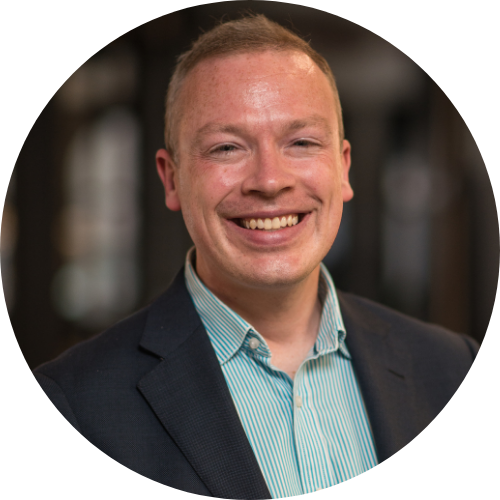
Laurence Parker-Brown is head of content at The Inside Network and managing editor of The Inside Adviser and Investor Strategy News.