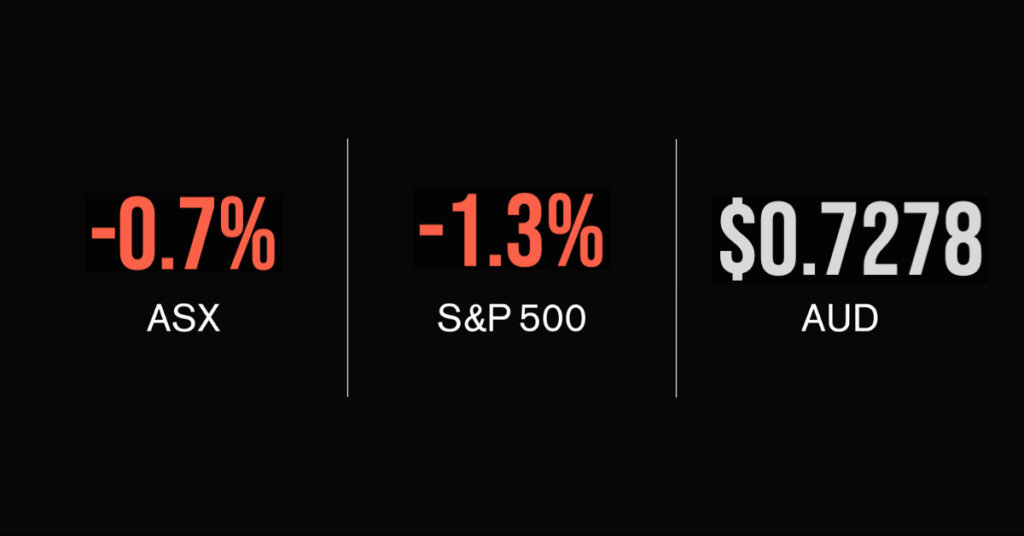
Monday 13th December 2021
Subtle shifts highlight the new paradigm for fixed-income investors
A quiet announcement from one of Australia’s leading industry/union super funds at the beginning of December piqued my interest. The announcement came amid a busy week for investment announcements, with nearly every investor offering up an outlook statement.
But this one was much more straightforward and delivered without any fanfare. It was the decision by the super fund and its investment committee to change the investment objectives for one of its investment options. On its own, it wouldn’t make the news cycle, but the message it sends may be significantly more powerful.
The decision related to a fixed-interest option within the fund’s investment menu, with the current absolute-return benchmark, pegged to 1-2 per cent above the rate of inflation (or CPI), effectively being abandoned. The absolute-return benchmark will be replaced with one squarely focused on relative returns, being a combination of two of the major fixed-income benchmarks in Australia.
The Your Future, Your Super legislation, which came into force on 1 July 2021, may well have been a precursor to this decision. Under these changes, every major pension fund is now being compared to a series of passive index benchmarks with underperformance potentially resulting, in the worst case, in an inability to take on new members.
Naturally, in this environment, the first reaction is to simply gravitate towards said index rather than risk making active decisions that cost the fund members in the longer term. That may well have been the case for this change, but as an experienced adviser, there is another clear reason: bond rates.
For anyone that has been around long enough, it is now obvious that the precipitous fall in interest rates from as high as 19 per cent in the 80s down to 0 per cent today, has been a key driver of returns in both equity and bond investors for several decades. Yet as it stands today, there is literally no other way but up for interest rates in the next three decades.
While there is disagreement on how fast this will occur, there is clear agreement that this will be a difficult time for those investing in bond markets, but particularly those investing in passive index-linked strategies. This is because any increase in interest rates, or even prevailing bond yields, will result in capital losses, sometimes significant, for those holding long-duration bonds in their portfolio.
With the traditional fixed-income benchmarks carrying duration of around six years, this means a 1 per cent increase in yields will translate into a 6 per cent capital losses. Now, you can likely see where I’m going. In an environment where inflation is increasing, and with interest rates likely to follow (at some point), attempting to outperform a CPI-linked benchmark with long-term bond investments is near-impossible.
For the true pessimist, you could suggest that the change in investment objective may well be the realisation and acceptance that fixed-income returns will be negative in the years to come.

Drew is editor of The Inside Network's publications and a principal adviser at Wattle Partners.