Monday 16th March 2026
Structure, scale, usability: Inside a property fund built for advisers
Commercial property’s real advantage is often overlooked: income secured by lease agreements that rise steadily over time. Chris Davitt explains how the Dexus platform is structuring portfolios to turn that stability into adviser-friendly income.
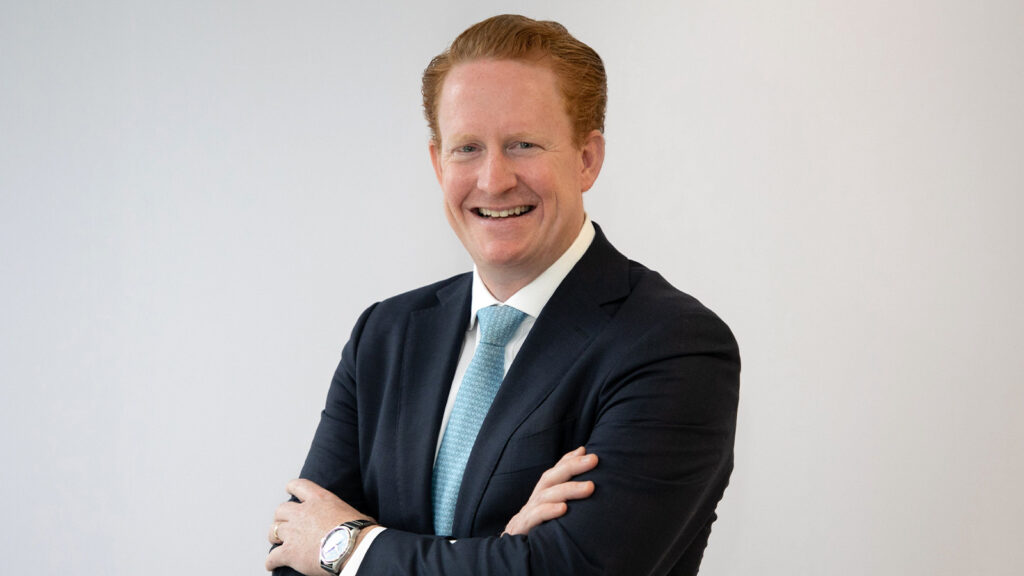
Commercial property’s income case starts with lease agreements, not the property cycle, and Chris Davitt, fund manager at Dexus, wants advisers to focus on that distinction. “The big feature of real estate is that the income is backed by leases,” he says, which means tenants are contractually obliged to pay rent that “will tick up on a steady basis through the life of the lease,” a very different risk contour to returns that rely on refinancing windows or asset sales.
He contrasts that cadence with private credit, now an integral part of clients’ income allocations. “Most of the private credit lending is residential development,” he notes, sometimes to projects that “don’t receive any cash flow during the development.” By comparison, lease-backed income lands quarterly, and advisers can underwrite the escalators with greater confidence.
Sector rotation
The portfolio Davitt runs, the Dexus Wholesale Australian Property Fund, has evolved its sector exposures as the cycle shifted. “We’ve dropped our office exposure from about 37 per cent down to 15 per cent while maintaining our exposure to retail even when that sector fell out of favour,” Davitt says, emphasising that the portfolio “has maintained an occupancy rate of 98 per cent even through the pandemic,” with retail providing “significant ballast” to the overall income profile.
Diversification now extends well beyond historical sector allocations. “It used to be a third, a third, a third,” he says, but for the last five years the team has introduced life sciences, hospitality and residential-related exposures, using listed REITs tactically as a completion strategy for liquidity and sector tilts, including pre-pandemic positions in data centres, land lease communities and self-storage.
Tenant mix
Being disciplined about location and asset flexibility are deliberate. He wants assets “that are well-located and not too specialised, so the tenant mix can evolve over time.” This has allowed the fund to keep pace as retail shifts “from goods to services and experiences,” and as tenant mixes change in industrial, office and alternatives. The point is simple; optionality helps the tenant mix evolve to maximise occupancy and deliver income that keeps up with inflation.
Valuations across the portfolio have stabilised. This gives advisers comfort that capital is protected. “We’ve had valuation growth for 18 months,” Davitt says, although he remains cautious that Melbourne will take a long time to work-through, which is why the core set of assets is currently concentrated in Sydney and Brisbane, where demographics and demand appear more supportive.
Diversification
That tilt has been building for years. “From about 2017, we’ve been putting quite a lot of money into south-east Queensland,” he says, initially when sentiment was gloomy in the wake of the resources boom, because the “very big urban economy” from the Sunshine Coast to the Gold Coast was attracting tenants “that were just not there 20 years ago,” a structural backdrop that helps rents and occupancy hold-up.
Scale and market niche are part of how the income stays smooth. “It’s a $1.8 billion portfolio fishing in the $20 to $200 million range,” Davitt explains, deliberately “above the fray” of private investors and “below the threshold” of the larger global investor, so the team can bring institutional leasing and customer service to mid-market assets where that capability is scarce.
Debt settings are managed to defend distributions, not to chase them. If pricing looks stretched, “I’ll take the cash,” and the objective is to bring gearing “from about 40 per cent down to 20 per cent,” which “will give us some more firepower for acquisitions and doing development within the portfolio” without compromising the income run-rate.
Client liquidity
Liquidity and pricing are designed around what advisers need to show clients. “On the way in, there’s daily unit-pricing-based accrual of income and quarterly external valuations, so there isn’t the same level of volatility that investors experience in listed markets.” On the way out, “there are multiple options, depending on investors’ preferences.”
The tax mechanics of commercial property investment can assist in converting gross rent into spendable, after-tax income for investors, which is why Davitt keeps the explanation close at hand.
Buildings can be depreciated, together with plant and equipment that is depreciated over shorter timeframes. This framework underpins distribution deferral and enables advisers to actively manage client cash flows across financial years.
Income at the centre
Execution shows up in planning wins that protect and grow income. “636 St Kilda Road (in Melbourne) is another good example,” he says, an office property now “going through the planning process to rezone to residential,” with height from 60 metres to 104 metres expected by the end of the year, a change that demonstrates how the platform’s development management capability and local relationships translate to the P&L.
Finally, he is building the wrapper to make lease-backed, appraisal-based income operationally easy for advice firms. The fund is accessible via major investment platforms, giving advisers a simple onboarding experience while simplifying reporting and managed account compatibility.
Important note
Dexus Capital Funds Management (ABN 15 159 557 721, AFSL 426455) (DCFM) is the responsible entity of the Dexus Wholesale Australian Property Fund (Fund) and the issuer of the units in the Fund. To invest in the Fund, investors will need to obtain the current Product Disclosure Statement (PDS) from DCFM. The PDS contains important information about investing in the Fund and it is important that investors read the PDS before making an investment decision about the Fund. A target market determination has been made in respect of the Fund and is available at www.dexus.com/dwapf. Neither DCFM, Dexus, nor any other company in the Dexus group guarantees the repayment of capital or the performance of any product or any particular rate of return referred to in this document. While every care has been taken in the preparation of this document, DCFM and Dexus make no representation or warranty as to the accuracy or completeness of any statement in it including without limitation, any forecasts. This document has been prepared for the purpose of providing general information, without taking account of any particular investor’s objectives, financial situation or needs. Investors should consider the appropriateness of the information in this document, and seek professional advice, having regard to their objectives, financial situation and needs.

Laurence Parker-Brown is head of content at The Inside Network and managing editor of The Inside Adviser and Investor Strategy News.