Thursday 5th February 2026
Space X already lifted-off for Pengana
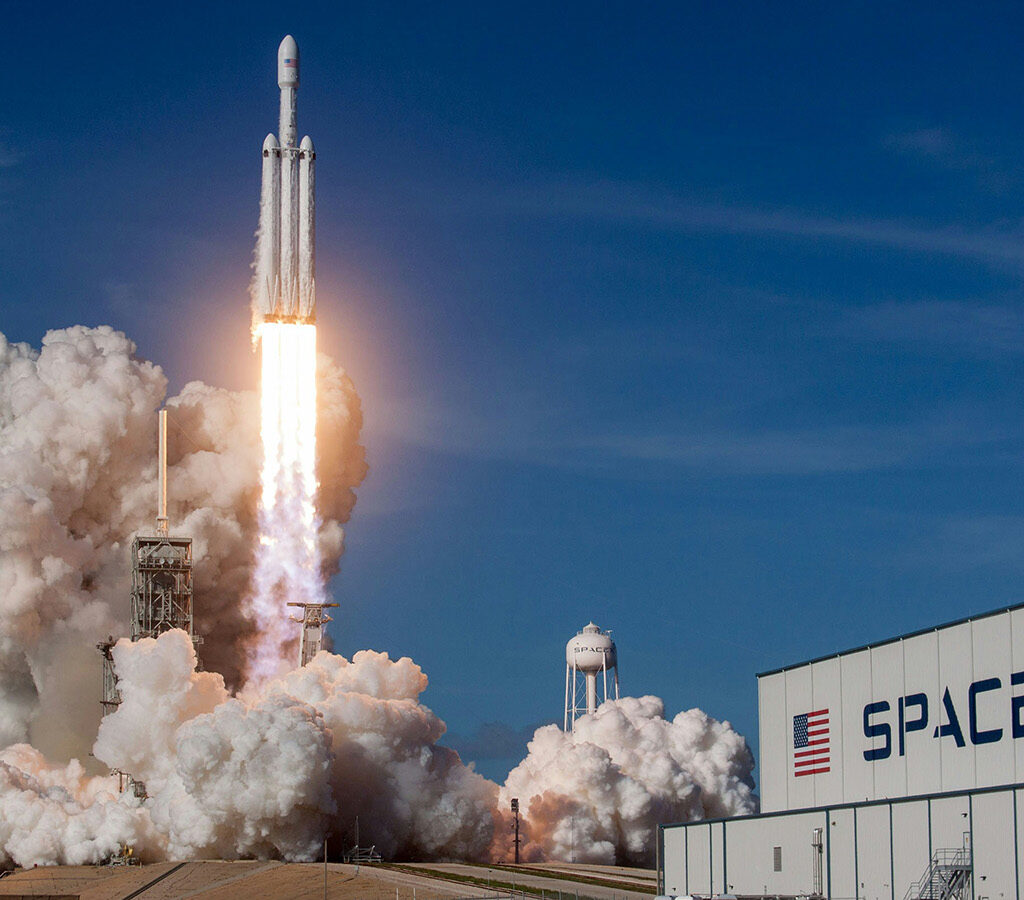
The potential Space X initial public offering (IPO) later this year will be the largest – and likely the most sought-after – stock market float yet seen. But one ASX-listed trust has been an investor for more than five years.
Elon Musk’s SpaceX, the space exploration and satellite company, could be headed for the biggest initial public offering (IPO) in history when it arrives on the US stock market some time this year – potentially a US$1.5 trillion ($2.1 trillion) valuation.
Given what Space X has already achieved – the first private company to successfully launch and a spacecraft in orbit around the earth, and retrieve it; the only private company so far to launch an object in orbit around the sun; and the first private firm to dock a space vehicle with the International Space Station (ISS) – the shares are likely to be fought over by investors.
But for Australian investors, there is already a way to invest in Space X.
Pengana Capital’s listed private equity vehicle, the Pengana Private Equity Trust (ASX: PE1), which was designed to offer a diversified portfolio of global PE investments, invested in Space X in late 2020, starting with a 2 per cent (of the portfolio) stake when the company was valued at US$50 billion ($71.4 billion).
That stake has grown to about 7.7 per cent of the trust’s private markets exposure, making it PE1’s largest investment.
The market has a sighter on Space X’s burgeoning valuation from the secondary share sale the company initiated in late 2025, to enable employees and early investors to sell some of their shares before an IPO (Space X conducts stock buybacks twice a year to provide liquidity for employees and early investors). The latest round has generated a US$800 billion ($1.1 trillion) valuation for Space X, more than double the last valuation.
In its December 2025 monthly performance report to the ASX, Pengana Private Equity Trust said the US$800 billion valuation implied by the recent secondary sales – which would make Space X the world’s most valuable private company – “has not yet been incorporated into PE1’s NAV,” or net asset value.
Musk wrote on X in December that “SpaceX has been cash-flow positive for many years,” and said the company’s valuation was rising due to the progress of Starship (the reusable super-heavy-lift space launch vehicle it is developing) and Starlink (its satellite internet and telecommunications network), but the appeal of Space X to investors is not just these operations. Earlier this month, SpaceX acquired Musk’s artificial intelligence company xAI, meaning that it now also owns X.
According to Musk, the Space X-xAI merger forms “the most ambitious, vertically-integrated innovation engine on (and off-) Earth, with AI, rockets, space-based internet, direct-to-mobile device communications and the world’s foremost real-time information and free speech platform.”
The IPO filing document will make for interesting reading, but the combination of businesses within Space X is predicted to command a US$1.5 trillion market capitalisation on listing.
To put that in context, the company – founded in 2002 – was worth about US$12 billion in 2015, and US$46 billion in 2020.
The actual amount raised in an IPO of Space X will be up to the company, but market speculation projects the actual capital raising in the range of US$20 billion–US$50 billion ($28.6 billion–$71.4 billion).
At the higher end of that range, SpaceX would comfortably eclipse the previous largest IPO, that of Saudi Arabian state-owned energy company Saudi Aramco, which raised US$25.6 billion ($36.6 billion) in December 2019, floating 1.5 per cent of the equity. That IPO surpassed the previous record held by Alibaba Group, which raised US$21.8 billion ($31.1 billion) in 2014.
The growth in value of Space X shows the value in including global private equity in a diversified investment portfolio, says Adam Myers, executive director at Pengana Capital Group.
“SpaceX is a great example of how private markets can provide exposure to companies well before an IPO. Investors in PE1 are among the few in Australia with meaningful access to this opportunity, and are well positioned to benefit from a favourable IPO outcome, whether in 2026 or at a later date,” says Myers.
“We know that companies are staying in private hands for longer. In many cases, the more influential a business becomes, the more access it has to private capital which reduces the urgency to IPO. By allocating a portion of a portfolio to PE, investors can potentially gain exposure to some of the most meaningful businesses of the future before they list, and potentially capture outsized returns on the journey to IPO,” he says.
Pengana’s fund has also invested in ChatGPT’s owner, OpenAI, which is also considered likely to conduct an IPO in due course.
PE1’s annualised NAV return since its inception in 2019 to 31 December 2025 is 8.7 per cent. Unusually for a private equity vehicle, the trust also pays an ongoing distribution yield of 4 per cent a year, on NAV.

James is an experienced senior journalist and editor of The Inside Network's publications.