Thursday 22nd May 2025
Picking winners: How StepStone Group and LGT Crestone think about venture capital
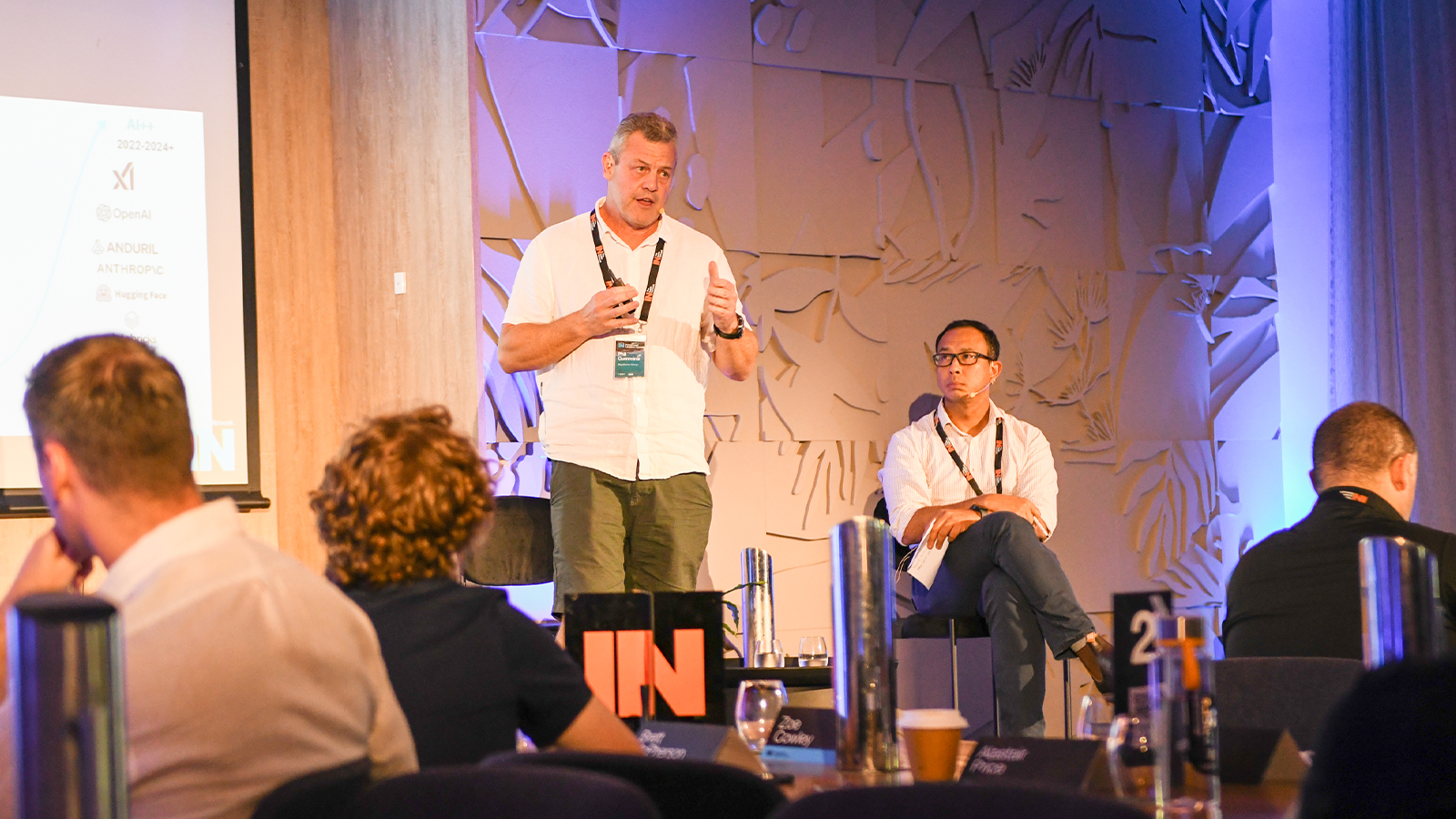
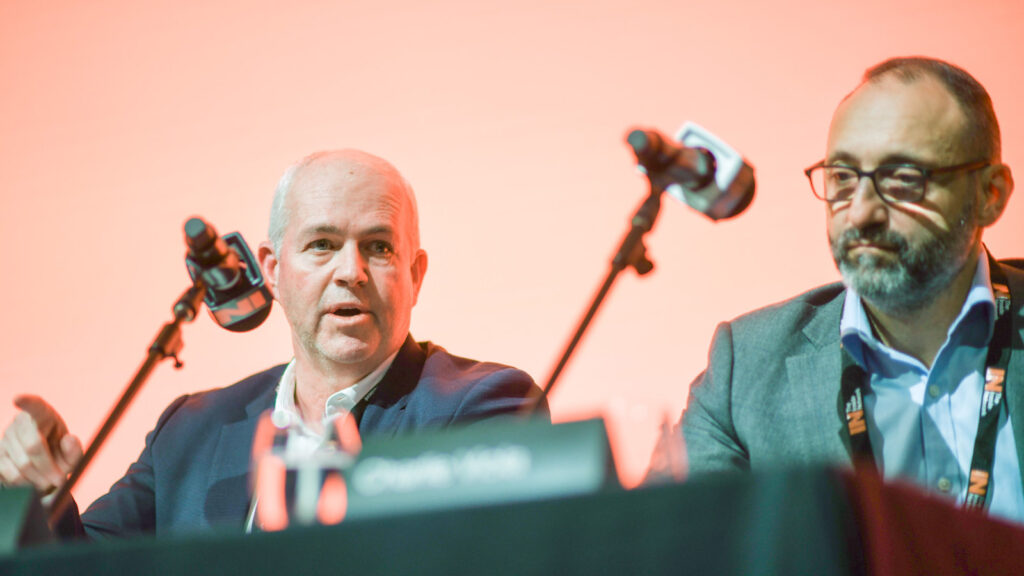
The conversation on venture capital at the Investment Leaders Forum held at Crystalbrook in Byron Bay pulled no punches. StepStone Group’s Phillip Cummins and LGT Crestone’s Kevin Wan Lum offered delegates a rare window into how venture capital is evolving — and why access, diversification and discipline matter more than ever.
One part data-led warning, one part strategic recalibration, the conversation between StepStone’s Cummins and LGT Crestone’s Wan Lum opened with the former giving a structural framing of the market. Drawing on decades of data and the group’s internal modelling, he made one point abundantly clear: venture capital returns are, and always have been, radically skewed.
“This is a game of right-tail risk,” Cummins said. “It’s not about avoiding losers. It’s about making sure you’re exposed to the handful of companies that matter.” In StepStone’s world, this translates into a portfolio design that’s laser-focused on capturing the best 1 per cent of outcomes — the few companies that drive most of the market’s value creation.
The industry statistics bear this out. Over the last decade, just 100 companies generated 45 per cent of total exit value across the US VC ecosystem. Fifteen per cent of ‘unicorns’ account for 60 per cent of the total value among $1 billion-plus US-based companies. The implication? Being broadly diversified isn’t enough. You need to be surgically connected.
StepStone’s advantage is not easily replicable, which is where LGT Crestone’s Wan Lum picked up the thread. “Even with my background, I can probably access two-thirds of what StepStone can,” he said. “That last third is where the magic happens.” For Wan Lum, this is the reason it partners with platforms like StepStone, whose ‘SPRING’ evergreen fund offers diversified exposure to later-stage venture businesses approaching liquidity events — IPO or trade sale — within a five-to-seven-year horizon.
But SPRING, as Wan Lum was quick to clarify, is not liquid in any real sense. “You can redeem, but the gate is years — not months,” he said. The point, however, is not redemption. “These are long-term holdings by design. You shouldn’t be thinking about getting your money out in three months. You wouldn’t try to sell a toll road in that timeframe either.”
Time, indeed, was one of the dominant themes. Cummins reminded the audience that the average time to exit in 2005 was six years. By 2024, it had stretched to ten. That expansion reflects both greater capital availability and more complex scaling requirements, particularly in high-growth areas like artificial intelligence. “AI is the big swing in this cycle,” he said. “The acceleration we’re seeing — from $1 million to $30 million in revenue — is five times faster than it was with software-as-a-service (SaaS) companies.” Yet he cautioned against hype. “Some cracks are starting to appear — data storage costs, computing requirements. You have to stay rational.”
Rationality, for both speakers, meant diversification — not just across companies but across vintages. “You can’t time venture,” Cummins said. “It’s like missing the ten best days in the public market. If you’re out of the cycle, you miss the returns.” Wan Lum echoed that sentiment, explaining how LGT Crestone encourages clients to build exposure year-on-year, not bet everything on a single fund. “We allocate one to four per cent to venture within private markets. It’s high-risk, but the upside is real. The job is to keep clients from over-committing — or under-appreciating the illiquidity.”
Both thought leaders flagged structural changes in the VC ecosystem. Fund sizes are shrinking. Fewer firms are raising follow-ons. Median returns are weakening. “This is not a market where the average wins,” said Cummins. “It never has been. The top-quartile funds capture the lion’s share of the value. Everyone else just tries to keep up.” He was candid that the StepStone approach is unapologetically focused on winners, not index-like exposure.
Wan Lum offered a sober reminder that even for top-performing venture funds, the payoffs come late. “The three or four companies that give you 3x or 4x? That doesn’t arrive until years seven to fourteen,” he said. That delayed gratification can be hard for clients to stomach — especially in a world of instant liquidity and 24-hour reporting. “It’s not just about volatility,” he explained. “Private markets may look calm on paper because they’re only marked once a year. But in reality, they’re illiquid, and high-risk, and you need to be comfortable with that.”
And yet, for all the risk, both speakers were unequivocal in their support for the asset class. The innovation cycle is real. The capital required to fund tomorrow’s winners is growing. The global shift toward private markets is irreversible. “Eighty per cent of the world is private,” Wan Lum said. “If you’re not investing there, you’re missing where value is being created.”
The takeaway from the discussion wasn’t a warning. It was an instruction. Don’t chase the thematic flavour of the month. Don’t get seduced by headline valuations or short-term liquidity. Instead, build a portfolio that’s diversified, disciplined, and plugged into the networks that matter. In venture, it’s not about being everywhere. It’s about being in the right places — just in time.

Laurence Parker-Brown is head of content at The Inside Network and managing editor of The Inside Adviser and Investor Strategy News.