Monday 31st October 2022
Passive funds still reign supreme despite market turbulation

The pendulum may have swung back towards active management this year, but the domestic ETF market is flush with options and continues to steal FUM.
Net inflows into exchange-traded funds (ETFs) continue to be dominated by passive mandates as investors steer clear of an increase in active offerings.
The latest data from the two domestic exchanges show Vanguard, BetaShares and iShares (BlackRock) attracted 88 per cent of total net inflows over the past twelve months. This has further entrenched the big three issuers’ market share, which currently sits at 65 per cent.
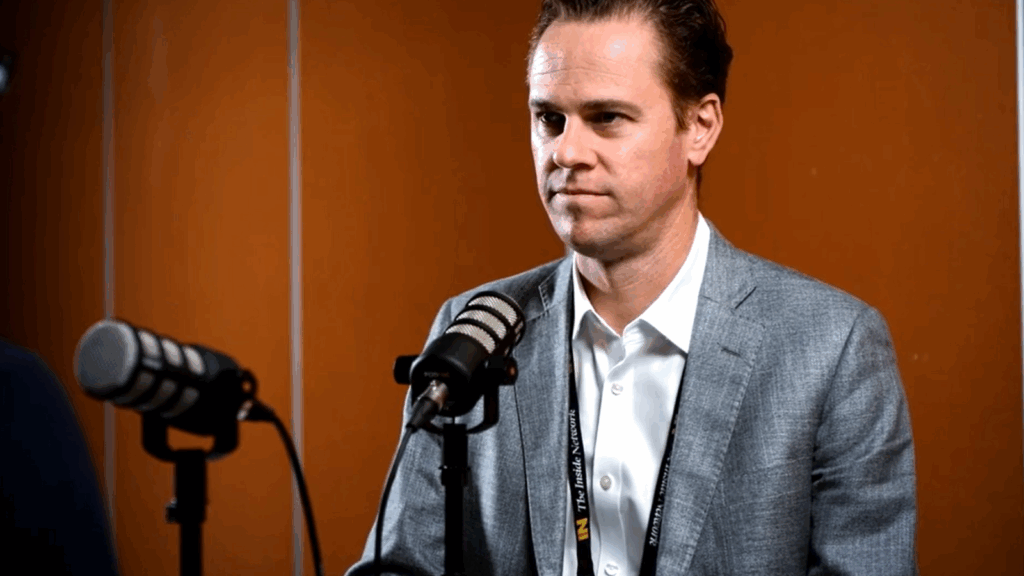
Stockspot senior manager of investment and business initiatives Marc Jocum (pictured) says the big three are doing a great job of meeting the needs of investors and then distributing products effectively.
“Low cost, performing well, providing liquidity and giving great exposure. That’s what investors are looking for,” Jocum explains.
Despite the market downturn this year setting the stage for active managers to show their value – the S&P/ASX200 is down 12.5 per cent to date – investors continue beating a path to low-cost options.
The ETF market has grown 38 per cent per annum over the past five years, compared to just 11 per cent for listed investment companies (LICs) and 7 per cent for managed funds.
Over the past twelve months active funds attracted just 10 per cent of net inflows. Despite the difficulty in attracting new money, active managers continue to try and capitalise on the rapid growth in the ETF market. Active products represent 17 per cent of total funds compared to just 7 per cent five years ago.
Jocum adds that the domestic ETF market is already saturated with options, meaning new products are increasingly thematic or niche.
“Most investor money is going into what we call beta”, he says, “which is just tracking the market and adopting that core and satellite approach.”
Active struggles to keep up
The latest Standard & Poors SPIVA scorecard revealed slightly over half of all active managers beat the benchmark over the past six months. But on a 15-year time horizon, 95 per cent underperformed.
Jocum says “every manager has their moment in the sun”, but the ability to keep selecting the right companies, recover management fees and cover brokerage costs makes it difficult for active managers to compete against a passive benchmark. “Markets are very efficient.”
Passive remains popular
The ETFs with the most funds under management (FUM) are largely broad-based indexes that capture popular local benchmarks in Australia and the United States.
| Ticker Code | ETF | FUM |
| VAS | Vanguard Australian Shares Index ETF | $11.2 billion |
| MGOC | Magellan Global Fund – Open Class Units | $8.9 billion |
| IVV | iShares S&P 500 ETF | $5.0 billion |
| VGS | Vanguard MSCI Index International Shares ETF | $4.8 billion |
| STW | SPDR S&P/ASX 200 | $4.6 billion |
The Magellan global fund continues to rank highly. However, nearly $4 billion was withdrawn from its current ETF products suggesting investors are moving away from the active manager. Eight ETF issuers recorded outflows over the past 12 months, with the majority active managers.
| Ticker Code | ETF | Net inflows |
| VAS | Vanguard Australian Shares Index ETF | $2.8 billion |
| VGS | Vanguard MSCI Index International Shares ETF | $1.1 billion |
| A200 | Betashares Australia 200 ETF | $1.0 billion |
| QUAL | VanEck Vectors MSCI World Ex-Australia Quality ETF | $846 million |
| HYGG | Hyperion Global Growth Companies Fund | $712 million |
Similarly, the top three funds by net inflows were passive products. Despite a resurgence in value investing this year, two growth-oriented ETFs rounded out the top five.
Jocum says that capital will continue to flow into the products which have a long history of performance.
“That’s where the trust is and where the model portfolios are.”

Lachlan is an experienced journalist writing across The Inside Investor and The Inside Adviser.