Wednesday 8th June 2022
Market falls on 50 basis point rate hike, confidence slips, every sector weaker
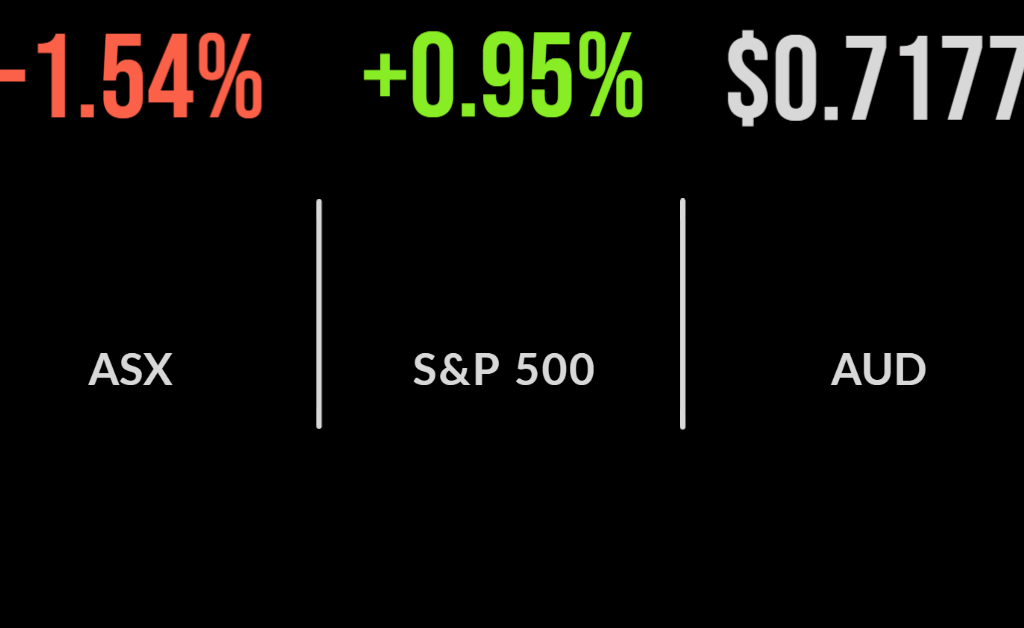
The Australian sharemarket was on hold ahead of the RBA’s latest board meeting and interest rate decision. A somewhat unexpected 0.50 per cent increase in the cash rate to 0.85 per cent saw the S&P/ASX200 slump by 1.5 per cent.
The large move was predicted by only a few experts with the RBA highlighted the fact that inflation had increased significantly around the country, due to energy and materials prices, and therefore action needed to be taken.
This remains a challenging proposition for the RBA, seeking to normalise policy at a time when surging consumer prices on daily goods are already hitting demand and sentiment.
They clearly risk sending the economy into a recession in 2023 and beyond. This will have a direct hit on loan repayments, which has seen consumer sentiment fall to the lowest point since August 2020, down 4.1 per cent in June.
It was a similar story for business, where confidence also slumped 22 per cent to 100.2 points.
Zip Co (ASX: ZIP) was the biggest detractor, falling 14.4 per cent with just 20 or so companies managing to deliver a positive return.
GQG assets increase, Zip dumped, materials, energy outperform
Fund managers were among the top performers of the day, with Magellan (ASX: MFG) gaining 2.1 per cent and GQG (ASX: GQG) falling 1.2 per cent.
GQG reported a 4.6 per cent increase in assets under management in May, growing to US$90.4 billion, with international equities gaining US$2 billion and the major highlight following strong outperformance from the underlying funds.
Sandfire (ASX: SFR) topped the market, gaining 3.4 per cent as the copper price remains strong, whilst perceived lower quality and technology companies were among the weakest, falling 3 per cent.
Ingham’s (ASX: ING) remains a beneficiary of poultry shortages, gaining 3.2 per cent, with news that a shortage of lettuce had resulted in cabbage being used as a replacement by KFC outlets, another sign of a stressed supply chain and lack of labour.
Real estate followed technology lower on a further jump in the bond yield, which has the potential to hit valuations, as Goodman Group fell 3.7 per cent.
Markets reverse, Target profit to slip, growth downgraded
The global markets staged a mid-session comeback on Tuesday, with all three benchmarks reversing losses to gain close to 1 per cent each.
They were led by the Nasdaq which finished 0.9 per cent higher on the back of a 1.7 per cent jump in Apple (NYSE: AAPL).
The stock gained after flagging a significant upgrade to their MacBook Air and Pro laptops.
But it was all about Target (NYSE: TGT) with the company downgrading earnings expectations and flagging falling margins as they seek to deal with an excess of product.
Management will now seek to cut prices to remove excess inventory, potentially challenging the inflation narrative. This is being seen as a shift from goods sold to services, and meant the consumer sector was the only one to finish lower.
The World Bank also downgraded global growth expectations for 2022 to just 2.9 per cent from the previous forecast of 4.1 per cent due to food shortages and the war in Ukraine.

Drew is editor of The Inside Network's publications and a principal adviser at Wattle Partners.