Monday 9th October 2023
Lack of global warming accountability putting investors, and the planet, at risk
"Rational, economic arguments" are required to support a reduction of the costs of global warming on the planet and the economy, says Australian Ethical.
If companies continue to be responsible for reporting their own contributions to global warming the inevitable lack of accountability will not only degrade the environment, but heighten risks to investors. According to Australian Ethical, moving the needle on climate change will mean formulating a plan to increase transparency.
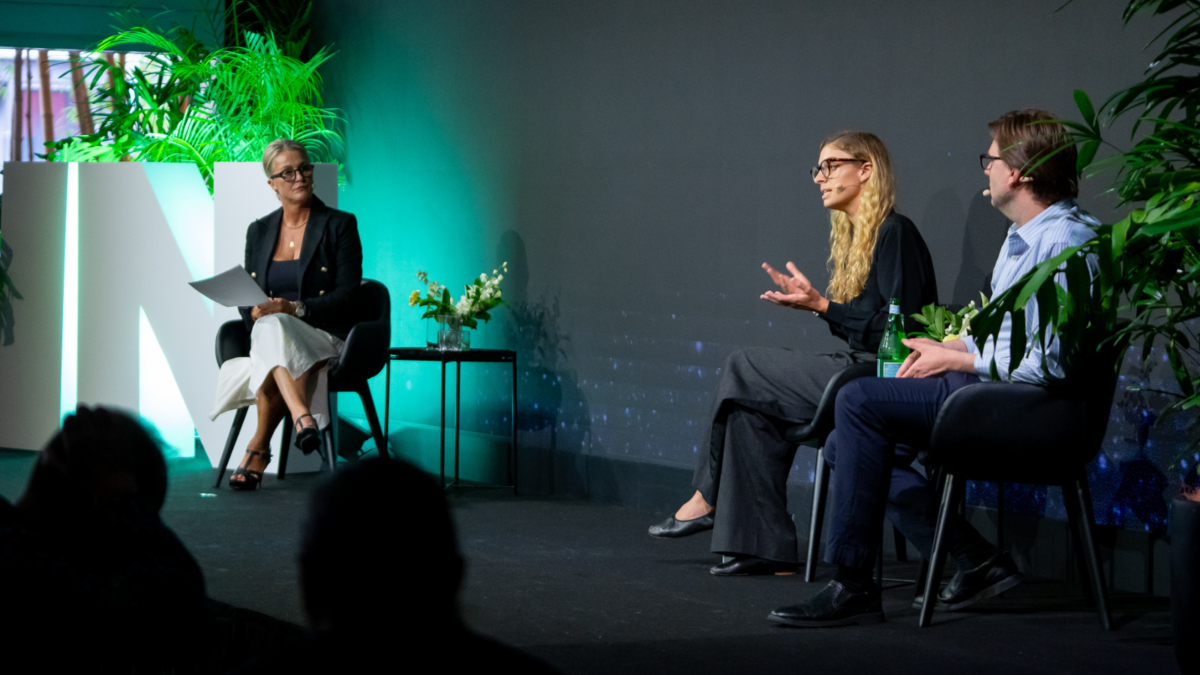
The ethical investment house sent its senior ethics analyst, Persephone Fraser (pictured, centre), to Canberra in September as part of a delegation from the Investor Group on Climate Change (IGCC), where she spoke to the Prime Minister and Cabinet, as well as party members from both sides of the divide.
As part of those discussions Fraser made clear that companies are putting off their carbon reduction plans because reporting on contributions to global warming is voluntary, which means firms are only reporting the data they want to be made public. Consequently, stakeholders can’t accurately gauge how well those companies are planning for the future.
“Because there’s no proper accountability, we’re witnessing first-hand companies putting off their carbon reduction plans,” Australian Ethical stated in a recent note. “This is setting us back as a country, but also putting investors at risk.”
Opaque and voluntary reporting requirements are precluding us all from limiting global warming to 1.5 degrees, the investment house argues. Making matter worse is the willingness of government to extend and approve further mining and fossil fuel projects, which are likely to make reaching net zero by 2050 nigh-impossible to achieve.
“The government’s own Intergenerational Report highlights the need for the mix of resources produced by Australia’s mining sector to change significantly in coming years,” Australian Ethical stated.
“As our export markets turn away from fossil fuels, we run the risk of being left with fuels no one wants and can’t be burnt if we’re to limit warming to safe levels. Our economy requires us to be moving away from fossil fuels and expanding into transition minerals, for our economic prosperity as well as for the climate.”
There is hope, however, that policymakers do have a sense of how grave the global warming issue really is.
“Following the meetings, we’re optimistic about what we can achieve when we combine our engagement with companies, our discussions with politicians and our influence more broadly in the public positions we take on exclusions and divestments,” Australian Ethical stated. “Our takeaway from recent discussions with politicians is there’s appetite in Canberra for investors to stand up and agitate for policy to push companies and individuals to do more on climate and reduce emissions.
“Following these engagements, we believe one of our best pathways is to provide rational, economic arguments that support increased climate ambitions from government, to reduce the costs of warming on the economy.”