Monday 1st December 2025
Japan’s second act: Masa Takeda on compounding through reform
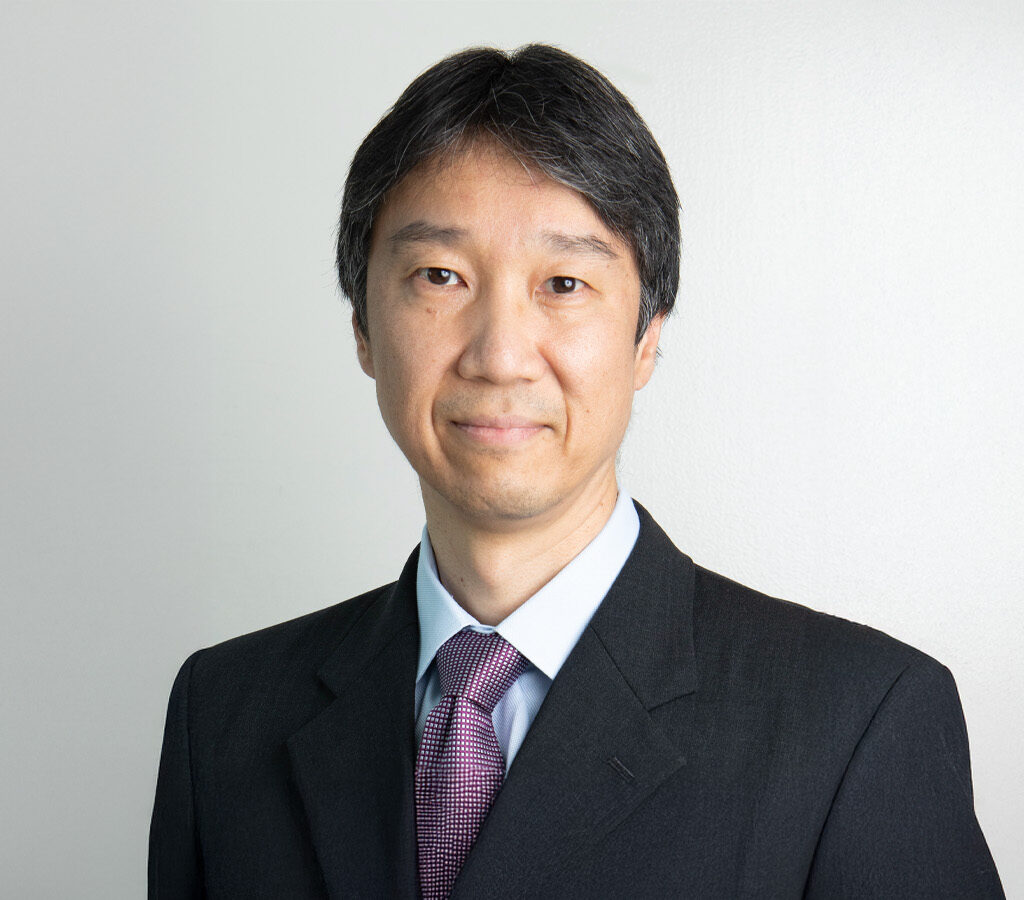
After three decades of relative isolation, Japan is finally back in town as an equity market, as a sustained campaign on corporate governance starts to bear fruit.
After three decades in the policy wilderness, Japan is finally behaving like an equity market again. Inflation is back, companies are lifting returns, and the exchange itself is telling laggards to do better. For Masa Takeda (pictured), portfolio manager at SPARX Group, this is not a flash in the pan – it’s the compounding phase for which long-term investors have been patiently waiting.
“We’ve had a decade-plus of steady governance progress that many outside Japan underestimated,” Takeda tells The Inside Adviser. “Combine that with a gentle exit from deflation and a cultural shift toward capital efficiency, and you’ve got a durable backdrop. We think we’re still early.”
Takeda’s approach is disarmingly simple, Buffett-like in both tone and tempo. He runs a concentrated, high-conviction portfolio of 20–30 names, with turnover around 10–15 per cent a year. The universe is technically all-cap, but the centre of gravity sits in robust large caps with global franchises, recurring cash flows and the kind of pricing power that turns return on invested capital (ROIC) into habit rather than hope. “We invest in great businesses with exceptional management at sensible prices,” he says. “We like asset-light models, wide moats and long runways – we’re happy to wait years before we buy.”
Waiting is easier when policy works with you rather than against you. Headline inflation has hovered near 3 per cent while policy rates remain low; real rates, Takeda notes, are around zero or negative across much of the curve. “The Bank of Japan wants to normalise, but slowly. They’ve seen what premature tightening looks like. In the meantime, a softer yen and low real rates support equities and encourage corporate investment.”
If policy is the tide, governance is the rudder. Since 2014 – under the late Prime Minister Abe – Japan has introduced a stewardship code and corporate governance code, pushing boards and institutions into a more constructive dialogue. The Tokyo Stock Exchange’s directive – urging companies trading below book value to improve their cost of capital and disclosure – was a cultural jolt. “In most markets, the exchange is a venue,” Takeda says. “In Japan, it has become a change agent.”
That push is interacting with other long-standing quirks: the unwinding of cross-shareholdings and the revaluation or monetisation of underused property. “For decades you had balance-sheet ‘fog’: assets that weren’t priced or used optimally,” Takeda says. “Activists and, frankly, common sense are changing that. As capital gets redeployed, return on equity (ROE) rises. Japan’s long-term average was roughly five per cent; today we’re seeing nine to ten. We’re not finished.”
Japan is back. In October the Nikkei 225 index pushed above 50,000 yen for the first time, but has come back to levels around 48,500 – it is still up 23.5 per cent year-to-date. Takeda prefers the market capitalisation-weighted TOPIX index, which he describes as the “S&P 500 to the Nikkei’s Dow Jones.” The TOPIX hit an all-time high in mid-November, and has gained 19 per cent so far in 2025.
In October, Japan experienced something of a political revolution, with the surprise win of Sanae Takaichi as the leader of Japan’s Liberal Democratic Party (LDP), and the subsequent confirmation by the Diet (Parliament) of the LDP leader as Japan’s new prime minister, giving Japan its first female PM. The subsequent appointment of Satsuki Katayama as Finance Minister ushered in a female – but highly conservative – leadership duo that is strongly linked to the “Abenomics” policy platform of former PM Abe.
Takaichi’s proactive fiscal policy and dovish stance on monetary policies have been so far welcomed by the equity market, says Takeda. However, unlike the early days of Abenomics, Japan’s current economic challenges stem more from supply constraints — such as labour shortages — than from weak demand. “As such, the longer‑term risk of inflationary side effects and a loosening of fiscal discipline are a source of concern,” he says. “It remains to be seen whether ‘Sanaenomics’ will prove well-suited to these conditions, and what it may mean for fiscal discipline going forward. The risk of weaker fiscal discipline, higher long-term interest rates and a weaker yen may undermine Japan’s secular growth.”
In any case, he adds, Japan’s steady progress in corporate governance reforms is likely to continue, regardless of changes in leadership. In essence, the core aim of Japan’s corporate governance reform is to raise returns on equity — an area where Japan has long lagged global peers, thus enhancing the appeal of the Japanese equity market to global investors.
Takeda’s team conducts more than a thousand company interactions a year across the firm, but his edge is cumulative rather than frenetic. “I’ll follow a business for years; the best entry points only appear a few times a cycle,” he says. That patience leads to positions that can look unconventional – Japanese property and casualty (P&C) insurers, for example, where he owns the “oligopoly,” as in the three major ones: Tokio Marine, Sompo and MS&AD Insurance Group.”
It’s a “hell of an industry,” he says, with very attractive pricing power. They’re great businesses hiding in plain sight. There are lots of what I call ‘growth stocks in disguise’ in Japan, and the P&C insurers are classic examples: they are returning long-term mid-to-high-single-digit earnings per share (EPS) growth, and they have consistently, because of the cross-shareholdings and huge production of cash yield, raised between 2 per cent–3 per cent share buybacks and dividend combined. And with the cross-shareholdings being sold down, and the acquisitions in diversification in the US and all these things, you’re looking at growth stock returns – but for value multiples,” says Takeda. “I fully recognise it’s a very unconventional thing to do, to own all three in the same portfolio, but I went ahead and did it, and that has contributed massively to the fund performance.”
One of the big benefits that SPARX has over a lot of its peers is that most managers are constrained by wanting to be viewed as a ‘growth’ or ‘value’ manager. “We don’t necessarily look at everything like that. Growth for us is anything over nominal global GDP growth: if it’s more than that, we consider it ‘growth’. We think you should view everything through a growth lens. But labels are misleading,” he shrugs. “We care about cash economics.”
Where activism is fashionable, Takeda prefers quiet engagement. A long-standing stake in Seven & i (7-Eleven’s parent) is a case in point. “Japan responds poorly to megaphones,” he says. “The governance framework is improving, but cultural context matters. Behind-the-scenes meetings with management can move the needle without creating backlash.” The same philosophy guides holdings like Orix and selected industrials – companies with self-help levers, international footprints and management teams that now see shareholder returns as part of the job, not a distraction.
The market canvas is broader than the clichés. Japan’s vaunted monozukuri – a craftsman’s obsession with process – still produces world-class hardware and components, but the corporate mix has evolved. “People know Toyota and Hitachi,” Takeda says, “but they forget that fast-retailer Uniqlo is Japanese, or that Sony today is a content and IP powerhouse. Even though Uniqlo is ubiquitous, it’s very much a Japanese culture. Reinvention is happening in plain view.”
For Australian advisers, the portfolio question is straightforward. Japan is still underweight in many global equity sleeves—often a mid-single-digit slice in benchmarks despite being one of the world’s largest, deepest markets. The temptation is to “own it” through an exchange-traded fund ( ETF) and move on. Takeda demurs. “Passive gives you breadth – and the duds,” he says. “Japan has nearly 4,000 listings. The point of active is to concentrate exposure in the beneficiaries of reform and avoid the zombies that reform will expose.”
To make that easier for local buyers, SPARX has launched an Australian feeder into its long-running UCITS strategy. The vehicle is ASIC-registered, platform-friendly and now third-party rated, with an AUD share class aimed squarely at wholesale licensees and private-wealth networks. “The request from advisers was clear: local access, local currency, local diligence,” says Takeda. Capacity across the strategy is ample; the flagship sits around US$5 billion–US$6 billion against a stated capacity near US$7.5 billion.
Where does it sit in a portfolio? Think of it as the missing deliberate overweight. Keep your global core, but add a concentrated Japan sleeve to capture the second-order effects of reform, a gentle policy normalisation and reshaped corporate behaviour. “This isn’t a two-quarter trade,” Takeda says. “It’s a multi-year compounding story – one where culture, policy and market plumbing are finally pointing in the same direction.”
The last word, as always with long-term investors, is about discipline. “Margin of safety first,” Takeda says. “We can talk about themes – AI, automation, services – but if we can’t underwrite the cash flows with humility and patience, we pass. In Japan’s second act, patience is not just a virtue. It’s the edge.”

James is an experienced senior journalist and editor of The Inside Network's publications.