Wednesday 3rd September 2025
Infrastructure at a crossroads: Investing for scale and society
Infrastructure is the backbone of modern economies, delivering the energy, transport, digital networks and healthcare facilities without which societies cannot function. For investors, it offers a unique blend of resilience and growth, with cash flows often underpinned by regulation or long-term contracts, yet exposed to powerful megatrends such as decarbonisation and digitalisation.
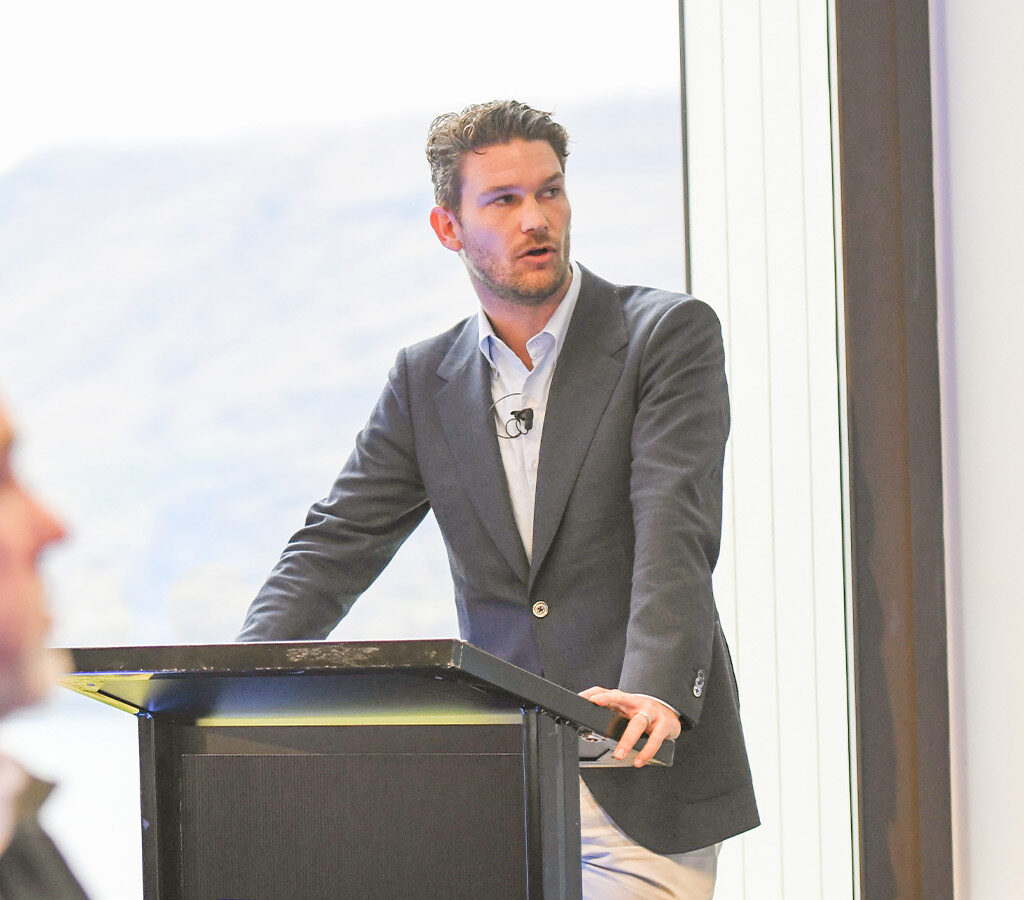
Along a spectrum of varying kinds of infrastructure, the asset class is broad enough to offer investors the dual promise of stability and transformation. That was the message that Sam Franklin, managing director at EQT Infrastructure, brought to the recent Investment Leaders Forum in Queenstown.
Franklin began by setting out how EQT defines infrastructure in investment terms. At its core, he said, infrastructure assets provide essential services and carry significant downside protection. But they exist along a spectrum. At one end are “super-core” assets such as toll-roads and regulated ports that behave like bond proxies, delivering stable cash returns with little growth. At the other end are growth-oriented platforms like renewable-energy developers, fibre networks and data centres that require capital to scale proven models. In the middle sits ‘value-add’ infrastructure, which Franklin described as the sweet spot for EQT, combining stable cash generation with scope for operational and strategic improvement.
This spectrum reflects the breadth of opportunity for investors, but the case for infrastructure as an asset class is even more compelling when viewed through global macro trends. Franklin argued that infrastructure investment is now indispensable because public funding alone cannot meet society’s needs. Governments face resource constraints while demand for healthcare, education, energy transition projects and digital infrastructure continues to rise. “Private capital has an essential role in meeting those needs,” he said.
The energy transition is perhaps the clearest example. Franklin stressed that investment in renewables is not just about policy or ideology but about economics. Ageing coal-fired power plants are becoming unviable, while wind, solar and storage technologies now offer arguably cheaper and more reliable generation. “The transition is driven by a need for new technology, not just regulation,” he said.
Demographics adds another powerful layer. Ageing populations in developed markets such as Japan and Korea, coupled with expanding middle classes in emerging markets, are reshaping demand for infrastructure. In Australia and New Zealand, the fastest-growing demographic for the next four decades will be those aged over 65, creating profound needs in healthcare, aged care and social services.
Technology is also redefining the sector. The rise of artificial intelligence has accelerated demand for digital infrastructure, particularly data centres. EQT has become the largest global investor in this segment. “One-third of all data generated in Europe and the US flows through an EQT-owned fibre or data centre,” Franklin noted, highlighting the scale of its footprint.
EQT organises its infrastructure portfolio into four key sectors: energy and environmental assets, transport and logistics, digital infrastructure and social infrastructure. Each of these is underpinned by structural forces, from decarbonisation and supply-chain regionalisation to demographic change and digitalisation.
For Franklin, successful investing is about enhancing the intrinsic characteristics of infrastructure. That includes inflation protection, secured either through regulatory frameworks or inflation-linked contracts, as well as high barriers to entry, resilient regulatory settings and stable cash flows. “If you are going to be investing in very long-term businesses, you want to make sure they remain viable through cycles,” he said.
EQT’s results demonstrate the effectiveness of this approach. The firm has delivered a 14 per cent net internal rate of return (IRR) across its infrastructure funds, with realised gross multiples of 2.4 times invested capital. Much of this value creation, Franklin stressed, comes from active ownership and operational improvements rather than passive yield collection.
One striking case study is EdgeConneX, a data centre operator that EQT acquired five years ago. At the time, it was a North American business with limited reach. Under EQT’s ownership, it expanded globally, becoming the largest provider of computing power to four of the six biggest hyperscale (a computing architecture designed to handle large workloads like big data, AI, and cloud services) customers worldwide, including Microsoft and Amazon. Its valuation grew from $2 billion to $32 billion in just five years.
The same story is evident in EQT’s renewable platforms. Cypress Creek in the US has commercialised more than 12 gigawatts (GW) of solar and storage projects and operates one of the country’s largest operations and maintenance (O&M) businesses. In the UK, Statera is building a multi-GW portfolio of battery storage and flexible generation assets to support intermittent renewables.
Franklin acknowledged that infrastructure is often marketed as “boring and safe,” but insisted that reality is different. Thematic shifts, from AI to energy storage, are creating opportunities for outsized returns. “Despite being large and slow-moving, these sectors offer the ability to generate significant value through thematic investing,” he said.
Beyond financial returns, Franklin highlighted infrastructure’s societal impact. EQT portfolio companies serve 40 million users annually across social infrastructure, operate 5,400 megawatts (MW) of renewable assets and divert 55 million tonnes of waste from landfill every year. “These businesses don’t just generate returns, they provide essential services that underpin economies and communities,” he said.
For advisers, the implications are compelling. Infrastructure is both a defensive anchor and a growth engine. It offers inflation protection, resilient income and exposure to megatrends that are reshaping economies. Accessing managers with scale, expertise and the ability to actively transform assets will be crucial.
Franklin closed by emphasising that the investment cycle is only accelerating. “Infrastructure is about addressing the current needs of future generations,” he said. “It is one of the most important, durable and opportunity-rich places to deploy capital today”.

Laurence Parker-Brown is head of content at The Inside Network and managing editor of The Inside Adviser and Investor Strategy News.