Thursday 4th December 2025
Industrial property’s long-term fundamentals remain ‘sound’
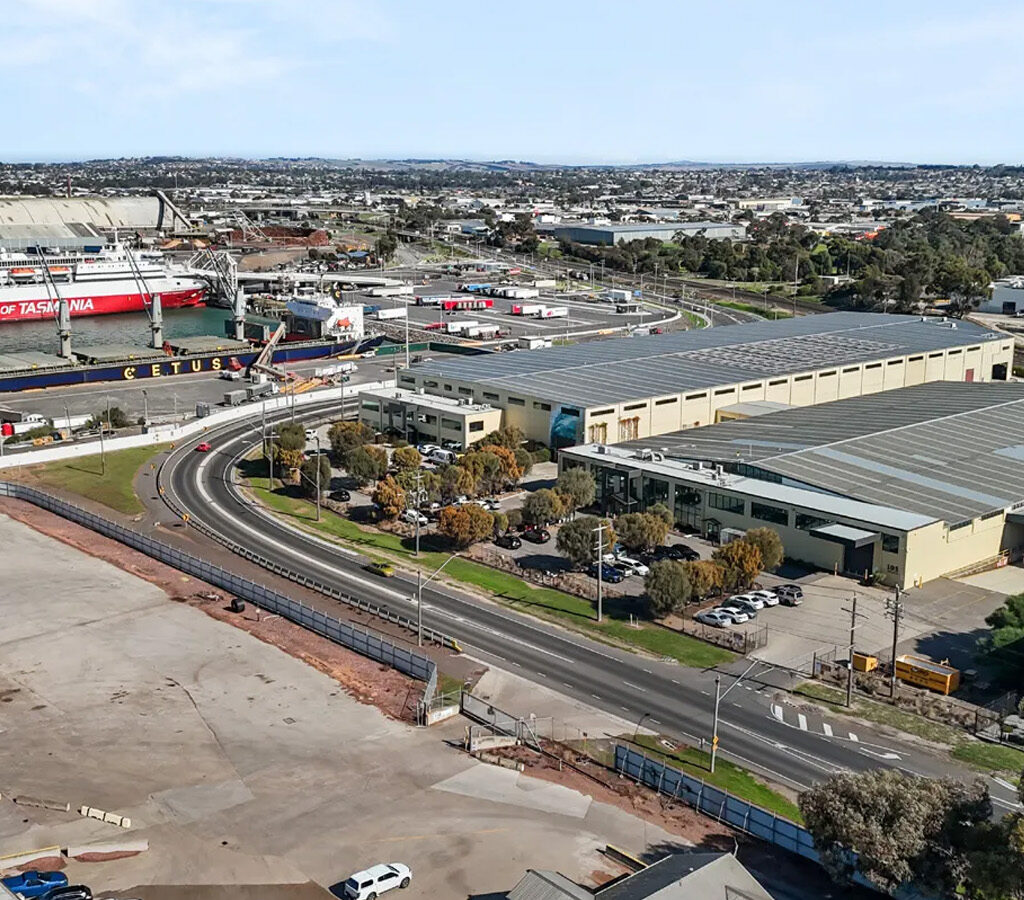
This real estate sector has been the leader of the commercial pack in recent years – and there’s plenty of evidence to suggest this stellar investment performance will continue.
It’s no secret that industrial property has outperformed the other major commercial property sectors in recent years. Since the COVID pandemic it has emerged as pre-eminent in terms of value growth, security of income and floor-space demand.
However, past performance is never a guarantee of future returns, so the question is: what does the long-term outlook look like? Will the economic and industry drivers behind its recent strength continue? According to property-backed income investments specialist Trilogy Funds, the answer is a clear yes.
Laurence Parisi, Trilogy’s head of direct property, says the fundamentals underpinning industrial property’s strong total returns remain in place. Indeed, in the next five to 10 years, they could be accentuated.
“Whether it’s automation, robotics, artificial intelligence (AI) or the ‘Internet of Things,’ they will continue to transform how occupiers use space, influencing storage and parcel movement efficiencies. It’s just going to continue evolving – literally a game-changer in how industrial space is used.”
He adds that within the industrial property space, there is a range of subsectors with different characteristics, offering further diversification benefits and their own unique exposure to macro trends. These include industrial strata units (smaller warehouses or factories), large warehouses and logistics centres, self-storage facilities for consumer use, cold storage (critical for the food, pharmaceutical and healthcare industries) and the fast-growing data centres.
“These differing sectors and the technological improvements are going hand-in-glove with growing online sales, with the research showing this market was valued at about $69 billion in 2024 and projected to expand exponentially.
“It’s being driven by more consumers wanting convenience, more efficient delivery systems and enhanced digital payment options, thereby increasing the demand for industrial real estate. Interestingly, this trend towards greater online sales is not confined to the younger generations, with the 2024 AusPost eCommerce Customer Spending Insights showing Baby Boomers are increasing their online spending.”
Parisi says there are two other important factors at play that will drive future demand for industrial real estate.
“The world is still nursing the scars caused by vulnerable supply chains during COVID. The emphasis on supply-chain resilience continues to grow, which, in practical terms, means companies are either shortening or diversifying their supply chains. They realised during COVID that supply-chain vulnerability equates to broad commercial vulnerability and, consequently, have taken steps to insulate their businesses from this.
Local sourcing
“Many are seeking that insulation by bringing some production back to Australia, increasing their local sourcing, or diversifying supply by supplier, geography, trade paths and other channels. They are also developing stronger commercial ties with our closer Asia-Pacific neighbours. All these strategies require changes to the way industrial space is used and logistics are executed.
“What is making this ‘insurance policy’ even more critical is the upsurge in geopolitical tensions and the trade wars. We’ve moved beyond COVID and now have more externalities that have simply reinforced this growing trend towards supply chain resilience. And it seems unlikely these will ease any time soon,” Parisi says.
He says industrial property will also benefit from the growing emphasis on sustainability and decarbonisation.
“With manufacturers under increasing pressure from policymakers and the market to reduce emissions – think electricity and fuel use and waste disposal – they will want to maximise the efficient use of their industrial space.
“This will involve greater use of green technologies, renewable energy integration, circular-economy practices and cleaner inputs, such as ‘green’ hydrogen and low-carbon steel. This will only enhance the attraction of industrial property as an investment opportunity, similar to the way in which we have seen across the office sector, where investors are willing to pay a premium for sustainable space.”
The growing demand for industrial space is not just a major-city phenomenon, with Parisi noting that it’s also occurring in the regions, especially in those areas with strong logistics connectivity such as ports, transport corridors or new infrastructure.
“Areas around new or expanding airports, ports or major road/rail works, what are often called the ‘last mile’ locations, are attracting more investment interest. Additionally, many of these regional ‘hot spots’ are beneficiaries of government policy via grants and infrastructure investment to stimulate industrial growth, especially if it relates to manufacturing or decarbonisation.”
For investors, this means further diversification opportunities that can only make it a more compelling investment argument.
Industrial space, which typically has lower capital expenditure demands compared with other commercial property sectors, benefits from quality tenants who are typically financially stable and want long-term leases, reducing vacancy risk. Another trend emerging is owner-occupiers prepared to pay premium prices to secure their business premises and hedge against future rent increases.
“From Trilogy’s perspective, the long-term investment case for industrial space is compelling – both in terms of demand and supply,” Parisi says. “The tailwinds in the form of e-commerce, technology, immigration and supply chains, when coupled with limited supply, are only likely to blow harder.”

Nicholas Way is a contributing editor at The Inside Adviser and has covered business, retirement, politics, human resources and personal investment over a 50-year career.