Thursday 19th June 2025
Global, growing, and undervalued: Is healthcare the opportunity of the cycle?
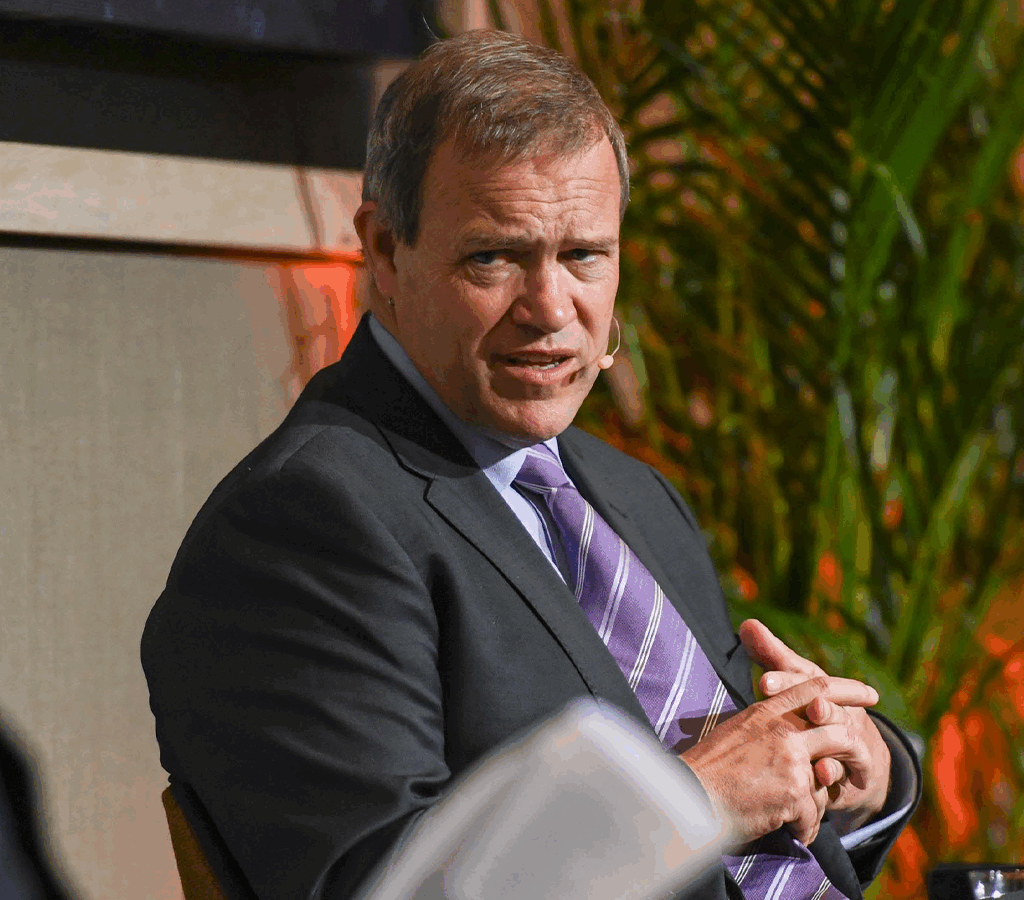
Healthcare, according to Perennial’s Victor Windeyer, is in the eye of the perfect storm— but in the best possible sense. Speaking at The Inside Network’s recent Equities & Growth Symposium, Windeyer laid out a compelling argument for the sector’s enduring strength.
Based as it is on consistent demand, healthcare is it is structurally underpinned by demographic inevitability, accelerating through relentless innovation, and, crucially, trading at one of the deepest discounts to the broader market in years. For investors who can navigate its complexity, healthcare offers global exposure, recession resistance, and a rare convergence of value and growth.
That was the argument that Perennial’s Victor Windeyer brought to The Inside Network’s recent Equities and Growth Symposium. The demographic story behind healthcare, he said, is both straightforward and powerful. In Australia, between 60,000 and 80,000 people will turn 80 each year over the next two decades. The same pattern is repeating across the developed world as baby boomers age into more intensive healthcare needs. “This is a huge, irreversible shift,” he noted. It’s not just about aged care or pharmaceuticals, but about the full spectrum of services and products that cater to a population living longer and demanding more from the medical system.
But ageing alone doesn’t create investment returns: innovation is what transforms demand into equity value. “We’re living in a hugely exciting time for medical science,” Windeyer said. From molecularly targeted therapies to AI-driven diagnostics and treatment planning, the rate of technological progress in healthcare is astonishing — and is often under-appreciated by public markets. He pointed to the obesity epidemic and the resulting explosion in the GLP-1 weight-loss drug market as a case study in how a health crisis can catalyse investment returns. When Eli Lilly and Novo Nordisk proved their weight-loss drugs delivered not just slimmer waistlines but cardio-vascular benefits, the market response was immediate and profound. “These companies added more value to their market capitalisation in a few weeks than the entire value of Australia’s largest companies,” he said.
Windeyer also stressed the importance of investing across the scale spectrum, with allocations to small-caps alongside the largest blue chips. Indeed he sees just as much, if not more, opportunity in the private markets. One example he gave was a private company developing a temporary heart pump designed to reduce mortality in patients suffering cardiac shock — a major cause of hospital deaths globally. The innovation lies in balancing three factors: full flow, minimal invasiveness, and low haemolysis (damage to red blood cells). The current market leader was acquired by Johnson & Johnson, proving both the commercial viability and acquirability of the space. “This company’s tech improves on all fronts,” Windeyer said, adding that the timing was perfect given the existing pathway to reimbursement (the payment for medical services to patients, by private insurance plans or government programs) and regulatory approval.
Investing in healthcare, he noted, requires more than enthusiasm for the science. It’s about rigorous diligence on people, reimbursement frameworks, and global scalability. “We need to like the team. We need to trust them. And we need to know they’ve done it before — or can prove they can,” he explained.
Reimbursement, particularly in medical devices, is a labyrinth of insurers, governments, and indirect beneficiaries. Investors have to know who pays, how, and why, and ensure that the product isn’t just clinically effective but economically adoptable. In this particular heart pump investment, Windeyer and his team have mapped the regulatory and reimbursement pathway in detail, de-risking the project significantly before committing capital.
Beyond individual companies, Windeyer described the broader healthcare sector as fundamentally global and deeply diversified. Australian-listed healthcare companies earn more than 95 per cent of their revenues overseas. Diseases don’t respect borders, and medical solutions are often globally applicable. The complexity of the sector — ranging from biotech and pharmaceuticals to diagnostics, medtech, and software — creates portfolio resilience.
“It’s an incredibly heterogeneous space,” he said. Even within sub-sectors like medtech, product economics and distribution models vary widely. A robotic surgical platform is fundamentally different from a wearable glucose monitor or a capital-intensive imaging system. Understanding these nuances is critical to building a successful healthcare portfolio.

James is an experienced senior journalist and editor of The Inside Network's publications.