Sunday 4th August 2024
Getting the ‘best of both worlds’ in IG credit
A higher for longer interest rate environment and likely default cycle in high yield means investment grade credit is once again in the hot seat.
The inflation threat is almost behind us, according to Yarra Capital, with the Fed set to cut 75 basis points this year and another 75 next year, while the RBA will deliver a cumulative 50 basis points between now and the March quarter.
But “that’s about it”, Yarra’s Roy Keenan told the Inside Network’s Income and Defensives Symposium in Sydney recently, and we’re now moving into a higher for longer environment, even as economic growth remains robust.
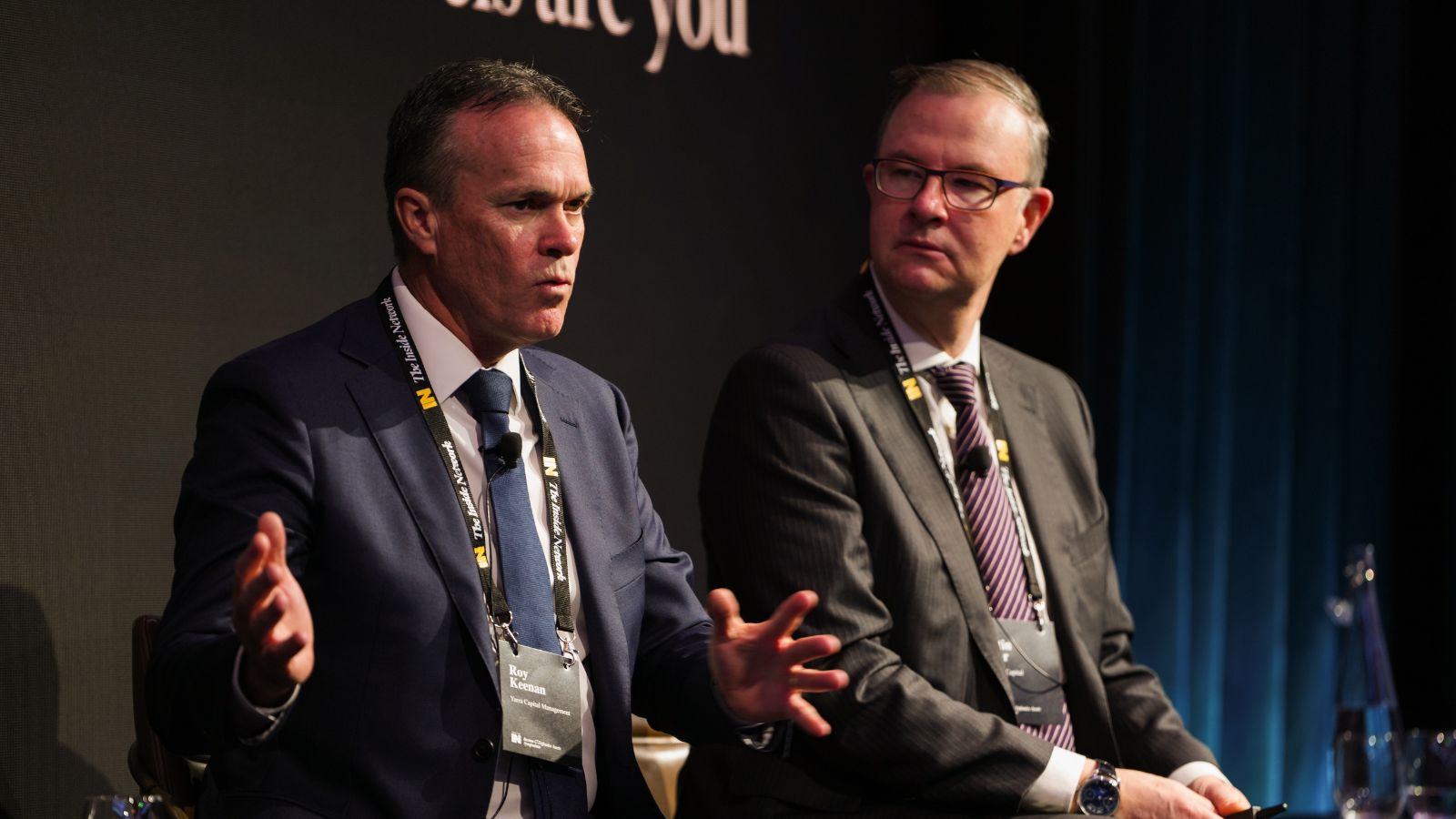
“We think that’s a really good opportunity for investment grade (IG) credit,” Keenan (pictured, left) said. “That higher for longer environment is also supportive of income generation, particularly floating rate credit. But we think you need to stick with quality; don’t chase too high an income.”
Keenan is cautious about levered companies in that environment, and said that there’s “no doubt” that they’ll struggle. And investors will need to be flexible to manage the market environment over the next 12-18 months, with an eye to their liquidity and duration, and the type of credit they invest into – but you don’t need to work that hard as a portfolio manager to generate really good returns in this environment.”
“From my perspective, in the market today and the sort of environment we’re looking at going forward, the return availability in investment grade credit will be similar to what we’ve seen over the last 12-18 months… It’s a really conducive environment.
“IG doesn’t experience defaults; it can go through the cycle and it tends to sail through. We’re higher up the credit quality curve at the moment and you don’t get paid a lot to take a lot of extra risk at the moment. I’d rather be in IG companies that issue subordinated debt than high yield. That’s where you’re getting much better bang for your buck.”
You’d have to go “back to the 1990s” to see a better environment for IG credit, says Daintree Capital founding partner Justin Tyler, and if investors want the “best of both worlds” in terms of risk adjusted returns that’s where they want to focus. But duration is no longer defensive, and as a market Australia is “over-allocated to it”.
“If I’m going to have duration in my portfolio, I want to know why it’s there; what role does it play? And historically the role it’s played has been a defensive one; when equities suffer, government bonds rally.
“But historically when has that correlation between bonds and equities been negative? When inflation expectations are a) low and b) stable. If you believe inflation expectations are not going to be stable going forward – and I can make a very good case for why they won’t be, the green transition, geopolitical risks that are likely to cause inflation to be higher – if you believe those sorts of stories you need to question the role of duration in the portfolio.
It’s better to go with a floating rate product rather than fixed rate, Tyler said, and to be cautious of higher risk assets.
“If you want the defensive part of your portfolio to behave defensively then you need to construct it appropriately. And we think going forward there’s every chance we see more equity market volatility and it’s really important to pay attention to the defensive part of the portfolio.”

Lachlan is editor of Investor Strategy News and has extensive experience covering institutional investment.