Saturday 21st February 2026
From uncertainty to control: How Japan’s election reshapes risk
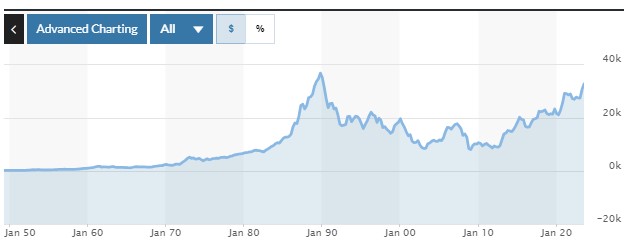
Perhaps the landslide victory for Japan's Liberal Democratic Party (LDP) will move the nation from being a tactical trade to a core strategic allocation.
Japan’s decisive general election result has delivered something markets always consume with enthusiasm: political clarity.
With the Liberal Democratic Party (LDP) securing an absolute majority of more than 310 seats, far beyond the simple majority markets had been pricing, Prime Minister Takaichi Sanae now holds a firm mandate to implement her growth-focused economic agenda.
For advisers assessing global allocations in 2026, the implications span equities, currencies and fixed income. They also reinforce why Japan deserves renewed attention.
A mandate for growth
In the lead-up to the vote, markets had assigned roughly even odds to the LDP scraping through with a simple majority. The eventual landslide result changes the calculus.
Claire Huang, senior emerging markets macro strategist at Amundi, says the outcome provides both political stability and strategic clarity. “Once again, Takaichi Sanae delivers, this time with a decisive general election result that provides a much-needed public endorsement of her growth strategy for Japan.”
“Just two weeks before the vote, markets were still pricing a 50/50 chance of the LDP securing a simple majority (>233 seats). Nevertheless, the eventual outcome – an absolute majority for the LDP alone (>310 seats) – is a landslide few anticipated. This result gives the LDP firm control of the lower house, consolidating Takaichi’s leadership and her ‘Sanaenomics’ agenda while providing Japan political stability in the medium term,” says Huang.
For advisers, stability alone matters. Japan has often been viewed as tactically attractive but structurally uncertain. A clear mandate shifts that narrative.
Equities up, currency volatile
The immediate market implications are nuanced.
“We view the election outcome as positive for Japan’s equity market, though it is likely to exert near term pressure on the yen and Japanese government bonds (JGBs). The Nikkei is expected to rise and extend its gains, while USD/JPY could break above critical level. A JGB sell-off is likely in the long duration sector.”
Claire Huang, Amundi
In other words, equity optimism may be accompanied by currency and bond volatility.
For advisers managing unhedged exposures, this raises important positioning questions. A weaker yen can support exporters and equity performance in local terms. But FX translation may dampen offshore returns in the short term.
Yet Huang suggests that currency weakness may not be a one-way trade.
“Following any initial market volatility, a yen intervention is probable, which could temporarily reverse JPY weakness. That said, the yen’s valuation has already cheapened significantly. Over the medium term, the currency is more likely to appreciate against the dollar, supported by attractive valuation, potential carry trade unwinding and renewed repatriation flows.”
This introduces a potential sequencing opportunity: near-term volatility, medium-term currency support.
Bonds: risk or repricing?
Japanese government bonds (JGBs) have faced pressure, particularly in the long-duration segment. But Huang argues the repricing may be creating value.
“For JGBs, valuations have become increasingly attractive after the January sell-off. Market sentiment is now more nuanced, with participants conducting a more granular assessment of fiscal risk. As details of Takaichi’s fiscal plan and growth strategy emerge, confidence is improving. The FY2026 Initial Budget and debt issuance plan indicate she is not pursuing unchecked fiscal expansion, but rather calibrating spending to what markets can absorb. In this sense, we expect the upside of JGB yields to be capped in the medium term.”
For advisers with global fixed income mandates, the distinction is critical. This is not an indiscriminate fiscal expansion story. If spending remains calibrated, bond volatility may stabilise sooner than markets initially fear.
A broader allocation question
Japan has already been one of the more compelling developed market stories of the past two years. This was driven by corporate governance reforms, shareholder return focus and earnings resilience.
The election result may strengthen that thesis.
Continuing the Asia conversation
Japan’s election result is a reminder that Asia remains central to the global investment narrative. Not just China, but Japan, Southeast Asia and the broader regional capital flows shaping the decade ahead.
These themes will be explored in greater depth at the INAsia Investment Leaders Forum in Singapore in 2026. The analysis will examine the forces driving equity, fixed income and currency markets across the region.
For advisers seeking to position portfolios for the next phase of global growth it is a conversation worth being in the room for.

Nicholas Way is a contributing editor at The Inside Adviser and has covered business, retirement, politics, human resources and personal investment over a 50-year career.