Thursday 12th February 2026
From the paddock to the portfolio: a country adviser who never forgot where he came from
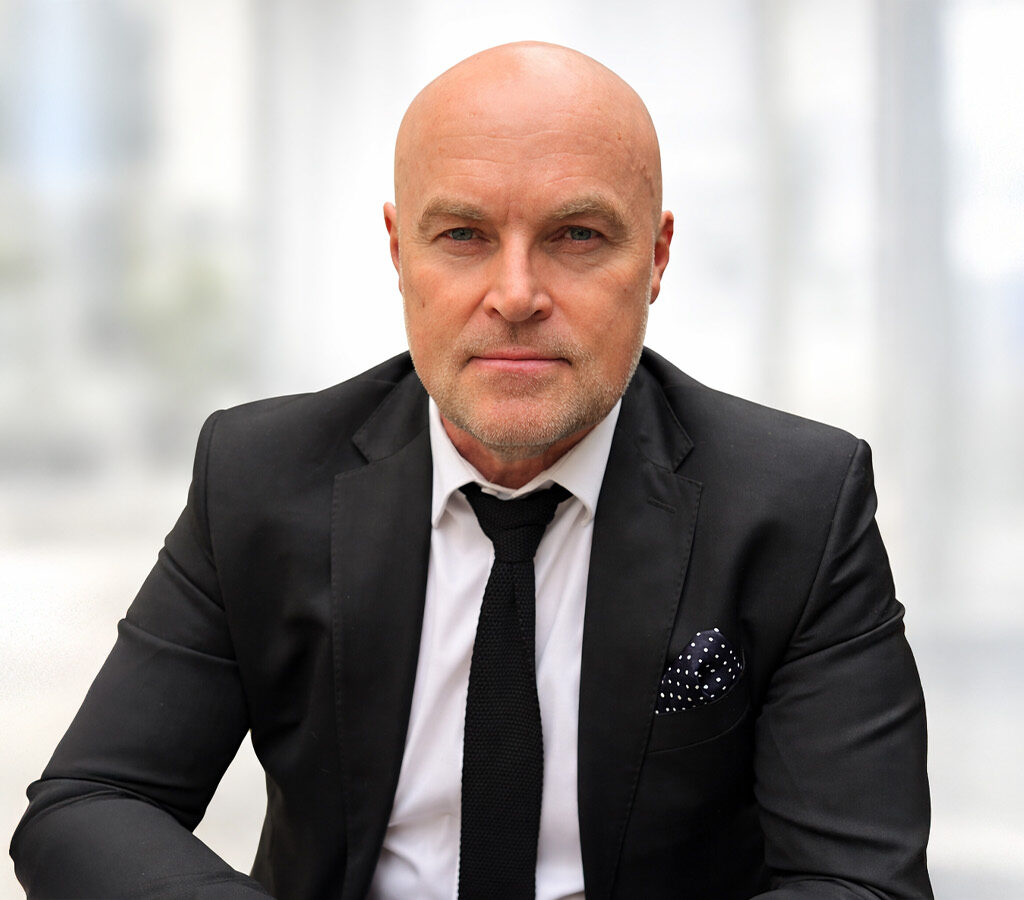
For Brett Crabtree, the way he conducts himself as an adviser is a product both of the way he was brought up, and the way his clients are. And vice versa.
There’s a certain kind of credibility that can’t be manufactured in a boardroom. It’s earned slowly, over kitchen-table conversations, muddy boots, long drives down country roads and a lifetime of understanding how farming families actually live and work. For Brett Crabtree, that credibility began long before he ever opened a client file.
Raised on a tough, labour-intensive farm near Horsham in western Victoria, Crabtree was the youngest of six children, arriving more than a decade after his eldest sister. By the time he came along in the early 1970s, his parents had already endured decades of hard farming life — clearing land, battling rabbits and making a living in a modest homestead before eventually building something more substantial. The family still owns the property to this day.
“I’ve always said I’ve been pretty fortunate from day one,” he reflects. “I was spoiled — not in a material sense, but in terms of love, stability and encouragement.”
Material wealth was never part of the picture. What defined the household instead was conviction. Crabtree’s parents didn’t drink, smoke or swear and are people of faith. They didn’t follow the crowd. His parents rejected chemical farming long before it was fashionable, opting for a cleaner, more sustainable approach that set the family apart in a tight rural community.
That quiet non-conformity left a lasting impression. “They never told us to be different,” Crabtree says. “They just showed us that you don’t have to do what everyone else is doing if you believe in something.”
At school, Crabtree carried that confidence with him. Sport played a central role — football, athletics and tennis on the state junior circuit — and the constant reinforcement that he was “good at something” translated into belief well beyond the field. “That confidence stayed with me in banking, in business, in advice,” he says. “I always felt like I’d figure things out.”
Finishing Year 12 in 1990, Crabtree came of age at the worst possible economic moment. Victoria was broke, jobs were scarce, and university pathways narrowed overnight. Instead of waiting, he took a traditional country route into banking, joining a major bank and working across branches throughout regional Victoria.
Those years proved formative. Lending to agricultural clients gave him an intimate understanding of farm cash flows, overdrafts, seasonal risk and the emotional weight that comes with debt. “You see things very differently when you’ve been on the farm, worked in the bank, and then later advised on the investments,” he says. “You’ve lived all sides of it.”
By the late 1990s, another influence was quietly shaping his direction. His eldest brother had moved into financial advice in Adelaide in the late 1980s, right at the height of the crash. A pure investment adviser by inclination, he encouraged Crabtree to consider following the same path.
In 2001, he made the leap — moving his young family from Ballarat to Adelaide and, with his Diploma of Financial Planning more than half competed, stepping straight into an advice role. From the outset, his rural background and experience banking farms became his calling card. He was quickly entrusted with farming clients, speaking their language in a way few metro advisers could.
Over time, he became the de facto specialist for regional families, while the broader practice expanded through acquisition.
Yet despite the growth, Crabtree remained an employee. Equity never eventuated — and when the practice was sold in 2015 to a buyer who proved a poor cultural fit, the cracks became impossible to ignore.
“It was a square peg in a round hole,” he says. “Clients hated it. Staff hated it. We knew we didn’t belong there.”
After fulfilling his contractual obligations, he finally backed himself. In early 2019, Crabtree opened his own practice in Adelaide, Crabtree Private Wealth, with no clients and no guarantees, but a simple conviction that people would find him if he did things the right way.
They did.
“Once the door opened, they came flooding in,” he recalls. “Clients, accountants, referral partners — all saying, “we’ve been waiting for you to do this, it’s about time’.” The business now manages approximately $165 million for 150 family connections.
Today, the firm remains deliberately boutique: Crabtree as the sole adviser, supported by two administrative staff (his wife and one of his sons), and a licensee (Insight Investment Services) that functions as a de facto general manager. It’s a structure designed for focus rather than scale.
“I don’t want to run an AFSL,” he says. “I want to advise clients. Quality over quantity — always.”
Around 65 per cent of the client base is rural, predominantly farmers and agribusiness owners, many running enterprises worth tens of millions of dollars. The work goes far beyond portfolio construction. Investment management is largely outsourced to specialist managers, allowing Crabtree to concentrate on what clients value most: clarity, perspective and long-term planning.
Succession planning now dominates many conversations. “For farming families, that’s the real work,” he says. “Looking after the kids who are on the farm, the ones who aren’t, managing tax, estates — it’s complex, emotional and incredibly important.”
Trust is the currency. Farmers are loyal, direct and intolerant of nonsense. “You can’t bullshit them,” Crabtree says. “But once you earn their trust, they’re with you.”
Accessibility is non-negotiable. Clients have his mobile number; calls are answered. Advice is personal. “They’re still surprised sometimes that they can ring me and I actually pick up,” he laughs.
Crabtree says these are people who care a great deal about their community, friends and others, which has resulted in them referring numerous connections to his firm over the years.
“For instance, I recently made one of my regular visits to the Yorke Peninsula to meet with some of my longest-standing clients. We probably have 30 client relationships there, and the net worth of those connections is approximately $600 million. There would be $50 million in assets being managed by our office from those relationships, and in some cases, there are three generations of clients from the one family.
“We feel very privileged to have been entrusted to provide our advice and expertise to such loyal and successful people. Those very clients have been incredibly supportive of myself and our business and they have become treasured friends,” says Crabtree. “We find that is par for the course with our clients on the land. They want their friends to experience the same kind of relationship, and they become our greatest advocates.”
Looking ahead, Crabtree is realistic. With no children entering the profession, succession will come through merger rather than family. But one thing is certain: any future arrangement will include equity and alignment.
“I can’t work in this industry without having skin in the game,” he says.
From a small farm near Horsham to advising some of South Australia’s most substantial rural families, Crabtree’s journey is a reminder that the most enduring advice businesses aren’t built on branding or scale — but on authenticity, trust and a deep understanding of where clients come from.
And for him, that will always be the country.
James is an experienced senior journalist and editor of The Inside Network's publications.