Thursday 27th November 2025
From rock star dreams to financial clarity: A journey to purpose and independence
AI is increasingly ubiquitous, investments are becoming commoditised, but what can’t be replaced is emotional intelligence. The trusted adviser of the future is part facilitator, part coach and part storyteller, says this New Zealand advice leader.
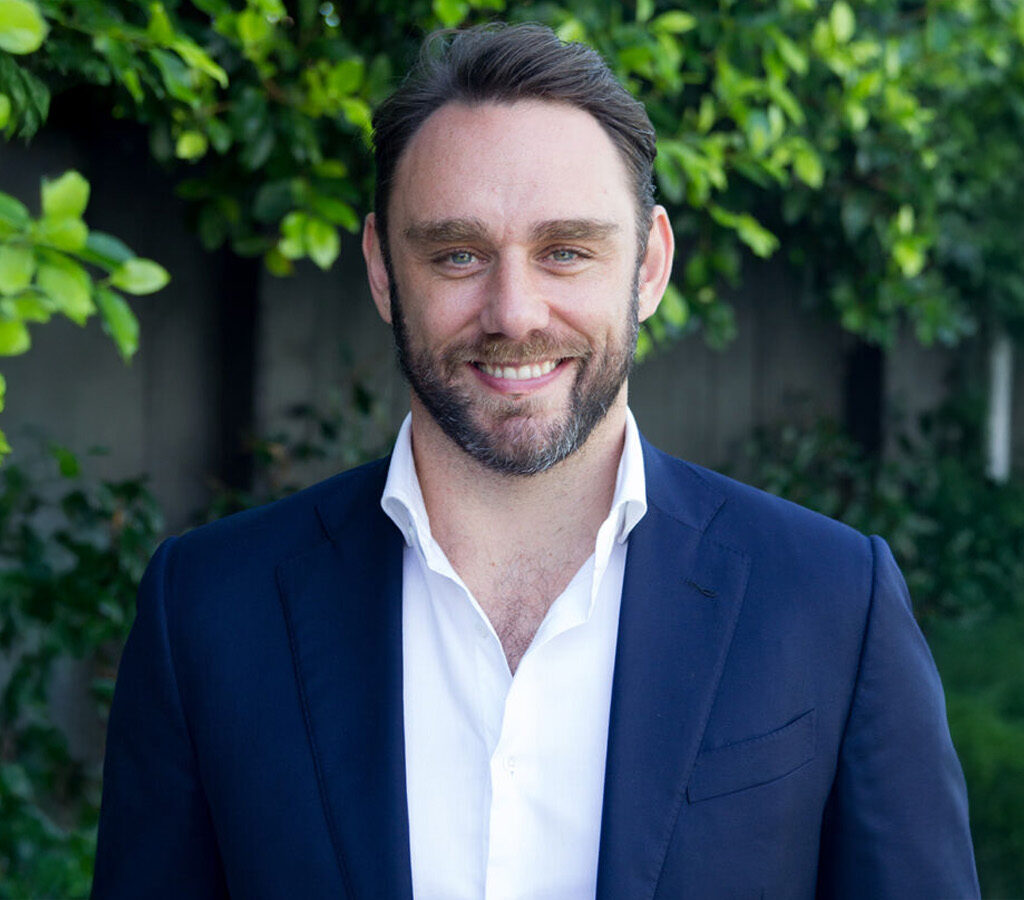
When you meet Patrick Fogarty, principal adviser at Rutherford Rede in Auckland, there’s an unmistakable sense of clarity in how he speaks about life, finance and purpose. He’s thoughtful, articulate and deeply intentional, qualities that reflect both his professional success and the path he’s taken to get there. But like many good stories, his began in unexpected places, on stage rather than in a boardroom.
“I tried my best to be an actor and failed. Then tried my best to be a rock star and failed at that too,” Fogarty laughs. “So I ended up getting into finance.”
That self-deprecating humour masks a trajectory that’s anything but accidental. From humble beginnings in New Zealand, Fogarty spent over a decade in the UK, a journey that would define his global perspective and shape his philosophy on what quality financial advice truly means.
Fogarty’s early career in finance began, as he puts it, by “bouncing around” temporary jobs in London’s bustling investment scene. Those years became his crucible, exposing him to every layer of financial services, from hedge funds to institutional investing.
“I got my first meaty name on the CV with the Royal Bank of Scotland,” he recalls. “From there, I landed at SEI, a large American firm, and that’s where I found my first serious footing in funds management.”
The role at investment processing, investment operations and asset management services firm SEI, in its client strategy division, placed Fogarty at the intersection of data, portfolio construction, and people. It was a perfect training ground for the role that would come next: joining Dimensional Fund Advisors (DFA), one of the world’s most respected names in evidence-based investing.
“I was headhunted to join Dimensional in London. At the time, it was a small team, and I was part of building it into a much larger entity. It was incredibly formative.”
Dimensional’s philosophy, grounded in academic research and transparency, left an indelible mark. “The premise was simple,” Fogarty says. “Implement best-practice ideas, based on evidence, not speculation.”
After 13 years abroad, Fogarty returned home to New Zealand, drawn back by family. “My father was quite unwell, with advanced dementia. That was the defining reason to come home,” he reflects. “When I was offered a role in private wealth, it made sense, I could be close to Dad and continue doing meaningful work.”
His father’s illness sparked a deeper sense of purpose in Fogarty. Today, he channels that passion as a director for the Dementia Auckland Foundation, using his financial expertise and creative instincts to support meaningful fundraising for Dementia New Zealand.
“When I joined Rutherford Rede, one of my colleagues, Jocelyn Witherell, was chair of Dementia New Zealand. I asked her, ‘What can I do to help?’” he recalls. That simple question led to a longstanding commitment to the cause and a series of initiatives that raise both funds and awareness.
Most recently, that commitment inspired Artful Minds – an innovative event uniting art, neuroscience and philanthropy, supported by Deloitte and the Gow Langsford Gallery. “We hosted guest speakers, including the former Aged Care Commissioner and a leading neuropsychologist, and we raised awareness through storytelling and creativity,” Fogarty says. “It was one of those nights where you feel proud to have contributed something tangible.”
He laughs as he recalls the follow-up idea: “We want to create a ‘Feather Day’ – like Poppy Day, to raise funds for dementia awareness. It hasn’t launched yet, but we’ll get there.”
Fogarty’s decision to join Rutherford Rede, one of New Zealand’s oldest and most respected independent advice practices, was a deliberate one.
“I’ve always been a bit of a purist,” he admits. “For me, advice is only quality if it’s independent and free from conflicts, especially in the distribution of investments. When you’re dealing with large family wealth, you need to know you’re standing behind the right solution, not something pre-sold off a shelf.”
That clarity of purpose defines how Fogarty approaches every client relationship. His investment philosophy is grounded in evidence and transparency.
“We try to capture the market rate of return, and improve it by targeting known dimensions of higher expected returns, like smaller, profitable or value companies,” Fogarty explains. “There’s no black box. Clients can see the data, understand the reasoning, and know exactly what we’re doing. Transparency builds trust.”
Fogarty’s clients range from high-earning professionals to charities, foundations and families managing intergenerational wealth. Yet regardless of the size or complexity of the client, his process always begins with something deceptively simple: a mind map.
“Following every introductory meeting, I develop a comprehensive mind map,” he says. “It includes everything, health, values, family trees, goals, estate plans, business structures. I record my meetings, listen back the next day, and expand the map. By the end, I know the client’s situation inside and out.”
The visualisation allows Fogarty to connect seemingly disparate details, from a grandchild’s education to a parent’s health, into a coherent financial plan.
“It’s almost like seeing the neurons in my brain fire.” Fogarty reflects. “You start with one idea and branch out to every element that connects to it. You zoom in to solve one problem, then zoom back out to see the whole picture. It’s about seeing both the forest and the trees.”
When asked what his “genius zone” is, Fogarty doesn’t hesitate.
“Communication,” he says simply. “I think I’m good at taking complex investment concepts and making them understandable. I do a lot of presentations on what I call The Principles of Successful Investing, helping people understand where returns come from and what drives capital markets.”
Fogarty often uses sketches and stories rather than spreadsheets to illustrate ideas. “When clients walk out of a meeting genuinely understanding how their investments work it’s incredibly rewarding.”
This emphasis on communication, he believes, is where the profession is heading. “The future of advice is more coaching and communication-focused than purely technical. Investments are becoming commoditised, but what can’t be replaced is emotional intelligence. The trusted adviser of the future is part facilitator, part coach and part storyteller.”
At 41, Fogarty is in what he calls “the grind years.” With a young family and a wife running a thriving business, Unity Studios, specialising in pre- and post-natal physiotherapy, life is full and fast.
“We’ve got two young kids, one on the way, and both of us are running businesses. It’s busy, but this is the best kind of busy,” Fogarty says.
He’s also been tapped for a new challenge, he smiles, “it’s one of those opportunities you can’t say ‘no’ to. Sometimes you just have to say yes and figure it out later.” The new opportunity comes as an appointed for Treasurer for the International Commission of Jurists (ICJ).
When asked, what advice he’d give his 18-year-old self, he answers simply: “Find your tribe. Don’t waste so much time and emotional energy on people who don’t have your back.”
That honesty encapsulates Fogarty, a man who’s lived broadly, learned deeply and found a way to combine intellect with empathy. His journey from aspiring rock star to respected financial adviser reminds us that the best kind of success is built on both evidence and heart.
Or as he puts it more simply: “If you can find something that gives you personal satisfaction, without any immediate personal benefit, do it. It changes how you see yourself, and it makes all the difference.”
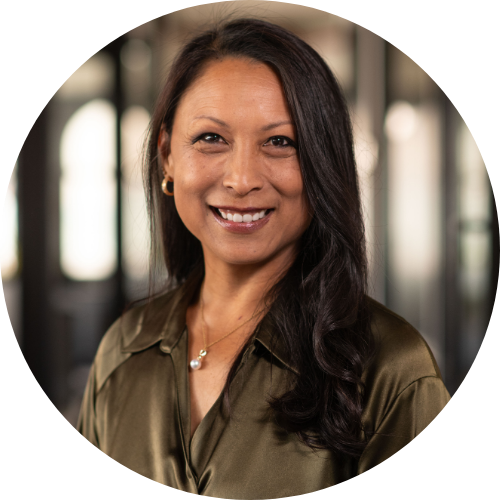
Fran Hughes is an award-winning financial adviser, columnist, and Community Director of The Inside Network. She is passionate about showcasing thought leadership and innovation within Australia’s advice community.