Friday 6th June 2025
From burritos to bins: The megatrends reshaping private equity
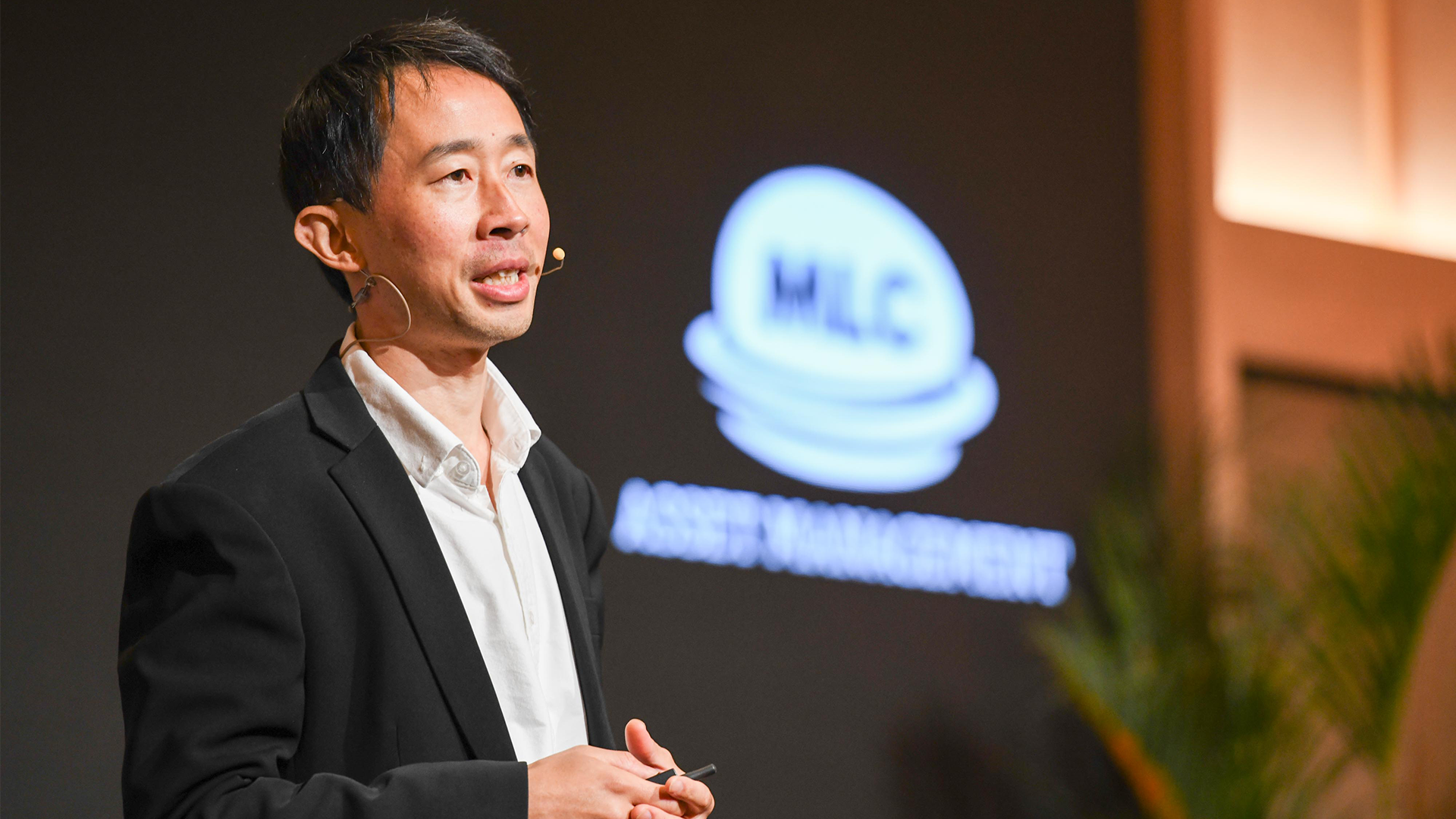
Private equity may seem like a world dominated by spreadsheets and enterprise value multiples, but if David Chan, portfolio manager at MLC, made one thing clear at The Inside Network’s Equities and Growth Symposium, it’s that the most successful investors are increasingly backing companies with a direct line into the future.
For MLC, navigating the changing word of private equity means following the megatrends — AI and data, health and wellness, and environmental sustainability. These aren’t buzzwords, insisted portfolio manager David Chan: they’re live investment themes reshaping the very structure of the private markets— and they’re already driving tangible returns.
Chan opened his contribution at the Equities and Growth Symposium by reminding attendees that while MLC is best known for its heritage in traditional wealth management, it has in fact been investing in private equity for nearly three decades, with a strong focus on the mid-market. It’s from that vantage point that he identified the three trends reshaping the asset class. First is artificial intelligence and data. Far beyond the hype of ChatGPT, MLC sees AI’s impact in both the way private equity funds operate and the way their portfolio companies grow. “We’re looking at tangible return on investment (ROI),” Chan said. In MLC’s portfolio, that means automated customer service agents, deal sourcing through LinkedIn analytics, and AI-led product innovation cycles that dramatically shorten time to market.
AI is helping private equity funds make decisions faster, cheaper and with more accuracy. Chan shared examples where deal sourcing has been supercharged through tracking job changes, customer activity and market chatter in real time — tools that replace weeks of traditional diligence with hours of algorithmic insight. At the portfolio level, companies are using AI to monitor key performance indicators (KPIs), automate workflows, improve fraud detection and even personalise customer experiences. In one case, a company in MLC’s portfolio cut its full-time employee headcount by 10 per cent by automating revenue-cycle management. “We’re seeing these tools accelerate cost reduction and boost productivity across the board,” Chan explained.
He also addressed AI’s impact on workforce dynamics. Unlike the industrial revolutions of the past, which primarily disrupted manual labour, AI is targeting knowledge workers — lawyers, marketers, developers. “It’s affecting white-collar desk-workers the most,” Chan said, noting that this changes the types of companies and roles private equity investors will increasingly back or avoid. Yet amid all the disruption, the advantage of private markets remains: access to innovation at a discount. Buyout valuations remain over 30 per cent lower than comparable public market multiples, giving investors a more attractive entry point to these technology-led stories.
The second megatrend is health and wellness — an area where convenience and virtue increasingly overlap. Chan walked through how this shift is manifesting in private portfolios: the rise of sugar-free, pre-biotic and non-alcoholic products; the mainstreaming of free-range sourcing; and the consumer’s growing obsession with ingredient provenance. But Chan also warned against betting on single-product fads like Ozempic. “We didn’t invest in the drug — we invested in the auto-injector,” he said. “The springs and components that are less than 1 per cent of the cost, but are mission-critical.” It’s a classic ‘picks-and-shovels’ play, and one that reduces exposure to binary outcomes while riding a secular wave.
In a particularly colourful moment, Chan described a portfolio company that sells individually wrapped, organic frozen burritos — “something that sounds like it only works in the US,” he joked. But the product, packed with eco-labels and healthy buzzwords, sells in bulk at major supermarkets and taps into exactly what time-poor but wellness-conscious consumers are looking for. More broadly, the consumer health market is massive and growing, with global revenues expected to reach US$266 billion ($409 billion) and strong margins supporting investment activity. High brand loyalty, the ageing population, and digital health trends all feed into this thesis.
The third and perhaps most under-rated megatrend is environmental sustainability — particularly as it intersects with smart infrastructure. Here, Chan shared the example of Waste Vision, a Dutch company in MLC’s portfolio that combines internet-of-things (IoT) devices with municipal waste management. Instead of overflowing bins on the street, Waste Vision offers underground receptacles that residents unlock via app, tracking their recycling behaviour in the process. Councils benefit from cleaner cities, lower emissions, and reduced collection costs, while Waste Vision shifts from a hardware sales model to recurring software-as-a-service (SaaS)-style revenues. “We’re moving from lumpy sales to predictable income,” Chan said, “and that transforms how the company is valued.”
The ESG dimension is more than branding. Waste Vision, for instance, not only delivers an ROI north of 200 per cent to municipalities, but also reduces total waste by 25 per cent and cuts landfill useage by 40 per cent. It’s a rare alignment of civic good and financial upside. There are even pilot programs underway to extend the technology to other commercial areas. “We’ve partnered with Heineken to install sensors in beer kegs so that pubs never run dry,” Chan revealed, adding that smart, predictive logistics could be one of the next major frontiers in waste tech.
Chan emphasised that private equity’s role is not just to identify good companies, but to reposition them strategically for the exit. By turning hardware suppliers into software subscription businesses or elevating niche services into platform solutions, MLC has seen valuation uplifts of over 10 per cent on average at exit. “You only really know what a company’s worth when you sell it,” he said. While public markets are grappling with volatility and cost-of-capital pressures, private equity — done right — remains one of the few places where fundamentals, strategy and long-term trends still determine outcomes.
In closing, Chan underscored that these megatrends aren’t passing fads — they’re shaping how consumers live, how cities function, and how capital flows. Private equity, particularly in the mid-market, remains one of the most effective ways to capture them. “Whether it’s AI-enhanced burritos or data-driven bin collection,” he said with a wry grin, “the future is being built in private markets. We’re just making sure we’re there early.”

Laurence Parker-Brown is head of content at The Inside Network and managing editor of The Inside Adviser and Investor Strategy News.