Thursday 7th August 2025
Force propels Ordon to Coller Capital, in secondaries return
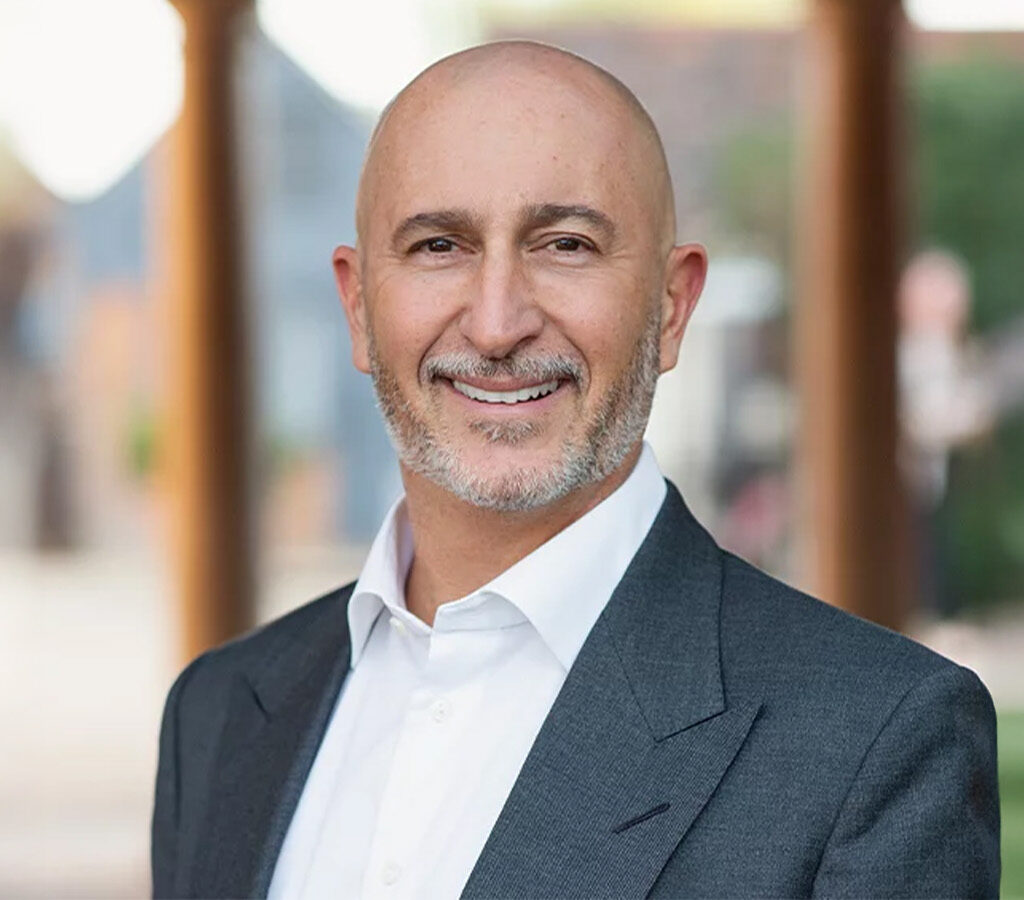
If you Google “Alex Ordon,” the first person that comes up is the director at Coller Capital; but the second is a Jedi knight. There is still confusion.
In the Star Wars canon, young Alex Ordon is born to two pilots who supply the Jedi Order on their secret planet of Pacis; when he is born, his parents are delighted that he is ‘force-sensitive,” someone who can sense and manipulate the Force, the cosmic energy field that binds the galaxy together. He is destined to be a Jedi knight.
The real Alex Ordon, when you mention this, thinks it’s pretty cool – in fact, he learned it many years ago. “I had to have a confrontation with my parents when I was about ten, to ask them whether there was anything I didn’t know, because there’s this obscure character called Alex Ordon in Star Wars. They said, no, they had no idea about it. But I still have my suspicions,” he says.
If the private-markets equivalent of the Force is secondaries, Ordon has been ‘secondaries-sensitive’ for quite some time.
“My first experience with secondaries was back in 2007–2008, when I was working at Credit Suisse, in the high-net-worth business. My role at Credit Suisse took me to speak to private banks and family offices, and one of the strategies that I spoke to them about was this little jewel in the crown within the alternatives business at Credit Suisse, called the Credit Suisse Strategic Partners Fund, which was essentially a private equity secondaries fund. At the time, the concept of PE secondaries was really new in the Australian market, but I thought it made a lot of sense.”
However, the Credit Suisse vehicle (acquired by Blackstone in 2013) was probably “too new” at the time, he says. “It was a US dollar-denominated offshore vehicle, minimum investment $10 million, limited liquidity, and for most family office and HNW investors, it just wasn’t the right vehicle for them, and really, too new.”
Ordon left Credit Suisse, and added to his CV stints at Netwealth, J. P. Morgan, Aoris Investment Management and L1 Capital, but while he didn’t work in secondaries, he didn’t forget the concept. “I knew David Hallifax (head of Australia/New Zealand private wealth distribution at Coller Capital) well from J. P. Morgan, and saw that he had joined Coller Capital, and I noted that Coller was one of the world’s largest secondaries managers,” says Ordon.
“Dave and I kept in touch over the years, and earlier this year, we had a coffee. Dave was talking about Coller, and I revealed that I was quite familiar with secondaries. Once he realised I was familiar with secondaries, the conversation turned to how I could help bring this strategy to the Australian market,” says Ordon. “The asset class is still relatively new for families, private wealth firms, etc, and it felt like a good fit for someone who’s actually done this in the past. And so, fast-forward to today. For me, it was a no-brainer to come across to Coller when the opportunity presented itself.”
The same moments arise in his discussions around the marketplace that did in his Credit Suisse days, he says. “When you start to explain secondaries, there is that ‘light- bulb’ moment when people realise that all you’re really talking about is the same way that we buy houses, the same way that we buy shares. As soon as people realise that, boom, they ‘get’ secondaries.”
But what is different this time around is the structure that Ordon can talk about.
“Almost twenty years ago, when I was talking to clients about PE secondaries, the only way you could do it was in the form of closed-end funds, typically with a 10-year commitment period, very illiquid,” he says. “But, now, at Coller, I’m able to talk about our Private Wealth Secondaries Solutions platform, which has an Australian-domiciled PE secondaries fund and now, a private credit secondaries fund, too.
“We can offer eligible private wealth investors access to perpetual ‘evergreen’ structures through wealth platforms, that are accessible at relatively low minimums and offer monthly subscriptions and monthly redemptions. That is the game-changer: family offices, HNW investors and private wealth firms already knew the investment case for secondaries, but now, we’re giving them the kind of product and the kind of access that make it much easier for them to use the asset class, within their portfolios” says Ordon.
The secondaries investors, he says, can see the performance of the underlying assets they are buying so there’s is no blind-pool risk as there is with a primary investment. And secondaries investments, because they offer the LP liquidity in a hitherto illiquid asset class, are priced at a discount to net asset value (NAV). “That’s always been the attribute that stops investors in their tracks: that they can invest in private equity or private credit with full transparency of what they’re getting into, and they can invest at a discount.
“They get immediate deployment of their capital into private equity/credit portfolios that are highly diversified; with hundreds of fund manager strategies and thousands of underlying portfolio companies within them. And when you structure that into a vehicle with good liquidity, that is easily accessible and exitable, there’s a lot for investors to like about it,” says Ordon.
And there is a lot for Coller Capital to like about Australia, in return. “The meetings that Dave and I have had with investors and asset consultants show that exposure to private markets is still very low in this market,” says Ordon. “There are a lot of portfolios that have no exposure to private markets, that could, and arguably, should go to 10 per cent. And if they’re at 10 per cent, there’s a case for them to go to 20 per cent or even more depending on the type of investor. The demand for alternatives is only growing, and we have a really good story to tell. It’s actually fun to sell our platform,” he says; and that’s the Force behind Alex Ordon these days.
James is an experienced senior journalist and editor of The Inside Network's publications.