Monday 8th February 2021
Dundas to get ETF treatment
Australian multi-affiliate shop, Apostle Funds Management, will roll-out an exchange-traded fund (ETF) version of a well-established active global equities strategy.
According to a release, the soon-to-be-launched Apostle Dundas listed fund will carry a total management fee of 0.9%, “well below the category median” of 1.35%.
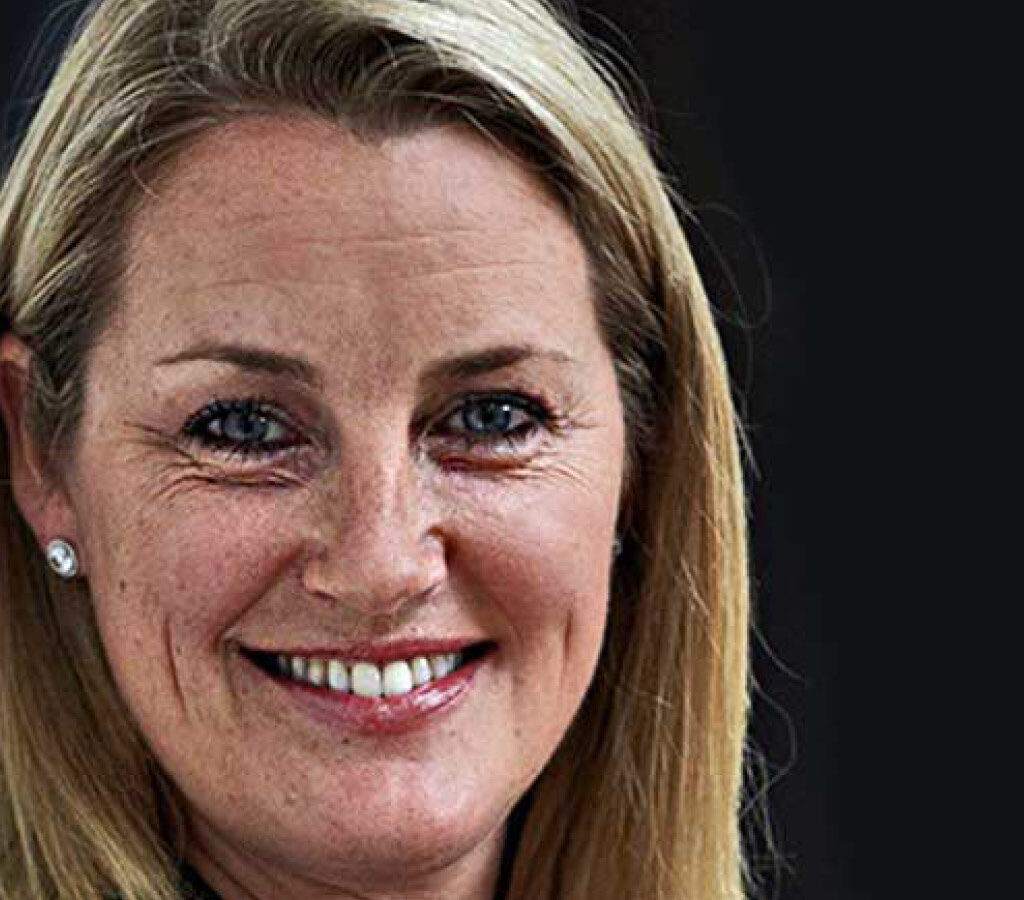
Karyn West, Apostle managing director, said in the statement that the new listed product “is a fully active portfolio of high-quality companies with sustainable dividends and is well-priced for our market”.
“In addition, this portfolio has been highly rated on its ESG merits,” West said.
Australian hedge fund manager, K2 Asset Management, serves as a responsible entity (a mix of supervisor and ‘fund host’ in NZ terms), for the Apostle Dundas ETF. Not to be confused with the ex-Legg Mason (now Franklin Templeton) hedge fund affiliate K2 Advisers, the Australian K2 currently operates six underlying funds.
The Apostle Dundas move marks the first time the Melbourne-based K2 has supplied responsible entity and ETF services to an external manager. However, K2 has created active ETF structures for its own funds and for Magellan when it first listed an active product nine years ago.
Campbell Neal, K2 chief, said: “This is a natural partnership with both Apostle Funds Management and Dundas Partners to operate and monitor the new global equity actively traded ETF.”
The Edinburgh-based Dundas, marketed in NZ by Heathcote Investment Partners, was founded in 2010 by Alan McFarlane.
Prior to launching Dundas, McFarlane was chief of global shares manager, Walter Scott, which had a distribution agreement in Australia and NZ with Macquarie.
Currently boasting about US$1.5 billion (A$1.9 billion) in assets under management, Dundas invests in a “benchmark-unaware” portfolio of global stocks with an emphasis on companies that have delivered sustainable dividend growth.
Until now, NZ investors have only been able to access the Dundas fund as an unlisted Australian unit trust. Once listed, the new variant “will allow all participants within Australian and New Zealand financial services to access this high-quality manager on an intra-day basis with full liquidity,” the release says.
The Apostle Dundas ETF will go live “early this year”.
While the ASX has well-established mechanisms for distributing active funds including listed investment companies (or trusts), ETFs and through its separate unlisted trading platform, mFunds, the process stepped up a notch recently with the ‘quoted managed fund’ structure.
Pioneered by Magellan, along with Australian administration firm Mainstream, the quoted managed fund regime eases the way for unlisted active products to offer like-for-like access via the ASX and the Chi-X exchange.
As detailed here, the administrative innovation allows actively managed funds to operate without deviating far from underlying net asset value (NAV). Standard active listed vehicles can move considerably away from the NAV, to either side.
Last year Magellan released a new range of cut-price ‘core’ ETFs on the Chi-X exchange. In December, the manager also combined three global equities funds into one.
George Boubouras, K2 head of research, said the quoted managed fund structure used by the new Magellan line (also referred to as exchange-traded products, or ETPs) is broadly similar to the existing active ETFs.
Boubouras said K2 was the first to retool an active retail managed fund as an ASX-listed ETF, nine years ago.
“K2 worked with regulators and the ASX to achieve this,” he said. “The Magellan version simply has sub-class units and is listed on Chi-X. This is a very positive development. That is, multiple sub-classes with one of these sub-classes being the active ETF.”
According to Boubouras, the active ETFs have been “well received” compared to the mFunds products that “have simply not resonated in the industry” for several reasons.

David Chaplin is publisher of Investment News NZ. David is a reputed financial services journalist with over 15 years' experience covering the investment, superannuation and advice industries in both Australia and New Zealand. In addition to publishing the weekly editions of Investment News, David contributes to several publications on a freelance basis.