Thursday 10th July 2025
Credit specialist posits “all-weather” alternative to private credit
Australian investors love the story of private credit; transfixed by its potential for reliable, steady income that is a step-change higher than returns from traditional fixed-income investments; its protection against inflation, and diversification away from public markets. But maybe, private credit is something itself from which investors should be looking to diversify.
Maybe, something uncorrelated to private credit is needed. That is the thesis of Sydney-based business development and capital advisory firm Clearway Capital Solutions and New York-native specialist manager of non-investment grade credit Shenkman Capital Management.
Shenkman’s opportunistic credit strategy uses six investment themes that the manager believes provide opportunities for consistent alpha, on both a long and short basis: stressed/distressed credit, market transition, catalyst-driven long/short, capital arbitrage, restructuring/deep value, and liquidations.
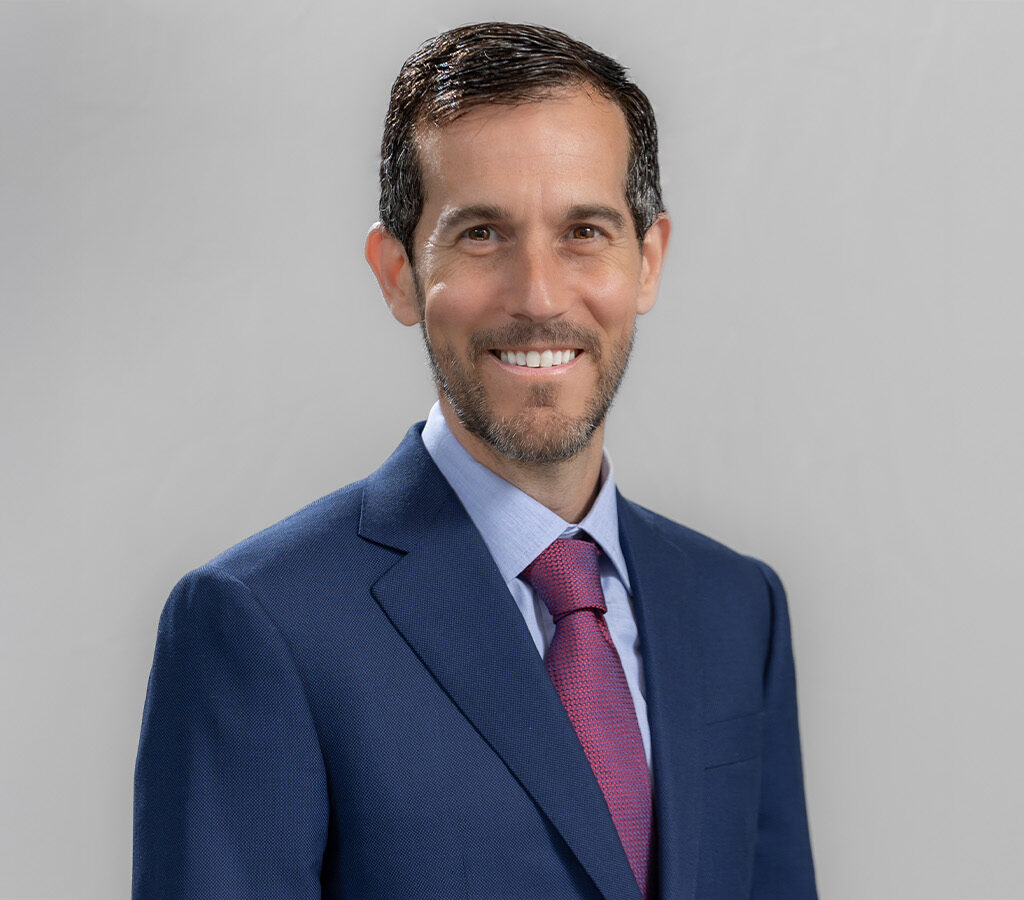
These are highly specialised niches of corporate credit, that Shenkman “knows better than most,” says chief investment officer Justin Slatky (pictured).
“If you look at corporate credit, it’s about a US$3 trillion ($4.5 trillion) market just on the public side, and then with private credit, it’s another US$1.7 trillion. So, you’re talking about a US$4.5 trillion market, that’s really just US-based. It’s a very big market,” says Slatky. “When you think about those themes, there are many investors who specialise in maybe one of those themes, maybe two, and that’s where they focus their time. Take distressed; there’s a number of people who are solely focused on the distressed market.”
But to be truly ‘opportunistic,’ says Slatky, a firm should think about all six.
“We think about it as leveraging our franchise. We manage US$36 billion ($54.5 billion), and we do that with over 140 professionals at the firm, of which 50 are investment professionals. Our analysts are looking at different industries, across the capital structure, on a very granular basis, to then create a portfolio of strong investments.”
The analyst team is “the engine of the firm,” says Slatky. “They’re experts in the industries they cover. Not only do they build models on their coverage universe, we also expect them to get to know the management teams. In a large part of our high-yield business, our bank-loan business, the ‘performing’ part (holding loans that are not distressed or stressed, and paying interest income), we often own these companies for five to seven years.
“That analyst team is following companies, but focused on one or two industries at a time; they’re looking at companies’ bank debt, bonds and convertibles, all in the same industry. The strength of that analyst team is our franchise, and what we do in the opportunistic credit strategy leverages that franchise.”
Over time, he says, the firm has created a huge database of knowledge of companies in the below-investment-grade credit universe. “That’s where the ideas come from. We’re looking to respond very quickly when an event happens, whether it’s a universal event such as the COVID pandemic or technological dislocation, that’s going to affect certain industries. Because they know their coverage companies so deeply, our analysts can quickly nominate names that are likely to be the most impacted, either positively or negatively, and we can go long or short. Being ‘opportunistic,’ is all about leveraging the knowledge of the analyst team.”
The way that Shenkman does this is akin to a stock-picking mindset, in sub-IG credit, Slatky says. “We like to think that we know the names so well that we can have high conviction on when to move, when to commit to get ahead of the market, based on knowledge of the credit. That’s what’s so interesting about the sub-investment-grade part of the market – it’s a mix of that equity ‘story’ mentality, of knowing the companies well, and the fundamental numbers, and how those loans and bonds relate to the macro environment. The way we look at those individual situations is idiosyncratic and involves understanding each individual situation and then assessing whether the market is pricing-in the trajectory of that company correctly.”
And there is another crucial edge that Shenkman believes it holds.
“The slight nuance in credit is that there are different types of investors in the market. There are some people who come into credit for interest income; there are some who come in for capital appreciation; and there’s some, like distressed investors, who come in to take a company through a bankruptcy, and then own equity at the end,” says Slatky. “And often, a security will switch from one investor base to another.”
When this happens, he says, there can be a “break” in valuation. “As a security switches from one investor base to another, the valuation can gap. For example, when something goes wrong with a credit and it becomes distressed, those who were holding it for interest income become sellers, and some other person has to create or determine where the value is – and that value often overshoots on the way down. That’s where all of our constant credit work comes in, because we can often determine that it’s worth buying, because it will return to that steady-state situation.”
Or it could be a ‘reorganised equity’ situation, where Shenkman might be a debtholder of a bankruptcy, and participate in a reorganisation, and convert its debt to equity. “That’s a situation where, if we’re correct in our assessment and the valuation improves, we can potentially bring in more equity-oriented investors, for example, private equity, or someone else who might want to merge it with their own business. We had several situations like that caused by the exogenous shock of COVID, when it was something out of the company’s control that caused the difficulty,” says Slatky.
Depending on the market environment, the theme ‘weightings’ move around. “The percentage of the portfolio in those themes will change quite dramatically based upon what the macro market is providing us as an opportunity,” he says. “Sometimes a particular theme won’t even be in the portfolio. But having the six themes enables us to move the book around and be an all-weather opportunity where you can really seek to take advantage, regardless of where we are in the cycle.”
The upshot is that Shenkman aims to generate returns similar to equities, with less than one-third of the volatility. “How we position the opportunistic credit strategy is that it can potentially serve as a core component of an investor’s traditional or alternative credit allocation within a multi-asset portfolio, offering exposure to uncorrelated event-driven opportunities across the credit spectrum,” says Slatky. “
“Shenkman has had Australian institutional clients for more than 15 years, and they’re very familiar with its opportunistic strategy and capabilities. We’re expanding it to the private wealth market and high-net-worths, and were getting very good traction in that space,” says Clearway managing director Dennis Mothoneos. “We think that market is very appropriate for this kind of strategy.”

James is an experienced senior journalist and editor of The Inside Network's publications.