Thursday 23rd September 2021
China's credit crunch
Many concepts in science illustrate the incapacity of the natural world to control everything. Once you introduce or determine an aspect, others fold-in or become uncontrollable. The adage that central banks can try to influence rates, inflation or currency, but not all three, is an example of a parallel problem.
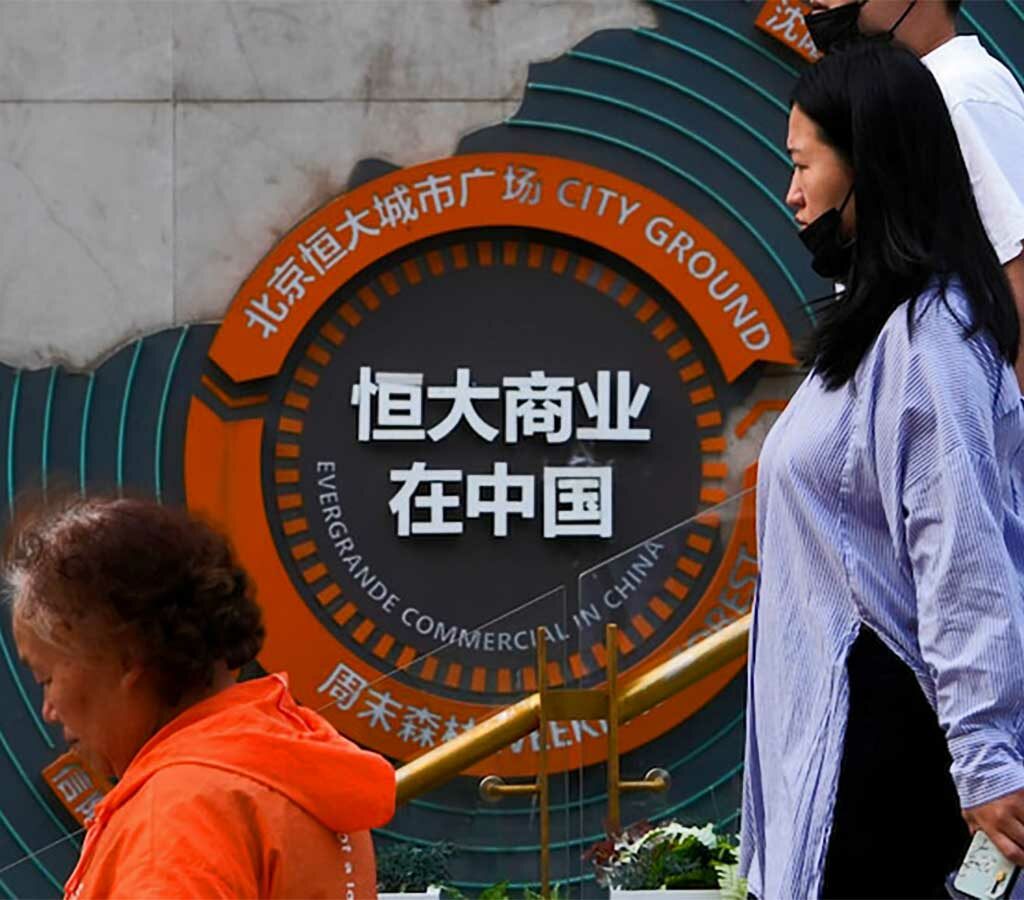
China is looking down the barrel of this dynamic with its decision on Evergrande. It can integrate the business into its financial system or let it loose for investors to work out. The likelihood is biased to some kind of pretend workout, probably at the expense of global bond holders. Expediency and internal politics suggest China, or rather its governing class, is intent on internal restructuring rather than the niceties of external relationships.
It is challenging to know where this ends up. China is not alone, there is a much greater inward-looking focus than before in most regions. China’s recent regulations have, in some circles, quietly been given a nod, such as the amount of time school-aged people spend on gaming or the influence of social media. Others are heavy-handed, but arguably not much more so than controls imposed on the developed-world banking sector or locally on private health and aged care by way of example. Financial markets should take heed.
China’s regulation aims to avoid concentration and challenge the control of social media, such is the case in the western world. Europe has tried the same with its General Data Protection Regulation (GDPR.) It may be a clumsy retroactive implementation replete with political overtones, but it has begrudging similarity to some initiatives elsewhere. Are many going to vote against a way to prevent young people from the ugly side of social media, non-stop gaming, ensuring gig employees have employment conditions, or that companies pay tax?
These questions skirt around the practical problem of what to do with Emerging Market or Asia holdings. Global funds with ACWI mandates can make up their own minds, likely influenced by peer group and index performance rather than a truly independent view. The dedicated funds don’t have that choice. China is circa 34% of the EM index and nearly 40% of Asia ex-Japan, and that is ignoring Hong Kong, hardly abstract from this influence.
The first observation is that the index is now not helpful at all. Active must stand up to judgement calls. Big-cap China is also queasy as that seems to be where the regulatory emphasis lies. For the braver, a move to funds that focus on mid-cap and those where jobs are important may be much more resilient. Knowing management and the role a company plays in society becomes key.
The irony is that a lot of successes of China are now embraced elsewhere. The ease of payments, the chat sites, Tiktok, delivery etc. Similar companies have emerged elsewhere in Asia.
Before exiting Asia or EM in general, it pays to peruse the fund manager’s portfolio and question them on where they can find investments which are likely to thrive even with the regulatory background. If EM and Asia/Pac continues to be sold-off due to Evergrande and China regulation, this might prove to be one of those times when investors who look through the headlines can be rewarded. The US meltdown in sub-prime, the LTCM debacle as well as Europe’s Greece debt crisis are examples. For China, employment and social stability is even more critical, and some companies will be the beneficiaries.

Giselle Roux is one of Australia's most well-known and highly regarded investment strategists, having held the role of Chief Investment Officer at both Escala Partners and JB Were. She has also held a number of senior equities analyst and investment banking roles including with Citigroup, Bank of America Merrill Lynch and McIntosh Securities. Giselle is a host of The Inside Network events, a member of the Advisory Committee and contributor to The Inside Adviser publication.