Sunday 25th October 2020
Another negative week for the ASX
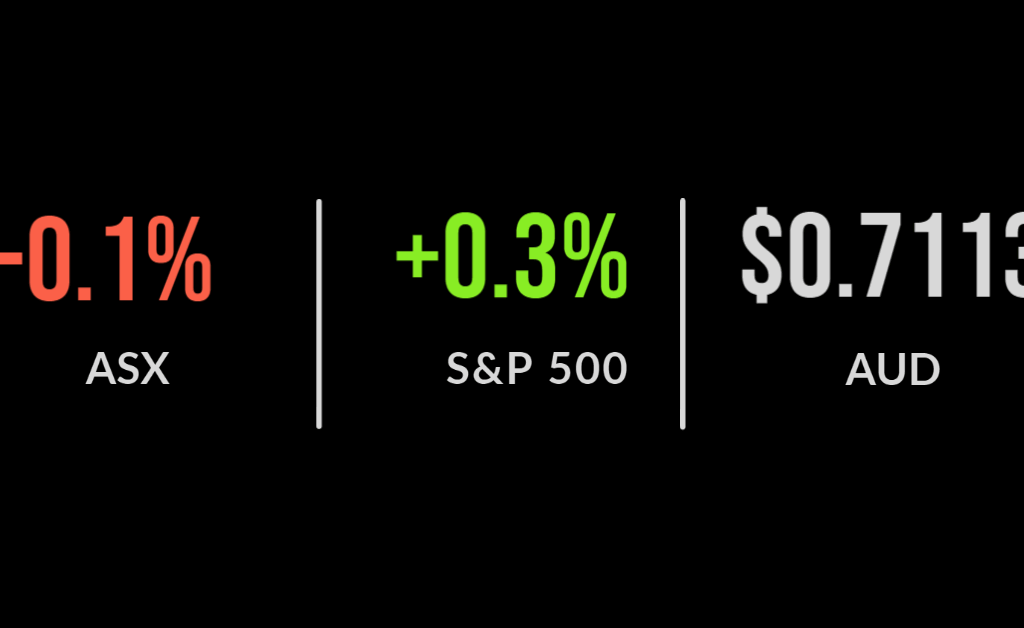
| Another negative week for the ASX, Trump-Biden debate, Link (ASX:LNK) undervalued The ASX 200 (ASX:XJO) finished 0.1% lower on Friday keeping the index in negative territory for the week, down 0.2%. The IT sector was the highlight, adding 1.8%, behind strength in Afterpay (ASX:APT), Zip Co (ASX:Z1P) and Link Administration (ASX:LNK). Management of LNK responded to the $5.20 private equity offer indicating it ‘materially undervalues’ the business. They cited an expected recovery in market-focused income, 80% recurring revenue and the latent value of the PEXA platform. In response, LNK will seek to demerge or IPO the billion dollar business in a boon for investors; shares finished 0.8% lower. BlueScope Steel Ltd (ASX:BSL) was the highlight of the day, jumping 10.9% after announcing a 30% increase in earnings in the first half of 2021 to $340 million; demand and pricing in Asia has been a particular highlight. Qantas (ASX:QAN) earnings hit, Coca-Cola (ASX:CCL) halts trading, who won the debate? All eyes were on the US Presidential Debate, with neither combatant seemingly committed any major errors. Markets have seemingly priced in a Biden election win but given the history of polling in recent elections investors should be wary and avoid making significant changes until the outcome is clear. The Australian National Cabinet, excluding Western Australia, agreed to the reopening of borders by Christmas, with Qantas Airways (ASX:QAN) jumping 2.7% on the news despite the Victorian lockdowns costing the group $100 million in the quarter alone. Cleanspace (ASX:CSX), which manufactures respiratory protection material jump 54% on its IPO as second wave see huge demand for its products. Negative weak for US markets, Intel (NASDAQ:INTC) slumps, governance in focus It was another negative week for global markets, the S&P 500 and Nasdaq falling 0.5% and 1.1% respectively despite 0.4% gains on Friday. Intel Corp (NASDAQ:INTC) fell over 10% despite beating analyst estimates to report $4.3 billion in profit in the third quarter, concern remains about their manufacturing process and fast falling market share to competitors including NVIDIA (NASDAQ:NVDA). It’s just the one takeaway from this week and that is the growing importance of governance from both a public and private market perspective. The week starting with the investigation into Crown Ltd (ASX:CWN) and the Victorian Government inquiry but expanded into extravagant gifts at Australia Post, excessive expense payments at ASIC, Google’s Antitrust case and questions on in-house investments at Magellan (ASX:MFG). ESG has been used heavily as a marketing tool in recent years but not strictly applied. Now with a great deal of pain across the Australian and global economy, consumers, investors and super fund members will likely be applying a blowtorch to companies that don’t meet ‘community expectations. |

Drew is editor of The Inside Network's publications and a principal adviser at Wattle Partners.