Thursday 12th March 2026
Back to the future of income: Why property belongs in client portfolios again
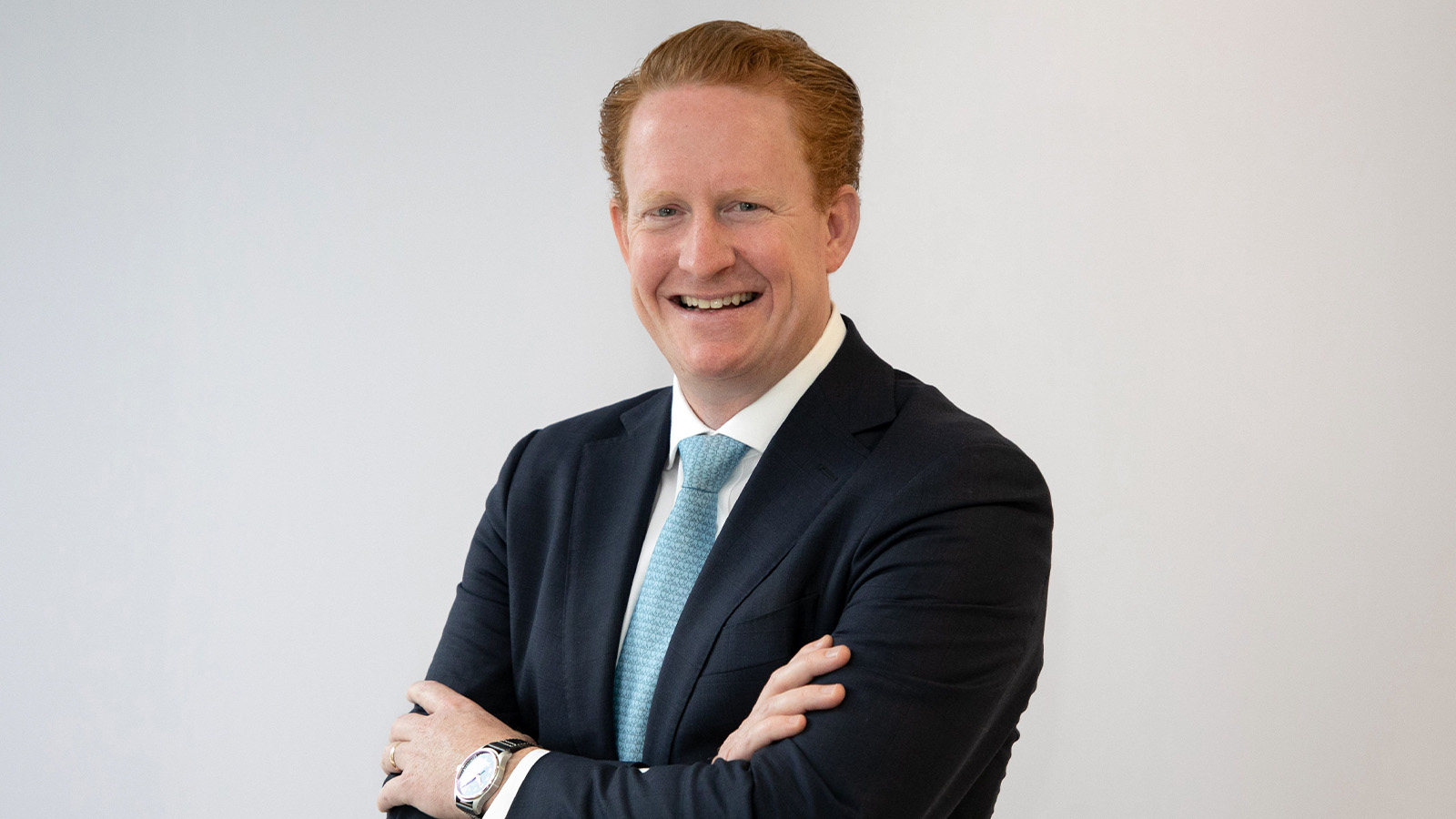
The search for income has taken advisers into new territory in recent years, from private credit to complex alternatives. According to Dexus’ John Taylor, it might be time to look “back to the future” and put property back at the centre of income portfolios.
Advisers are increasingly required to deliver regular and diversified income for clients, and John Taylor, Head of Private Capital at Dexus, thinks property has been unfairly sidelined in that search. “I think it’s a really difficult time to be a financial adviser” he says, noting the challenge of deploying new money at equity market highs while dealing with an ageing client base that is more risk-averse and income-focused. The challenge is not only about yields, but also about restoring confidence in the most dependable sources of cash flow, and Taylor’s view is that real estate deserves to be back in that conversation.
He traces part of the drift to policy choices and rate volatility. “Regulators saw fit to pull hybrids out of the market,” he says, describing how a multibillion-dollar asset class that once anchored income sleeves abruptly disappeared. In the vacuum, advisers leaned-in to substitutes, and the industry’s story about property as an income solution quietly faded.
Credit stepped into that void with speed, which Taylor understands and respects. “We’ve clearly seen huge support for the private credit industry,” he observes. Growth will bring consolidation, he adds, but private credit is “an important part of the economy for borrowers and lenders alike” and an enduring component of income portfolios, even if it should not crowd-out real assets.
Reclaiming income
That tees-up his central message, that it is time to reclaim the income narrative for property. “The property industry needs to reclaim its position as an income solution with specific characteristics, including inflation hedging, potential for capital growth and tax benefits for clients,” recalling that “10, 15 years ago, property was seen as an income solution.” The steep increase in interest rates from zero to five per cent negatively impacted valuations, creating understandable caution from investors. Now that the valuation cycle has turned, the argument for property as an income solution for clients needs to be made again with clarity.
“On balance, valuations for commercial property are coming off the bottom and starting to improve,” he says, and when “valuations are 20 per cent below replacement cost, you can take some comfort” that buyers are not overpaying for assets. This represents a practical window for reintroducing property as an income engine, since entry levels matter for total return and for advisers’ conviction to make recommendations to clients.
Consistency through cycles
Taylor argues that what separates property from many income solutions is growth built into in the cash flows. “Property can deliver inflation hedging based on the rent reviews built into leases.” he says. Growth in cashflow should “translate to an increase in valuations” over time. That linkage is not theoretical; it is coded into indexation and review mechanics that repeat across diversified portfolios.
Consistency is an important trait that can differentiate a real asset portfolio. If you look at the Dexus Wholesale Australian Property Fund (DWAPF) as an example, “the portfolio is 21 assets, and it will be very similar in three or four years’ time,” Taylor notes, whereas “the underlying loans in a private credit fund might be a very different in two or three years’ time based on loan durations. On that basis the investment would need to be re-underwritten as the asset mix changes.” For advisers, predictability of the underlying assets is an advantage, because the assets you invest in today are the assets clients still own tomorrow.
Tax deferral
Then there is the tax superpower that many forget. “In the case of DWAPF,” Taylor says, “about 70 per cent of income is tax deferred. So, if you earned $100 a year out of this fund, the first $70 of that is not taxed as income immediately” which is why gross yield and after-tax yield can diverge meaningfully for clients. It is not a free lunch, he is quick to add, but it is a powerful way to turn rent into spendable income for households that value cash in hand.
He explains the mechanism with simple sequencing that advisers can use in client meetings. Depreciation “is recognised against the income that you make on the way through,” and the deferred portion “then comes off your cost base,” shifting liability from income tax today to capital gains once the asset is sold. “As long as you hold for more than 12 months,” he says, “you take advantage of the CGT discount.”
The planning permutations multiply for pre-retirees. Taylor sketches the path, clients “transitioning to retirement so they can get tax deferral for the last couple of years while they’re making money,” then potentially moving into a phase “where they might not be paying any capital gains because they’re in retirement.” Advisers can model these sequences asset-by-asset, which turns a portfolio conversation into a cash flow and timing conversation that resonates.
Sectors to watch
None of this ignores sectoral nuance, which matters for underwriting the income. “For example, Sydney is in a leasing absorption phase, characterised by rising rents and declining incentives,” Taylor says, while “Melbourne is probably still 6 to 12 months behind that” with a stark difference in leasing outcomes depending on location within a CBD. Geographic selection and location discipline become levers to protect distributions.
The industrial sector has been the clear outperformer in recent years, although conditions are likely to normalise. Many portfolios are still “significantly under-rented,” he says, which supports further rent growth, but “I don’t think you’d expect industrial capital growth to do in the next 10 years what it did for the last 10 years,” especially as rents approach owner-occupier substitution levels. It remains “a terrific asset class,” the point is to calibrate forward returns rather than extrapolate yesterday’s spike.
Retail has adapted in ways that stabilise income quality rather than erode it. Even after the e-commerce surge, “online shopping still only represents 14 per cent of all the transactions,” Taylor notes, and the best centres have “transitioned the service offering,” so a two-hour trip today might be driven by services such as having a coffee, getting a haircut and visiting a specialist, rather than leaving with armfuls of shopping bags. The shift in the tenant mix is part of why well-managed retail still belongs in diversified income sleeves.
The living sector
The structural story is strongest across the living spectrum, which underwrites both occupancy and rent growth. “It is well-publicised that the living sector in Australia is significantly undersupplied,” Taylor says, from student accommodation to downsizer apartments to seniors living, and “we cannot build enough of anything at the moment.” That scarcity is a durable tailwind for income stability, especially when paired with adaptive reuse that creates stock without chasing speculative new supply.
Finally, he reminds advisers that execution at scale is part of protecting cash flows. Across the Dexus platform there are “about 900 people working directly on our portfolio of assets,” he says, which means in-house leasing, property management and planning. This allows us to execute on investment plans and pivot quickly if conditions change. While scale does not guarantee outcomes, it improves the odds that active management will protect income and capital values over the cycle.
Back to the future
For private wealth advisers, the conclusion might be to look “back to the future” to support client portfolios in generating reliable income and inflation protection. Property’s income is anchored by lease contract with built-in review, backed by tangible assets that do not churn quickly, and, in many structures, it arrives with meaningful tax deferral that improves the after-tax outcome for clients. “On balance, it seems like a good time to revisit property as an income solution” Taylor concludes. The case is not based on nostalgia, but a sensible recalibration that puts property back where it belongs as an income solution.
Important note:
Dexus Capital Funds Management (ABN 15 159 557 721, AFSL 426455) (DCFM) is the responsible entity of the Dexus Wholesale Australian Property Fund (Fund) and the issuer of the units in the Fund. To invest in the Fund, investors will need to obtain the current Product Disclosure Statement (PDS) from DCFM. The PDS contains important information about investing in the Fund and it is important that investors read the PDS before making an investment decision about the Fund. A target market determination has been made in respect of the Fund and is available at www.dexus.com/dwapf. Neither DCFM, Dexus, nor any other company in the Dexus group guarantees the repayment of capital or the performance of any product or any particular rate of return referred to in this document. While every care has been taken in the preparation of this document, DCFM and Dexus make no representation or warranty as to the accuracy or completeness of any statement in it including without limitation, any forecasts. This document has been prepared for the purpose of providing general information, without taking account of any particular investor’s objectives, financial situation or needs. Investors should consider the appropriateness of the information in this document, and seek professional advice, having regard to their objectives, financial situation and needs.

Laurence Parker-Brown is head of content at The Inside Network and managing editor of The Inside Adviser and Investor Strategy News.