Sunday 7th December 2025
From capital to connection: Ryan Loehr on the next evolution in advice
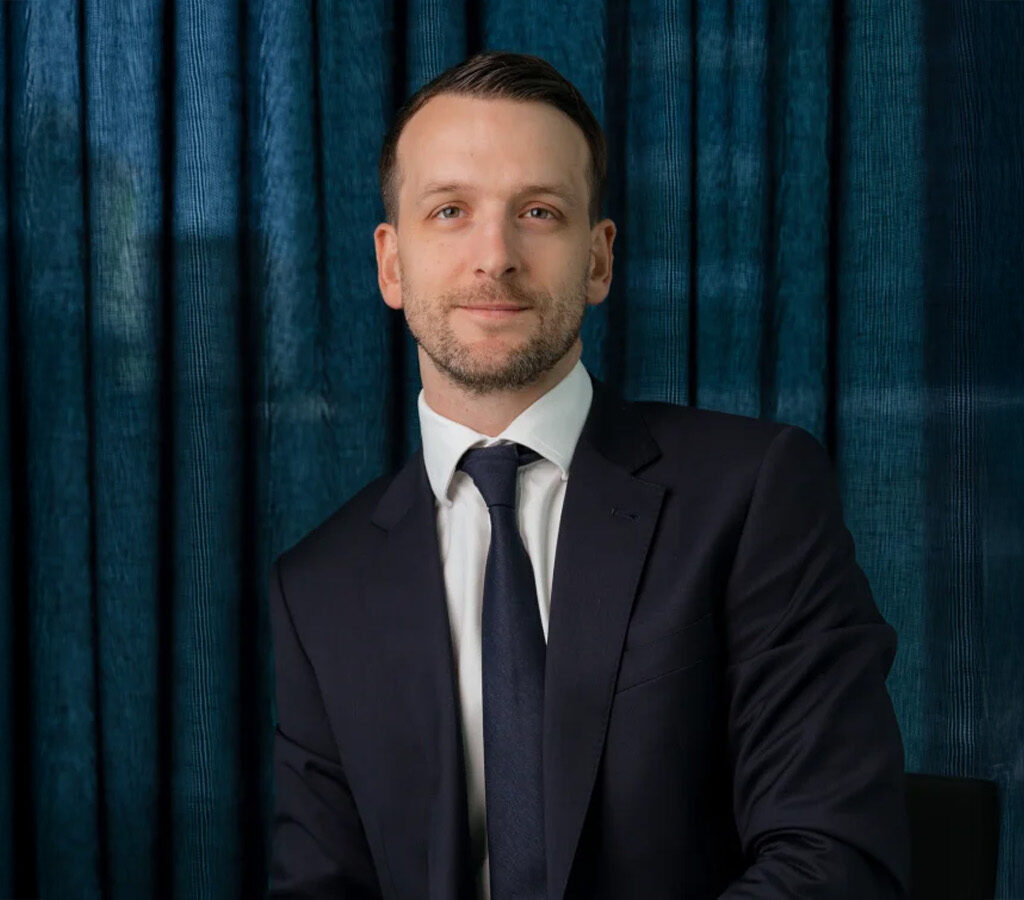
In a powerful call to reimagine the future of advice, Ryan Loehr urges advisers to move beyond portfolio returns and embrace a more human, purpose-driven model of value that will define success in 2026.
With 2026 on the horizon, financial advisers are being urged to think not just about market conditions or regulatory reform, but about the deeper value they offer their clients. Ryan Loehr, partner at Emanuel Whybourne & Loehr, is among those calling for a more human-centred future for advice, one that transcends product innovation and portfolio returns, and focuses instead on meaning, purpose and relationships.
“Innovation in our industry is often reduced to product development or finding a marginally better entry point into an asset,” Loehr told an audience of peers at a recent The Inside Network event. “But real innovation begins when you focus on what capital can enable for a family, not just what it can accumulate.”
It is a subtle but profound shift in perspective. And one that, according to Loehr, will define the most successful advisory practices in the years ahead. He recounted a recent client engagement where what began as a casual conversation about health and longevity turned into a far more consequential journey. A client, having sold a business and enjoying financial security, was introduced to a preventative health service through Loehr’s network. The result was the early discovery of a serious medical condition and a successful intervention that likely saved the client’s life.
“This wasn’t financial advice in any traditional sense,” Loehr said. “But it fundamentally reshaped the client’s relationship with us, and with their own wealth. That’s the kind of value that lingers, and spreads, in a networked world.”
For Loehr, this kind of impact points to a broader role for advisers in 2026 and beyond. Not as gatekeepers to financial products, but as strategic connectors and curators of experience. “We are often sitting in a privileged position, with visibility across professional services, industries and networks. The question is, are we using that position to truly add value to the person in front of us?”
He gave another example, of a client who had taken time away from their professional career to care for a parent, only to find it difficult to return to a fast-moving industry. Through Loehr’s personal network, the client found a new role that reignited their career. “The return on that opportunity dwarfed any financial return we could have generated,” he said. “And yet, it was only possible through relationships, through knowing the right person at the right time.”
This, for Loehr, is the essence of innovation as the advice profession enters its next chapter. “Forget the buzzwords for a moment. Just ask: how do I bring the most value to the human in front of me? That’s the right starting point for 2026.”
The conversation naturally turned to the structural shifts reshaping the industry, particularly the tension between consolidation and specialisation. Emanuel Whybourne & Loehr was founded, he noted, on the belief that the best advisers specialise. “Big institutions scaled by providing vanilla advice and capturing pricing benefits,” Loehr said. “But the most impactful operators we’ve seen have always been those who focused. Whether it’s in not-for-profits, family business or migration-linked investment, specialisation is where the value lies. And specialisation doesn’t scale easily.”
He pointed to the rise of boutique and independent advisory firms as evidence of a market that increasingly values precision over breadth. “Clients in 2026 will expect a level of sophistication that big platforms can’t easily deliver. The future belongs to those who can build solutions around the client, not force clients into solutions that fit institutional models.”
Indeed, with the ongoing fragmentation of the industry, many advisers are being forced to reconsider their business models. But for Loehr, this creates opportunity. His firm has tripled in headcount since launch, reinvested in its own technology stack, and operates with full platform and product independence. “Some of the largest family offices in the country work with us without ever moving assets onto our platform. It’s about trust, ideas and value, not custody.”
This independence, he argues, is essential for engaging the next generation of wealth holders. With trillions of dollars set to change hands over the coming decade, advisers need to look beyond inheritance logistics and ask what wealth means to the generation inheriting it. “It’s not just about planning for a transfer,” Loehr said. “It’s about helping the next generation define what they want their capital to represent.”
For some, that might mean building new ventures, and needing support with strategic partners, advisory boards or technical upskilling. For others, it might mean rethinking the sacrifices their parents made and opting to spend more time with their own young families. “The capital, in that sense, becomes a tool for freedom. For presence. For self-determination.”
Loehr believes the most resonant advice in 2026 will be deeply personal, and it will be shaped by an adviser’s ability to bring the right people and resources around a client’s vision. “It’s not always about performance metrics. It’s often about optionality, about confidence, about enabling the client to live the life they want to live, whatever that looks like.”
He is not naïve about the pressures facing the industry, such as rising expectations, regulatory reform, shifting business models. But he remains optimistic. “If we can get back to the heart of what we do, serving people, not just managing money, then 2026 could be the most inspiring chapter yet for advice.”

Laurence Parker-Brown is head of content at The Inside Network and managing editor of The Inside Adviser and Investor Strategy News.