Monday 25th August 2025
From risk to reward, the case for default arbitrage
Far from being a purely negative outcome, defaults can form the basis of a tradeable, diversifying asset class that sits alongside more traditional fixed income exposures.
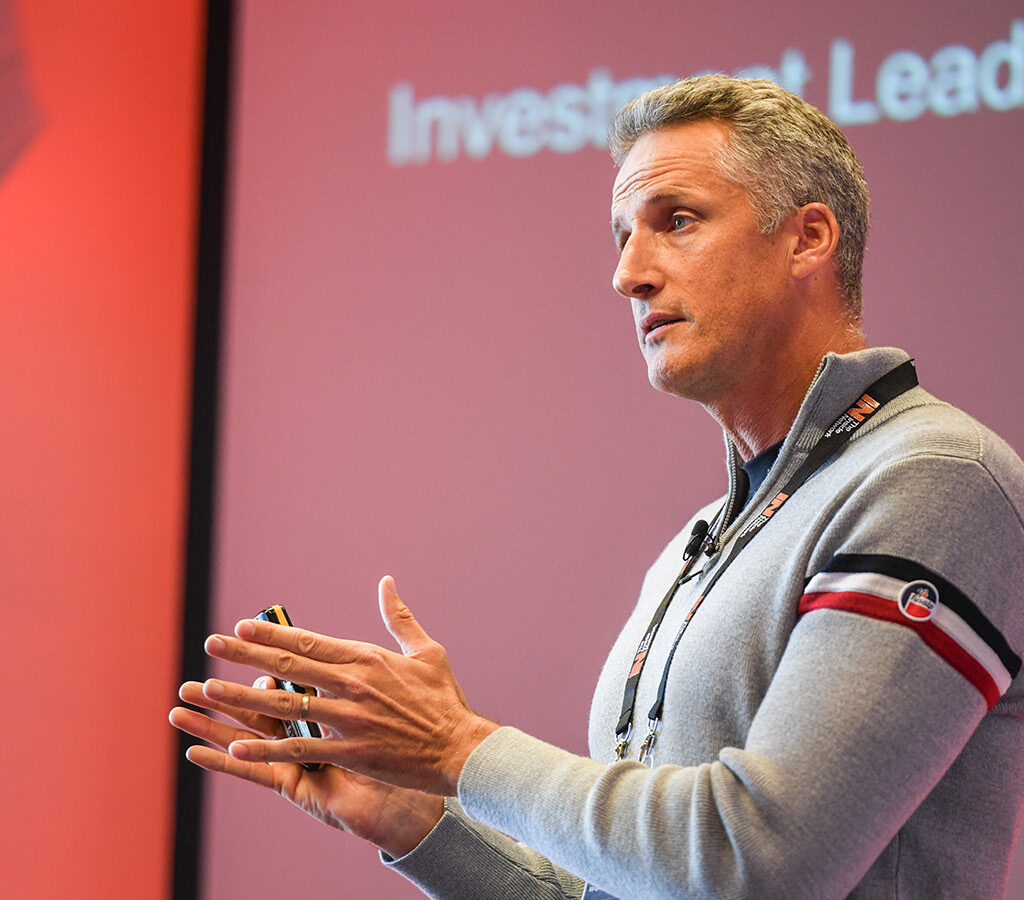
At The Inside Network’s Income & Defensive Symposium, Christian Baylis, chief investment officer at Fortlake Asset Management, challenged advisers to think differently about defaults. He argued that far from being a purely negative outcome, defaults can form the basis of a tradeable, diversifying asset class that sits alongside more traditional fixed income exposures.
Baylis began by setting the stage with a structural shift in global credit markets. Since the global financial crisis, regulatory changes such as Basel III have pushed banks away from proprietary risk-taking and reduced their willingness to warehouse credit risk. “They have become more like brokers than balance-sheet lenders,” he said. This has left public credit markets less liquid, and in many cases, functionally more private.
At the same time, market infrastructure has evolved. Baylis pointed to the creation of central clearing for credit-default swaps (CDS) and the emergence of trade repositories as key innovations. “We now have absolute transparency on defaults,” he explained. All CDS trades must be reported, and central counter-parties guarantee performance, reducing counter-party risk and ensuring margin discipline.
This transparency has created a new opportunity: the systematic trading of recovery rates after a corporate default. In the past, default settlements were opaque, negotiated outcomes. Now they are determined via market-based auctions run through clearing houses, with sell-side dealers submitting bids that are averaged into a final recovery price.
According to Baylis, the long-standing assumption in credit markets has been that recoveries average about 30 cents on the dollar. In reality, especially for modern corporate structures heavy on intangibles, technology spend and minimal hard assets, actual recoveries have been closer to nine cents. “If you are paying 30 cents for something that is only worth nine, there is a clear opportunity for those positioned to benefit when the recovery comes in lower,” he said.
The strategy Fortlake has built combines this “default arbitrage” with traditional fixed income. The default book behaves like a form of insurance, with a negative carry in normal markets but the potential for significant payoffs when defaults spike. “We do not try to be master predictors, we aim to be prepared actors,” Baylis said. This is paired with a ‘long’ credit allocation designed to cover the running cost of the default positions.
Timing, he stressed, is less about predicting the exact default cycle and more about maintaining positioning so that when stressed conditions arise, the portfolio benefits. He noted that spreads in high-yield credit have already returned to pre-dislocation ‘tights,’ suggesting a degree of complacency in markets.
Baylis also warned that current low default rates are partly artificial. Many weaker corporates survived the pandemic thanks to government support, covenant waivers and the extension of credit between private funds. “We have a lot of zombie companies still walking around,” he said. “At some point the subsidies will end, and the defaults will catch up”.
When that happens, Fortlake aims to capture the gap between the market’s assumed recovery and the realised price in default auctions. The process is highly rule-based: a credit determination triggers an auction, banks submit bids, and a volume-weighted average produces the settlement price. If that price is far below the long-standing 30-cent assumption, the strategy profits.
Baylis sees the asset class as having low correlation to equities and traditional fixed income, precisely because it is tied to real-world insolvency events rather than capital-market sentiment. The lag between economic stress and default resolution also provides a diversification benefit in multi-asset portfolios.
Education remains a challenge. Baylis acknowledged that only a handful of market participants globally fully understand the infrastructure and data underpinning default auctions. For Fortlake, that knowledge barrier is part of the competitive edge. “Our job is to guide investors through a complex execution process and deliver a smooth return over the medium to long term,” he said.
For advisers, the takeaway was that defaults need not be a purely defensive concept. With the right structure, they can be a source of uncorrelated return that complements more conventional sources of income, particularly in a world where traditional credit markets are less liquid and more prone to bouts of stress.

Laurence Parker-Brown is head of content at The Inside Network and managing editor of The Inside Adviser and Investor Strategy News.