Monday 23rd June 2025
Cycles, surprise and core strength: navigating the new global market order
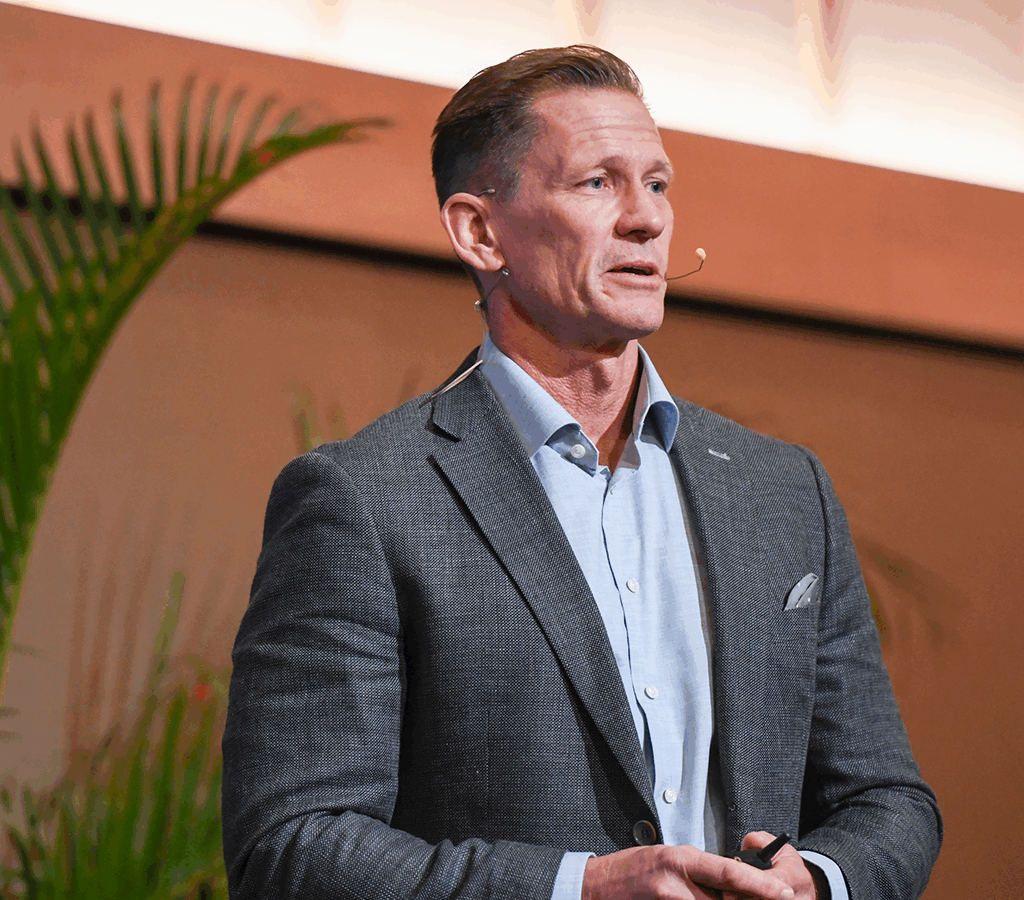
Jonas Palmqvist, portfolio manager at Alphinity Investment Management, doesn’t waste time debating growth versus value.
For Palmqvist and the portfolio team behind the Alphinity Global Equity Fund, it’s about earnings leadership — finding companies at the right point in their earnings cycle, where expectations lag reality and positive surprise is imminent.
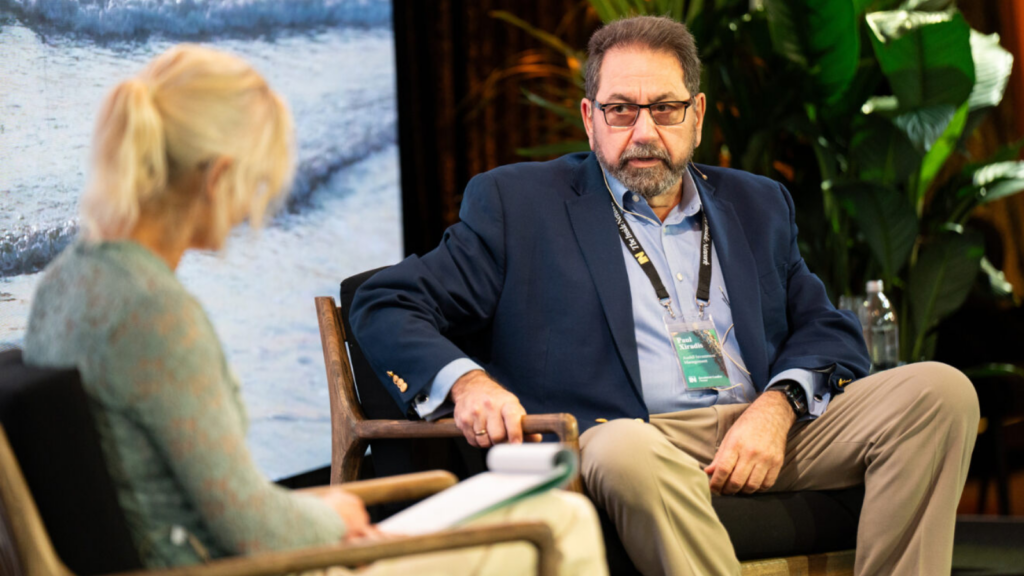
Speaking at The Inside Network’s recent Equities & Growth Symposium, Palmqvist outlined a global strategy shaped less by style and more by process. In a world where fundamentals are being repriced at speed, he made the case that flexible, cycle-aware investing is more essential than ever.
Palmqvist began by reiterating the core discipline Alphinity has honed over decades: only owning companies in an earnings-upgrade cycle. “It’s not just growth that drives returns — it’s the surprise factor,” he said. “When a company consistently beats expectations, that momentum gets priced-in, and shareholders are rewarded.” Conversely, downgrades — even among high-quality businesses — can be devastating. Alphinity’s approach is active by necessity: stocks are exited quickly once earnings momentum wanes or multiple profit warnings begin to cluster. “They always come in threes,” Palmqvist observed wryly, referencing the familiar danger zone of serial disappointments.
That discipline matters even more in today’s landscape. Markets, he said, have come two years into a US-led earnings upgrade cycle that began in late 2022. While this cycle has delivered strong returns, Palmqvist warned that much of the upside — particularly in the so-called ‘Magnificent Seven’ — has already played-out. “Generative AI has been the dominant theme. Data centres, chips, electrification, power supply — it’s been discovered,” he said. “Now, we’re running out of momentum in those names.” The portfolio is already rotating out of these peak-cycle stocks, as Alphinity begins to lean into what comes next.
This includes a broadening of leadership, both geographically and within sectors. Palmqvist noted that hundreds of S&P 500 stocks outside the mega-cap tech complex are now showing promise. These names, he said, often fell just as hard during the recent correction, despite having less inflated valuations. “A lot of babies were thrown out with the bathwater,” he remarked. Europe and Asia are also re-entering the conversation, with several under-loved names in financials, consumer goods and healthcare beginning to show signs of life. “The story is finally shifting away from a US-only trade,” Palmqvist said, pointing to attractive valuations and low expectations as fertile ground for positive surprise.
At the portfolio level, Alphinity runs a tightly constructed book — typically between 25 and 40 stocks. Palmqvist says this allows the team to maximise the contribution of stock selection, which he estimates accounts for nearly 80 per cent of portfolio risk. The firm deliberately avoids macro bets, sector tilts, and currency speculation. “We don’t think we have any edge on market direction,” he said. Instead, it stays laser-focused on identifying companies with positive earnings momentum and reasonable valuations, backed by high-quality balance sheets and management teams with proven execution. “The market tends to forget about balance sheets in a bull run. That’s starting to change.”
One tool on which Palmqvist relies is Alphinity’s proprietary quant overlay — a rules-based filter designed not to pick stocks, but to enhance discipline. “It dials-down emotion,” he said. “Quant doesn’t make decisions, but it makes sure we’re paying attention to what the numbers are saying.” By using this systematic lens, the team can spot when sentiment is diverging from fundamentals — whether it’s time to exit an overhyped name or revisit a turnaround story beginning to show real traction.
He illustrated this with the firm’s “earnings cycle clock,” a visual framework that tracks companies through multiple stages of upgrade and downgrade cycles. The ideal entry point is at six o’clock — peak pessimism, when valuations are low and a recovery is just beginning. “If you could always buy at six, it’d be perfect,” Palmqvist said. “But that’s hard. So we wait for confirmation, even if it means missing the first leg of the recovery. It reduces the risk of falling into a value trap.” On the other side of the clock, when stocks become consensus darlings, Alphinity trims positions — even if momentum continues in the short term. “Twelve o’clock is when the lights come on at the party. You have to be near the exits.”
The current environment, he believes, is primed for such rotation. Financials, which staged a strong rebound over the last year, are facing renewed pressure from geopolitical uncertainty and the reappearance of tariff-based trade tension. Meanwhile, less-loved sectors like staples and healthcare are benefiting from stable demand and now offer attractive entry points. “There are some European names trading at very low multiples, with improving fundamentals. The market’s starting to notice,” he said. The team is increasingly focused on what Palmqvist calls “quality plus growth” — businesses with clean balance sheets, modest but consistent earnings expansion, and protection from cyclical whiplash.
What sets Alphinity apart is its refusal to anchor to a single style. Though the fund launched as a “core” strategy in 2015, the label was initially met with scepticism. “At the time, clients thought you had to be either growth or value. Core was seen as boring,” Palmqvist recalled. But 2022 — when many growth managers faltered — validated Alphinity’s flexible approach. By pivoting into defensives ahead of the drawdown, then rotating into reopening trades in 2021, the fund has demonstrated its ability to perform in multiple regimes. “We’re like the central midfielder,” Palmqvist said. “Not flashy, but dependable. The one you want on the field in every match.”
That doesn’t mean standing still. Alphinity’s investment team travels frequently, with up to five overseas trips a year to meet management face-to-face. “You lose 20 to 30 per cent of the information on Zoom,” he said. “Being in the room matters.” And while clients often ask about launching new products, Palmqvist was firm: the focus is on performance, not proliferation. “We’ve been given the responsibility to manage people’s capital. That means saying no to distractions and sticking to what works.”
Ultimately, Alphinity’s model rests on a simple but powerful insight: markets may be unpredictable, but earnings leadership endures. By tracking that leadership across geographies, sectors and styles, and aligning portfolios accordingly, Palmqvist and his team aim to deliver not only returns, but consistency. “Cycles change,” he added. “Surprise drives value. And we want to be on the right side of that surprise.”

Laurence Parker-Brown is head of content at The Inside Network and managing editor of The Inside Adviser and Investor Strategy News.