Monday 27th May 2024
Australian Ethical hunts opportunities in private debt, climate tech
The $10 billion ethical investors expects “quite an evolution” in climate resilience and mitigation investing, as well as growing interest in sectors like water, where it is “actively exploring” opportunities.
Not so long ago, Australia’s renewable energy market was less than nascent, with barely any power-generating assets to speak of.
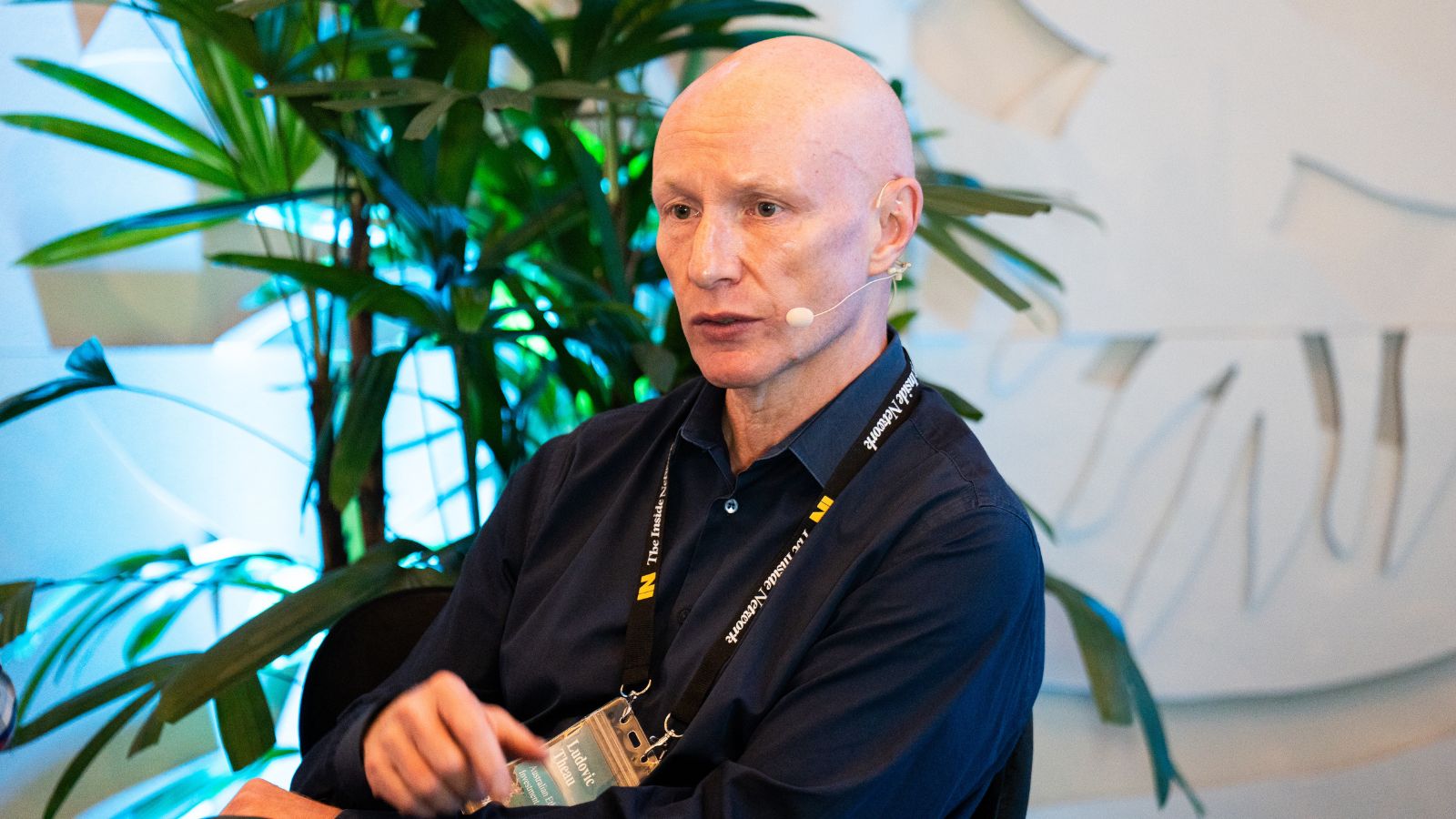
But the speed at which that market has now developed means that investors both domestic and international are still coming to grips with its ins and outs, according to Australian Ethical CIO Ludovic Theau.
“Over the last six or seven years we’ve seen two types of investors,” Theau told The Inside Network’s Investment Leaders Forum. “The more experienced investors coming early in the markets and actually making quite good money. We’ve seen some renewable energy platforms being sold at very substantial multiples. And sometimes global investors are leaving the market and some other investors in the private market are losing monies because sometimes they don’t understand the risk associated with energy markets.”
The last 12-18 months have basically been a period of consolidation, Theau said, but he expects that in the years to 2030 there will be a new push into Australian energy markets and “quite a few investment opportunities”.
“As we invest in energy markets, we look at the short-term and quarterly performance, but we also look at the long-term horizon: 2030, 2040 and 2050,” Theau said. “If you’re thinking of entering energy markets and participating in the climate transition it’s always a good time to enter the market. We are not talking about a cyclical trend; we are still going to be talking about climate transition for the next 25 years.”
Which doesn’t mean it’s not without its troubles.
“Post-Covid, we’ve seen some macroeconomic issues, higher inflation, higher interest rates… but we’ve seen some of the capex coming down, which is a good sign,” Theau said. “The other issue is that if you play in the energy market, there’s quite a bit of volatility; one of the biggest risks is merchant energy price risk and you do need some government support and there is an evolving government framework.”
Australian Ethical recently partnered with Infradebt to launch an infrastructure debt fund to provide capital for projects spanning renewable energy, social infrastructure and property with a social or environmental benefit, with Theau saying the “number one benefit” of infrastructure loans is their attractive risk profile.
“You’ve got a much lower default rate and the recovery rate is actually very, very high. In simplistic terms it’s a place between cash and secure loans,” Theau said. “The second benefit is the volatility, and you’ve got limited exposure to listed equities because it’s of course a private markets asset class and you’re subject to the private market valuation methodology; you don’t have this ongoing valuation.”
But Theau also said that he expected “quite an evolution” in climate mitigation and resilience, as well as in specific sectors like water, and that Australian Ethical is “actively” looking at opportunities in those areas.
“If you’re looking at private markets we do expect more activities around private debt given the geopolitical risk and volatility issues,” Theau said. “We would like to invest more on private debt. There’s been a resurgence of green bonds and we’re expecting some government issuances shortly, so hopefully the market can start again.
“And one topic that hasn’t been mentioned in private markets is climate tech. You can’t transition successfully if you don’t have ongoing technology breakthrough, so we are very keen to support climate tech not only domestically but also globally.”