Monday 13th May 2024
'Completely unfair': Advisers to be slugged another $4,165 over Dixons CSLR bill

Costs for the compensation scheme are spiralling out of control, with the FAAA estimating another $4,165 will be added to every adviser's CSLR bill – bringing the estimated total to $5,709 – if the funding model isn't re-examined.
The Financial Advice Association of Australia has called on the financial services minister, Stephen Jones, to urgently review the Compensation Scheme of Last Resort after it was revealed that financial advisers will need to pay an extra $65 million in compensation for the misdeeds of Dixons Advisory.
In what the FAAA characterised as a “huge impost”, the Australian Financial Complaints Authority recently advised that as of 30 April, 2024, it had received an extra 544 complaints stemming from the Dixons scandal, which saw 4,606 clients lose $360 million after the firm breached best interests duty on 53 occasions.
While this figure was previously advised as 1,948 complaints, AFCA said the number has now risen to 2,492 and the authority “taking time to work through the large number of complaints”.
According to the funding model set within the CSLR, consumers who have been cheated by a financial adviser, credit provider or securities dealer, will be compensated by the industry at large if the financial institution has become insolvent and the money cannot be recovered.
In practice, this means current registered advisers will foot the bill for the crimes of advice firms that have subsequently closed down. In what is commonly know a ‘phoenixing’ activity, these firms are often wound up by shareholders to avoid paying money owed or compensation.
As Dixons is still a member of AFCA, however, the bill for these crimes remains payable by the industry according to the CSLR model.
The notion of paying for the misdeeds of others is not new to the advice community, which is charged thousands of dollars per adviser every year as part of the ‘user pays’ regulatory funding model. While government has acknowledged the flawed nature of a model that punishes good advisers for the crimes of bad ones – a 2023 review found the approach “does not align” with the principle of charging the people who caused the extra regulatory costs – it has effectively templated the model across the compensation scheme.
Last week, the increasing CSLR bill prompted FAAA chair David Sharpe to say he was “sick of being an adviser ATM machine“.
Of the initial 1,948 complaints lodged with AFCA, the $241 million tab was picked up for most part by the nation’s ten biggest financial institutions in a legacy arrangement, with advisers given an “industry funded” bill of $24.1 million for the 2024/25 financial year and the responsibility to pay all future bills.
A rough estimate of that initial bill would see each of the industry’s roughly 15,600 advisers pay $1,544.
With the amended AFCA figure, that bill could now balloon a further $4,165 to $5,709 per adviser with hundreds of complaints still to be submitted.
A crucial factor in the Dixons case is its ongoing membership with AFCA, because the authority can only handle complaints of current members. While Dixons was long ago put into administration, AFCA says it has not met the necessary pre-requisites for cessation of membership.
That doesn’t make sense, the FAAA says.
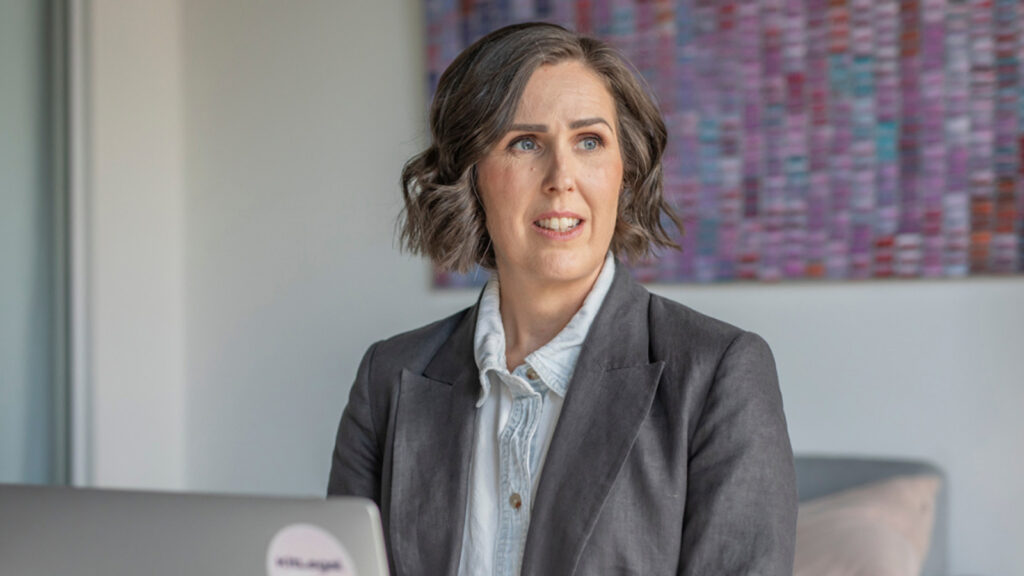
“The Dixon Advisory AFCA membership has already been extended twice and the entity was put into administration over two years ago now,” said FAAA chief executive Sarah Abood. “We urgently call upon the AFCA board to clarify the process and timing for that membership to end.
“We also urgently, again, call upon the government to review the funding model of the CSLR. Not only is it completely unfair, but it is also economically impossible for the small business financial advice sector to underwrite the failures of large listed firms.
“Why should financial advisers pay for the failure of Dixon Advisory, a subsidiary of the large listed group Evans and Partners, which earned over $174 million in revenue last financial year?
“They should not, and they cannot,” the CEO continued. “It is not too much to say that this matter represents an existential threat to our profession. The Minister has not yet responded to our many requests for engagement on this matter, and we call upon him again to work with us urgently to find a sustainable solution to this crisis,” Abood said.