Wednesday 20th December 2023
‘The stock prices will follow’: Earnings key to big-picture portfolios
Understanding how macroeconomic changes may affect companies' earnings profiles is key to Ausbil Investment Management's top-down approach, which lets the fund manager invest with confidence in uncertain markets by focussing on the things it does know, says CIO Paul Xiradis.
Markets recently have seen their share of bad news, and macroeconomic uncertainty has many investors concerned about navigating a new regime. A good macro approach doesn’t mean having a crystal ball, but knowing how assets are likely to behave can help investors see through the fog.
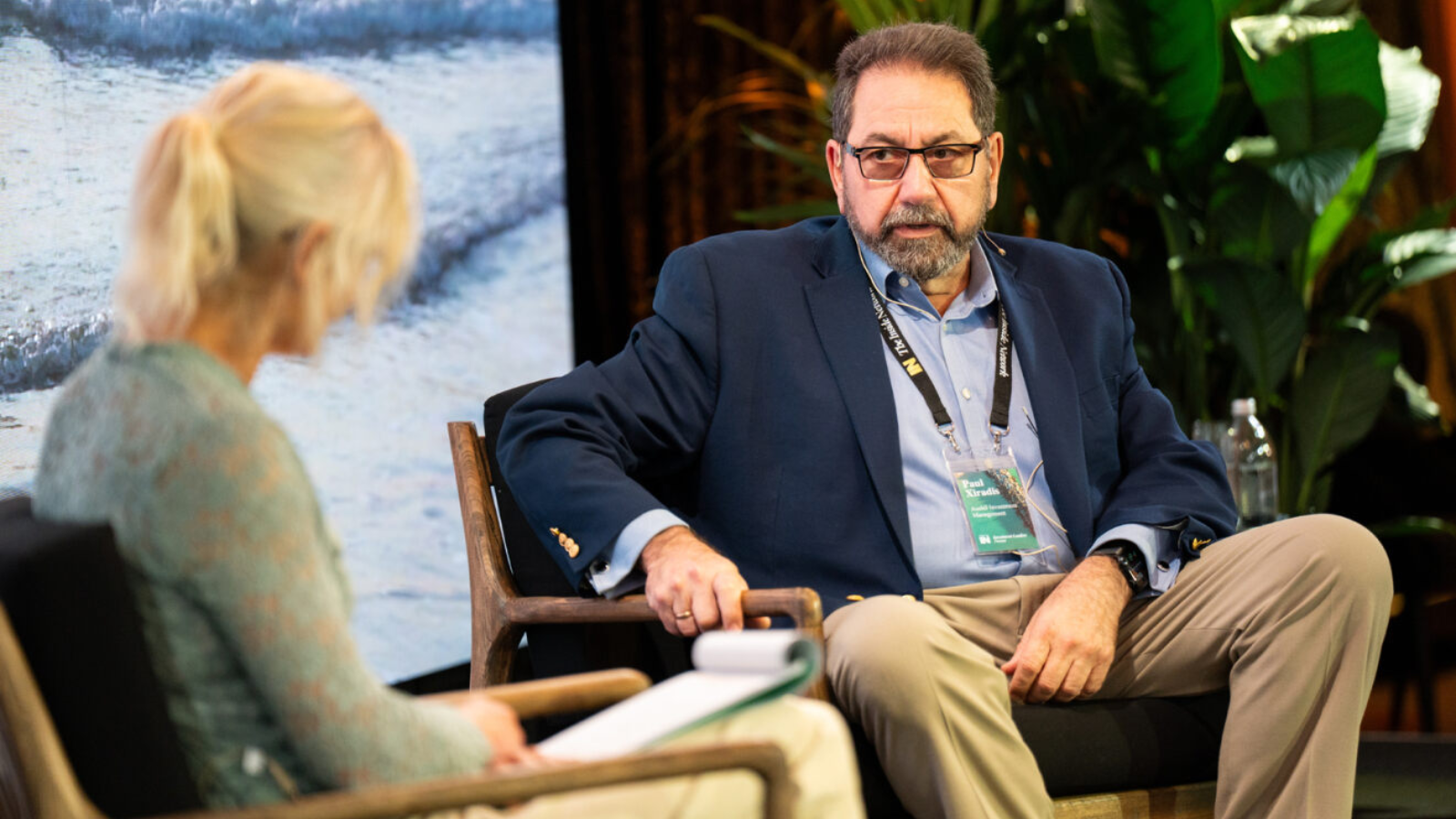
Understanding how the bigger picture will affect the bottom line is key to how boutique fund manager Ausbil Investment Management formulates its views on portfolio construction and earnings-focussed approach, according to chief investment officer and head of equities Paul Xiradis (pictured).
Taking a top-down view
Speaking at The Inside Network’s Investment Leaders Forum recently in Noosa Heads, Xiradis said a top-down philosophy allows Ausbil to focus on the things it does know, enabling it to invest with some confidence in tumultuous markets.
“It’s a discipline we’ve adopted since day one; it’s also the prism through which we look for opportunities and risk in the marketplace,” he said. “It’s about understanding what the changes are likely to be and what they may mean for asset classes, assets and earnings.”
Ausbil has long acknowledged the importance of incorporating macroeconomic themes in forming a portfolio view. But it’s not about coming up with an exact number, Xiradis stressed; it’s “more the direction of change that will occur, and what that means for companies that operate in that environment and for their earnings going forward”.
He cited changing market expectations amid central banks’ bid to fight rising inflation by hiking interest rates as an example of how Ausbil’s assessment of macroeconomic conditions influenced its sector allocation.
While the consensus had initially expected a dramatic downturn, Ausbil bet that overall growth would remain strong and interest rates would stay higher for longer. That “now seems to be the accepted norm”, Xiradis said, along with the idea that we’re likely to see a soft rather than hard landing.
A return to ‘normal’
All of this has ramifications for stock selection and portfolio positioning, Xiradis said. The world is now entering a “more normal” period of interest rate settings, but the same cycle should play out – the key is understanding there will be stocks, sectors and economies that suffer or benefit from that.
Ausbil, “very much an earnings house”, focusses on what’s driving earnings for a company or sector and how that profile will likely change, he said.
Valuations also matter, with rising interest rates playing an important role as they push up the cost of funding. In a higher-for-longer environment, “the ability to re-engineer balance sheets to extract value through financial means will become a thing of the past”, Xiradis predicted.
“Clearly, we need to adjust to the new world, in which rates are going to remain elevated for an extended period,” he said. “We’ve got to forget about being in zero interest rates.”
Indeed, higher for longer means moving away from “bizarre” near-zero interest rate dynamics into a “more normal phase” in which monetary authorities will have more flexibility to make needed adjustments.
And with ongoing uncertainty and disruptions showing up in share prices, the “decision tree” for recognising investment opportunities will vary, Xiradis said – “There are a lot of different roads that can get you to that endpoint.”
Regardless of the macro environment, key questions for investors should be how strong the company’s earnings profile is and what threats it faces.
“We focus on the ability to generate cash and earnings,” he said. “If we think both are going up, that normally means the stock prices will follow, and vice versa.

Lisa is editor of The Golden Times and has extensive experience covering legal and financial services news.