Wednesday 9th August 2023
Did the great recession of 2023 just pass us by, or is it still lurking?

Did one of the most widely forecast recessions just fail to materialise, Neuberger Berman asks, or are we entering a false dawn that could see investors trip over themselves to entertain more risk than is prudent?
And just like that, markets turned a corner. Or did they?
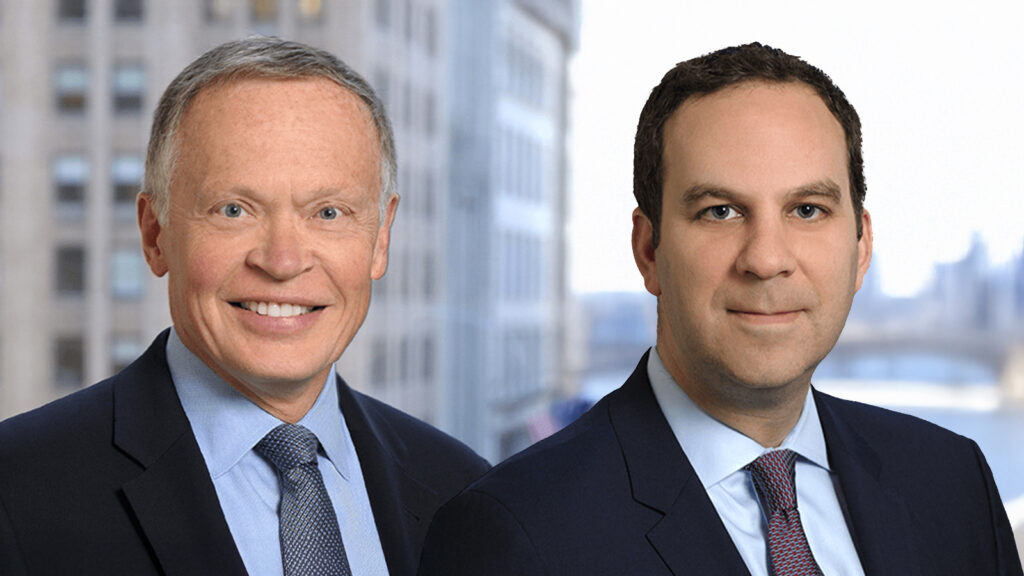
This is the question asked by Brad Tank, chief investment officer and global head of fixed income at global money manager Neuberger Berman, who questions whether one of the most widely touted recessions in history has whizzed by the global economy without actually gripping its surface.
In June Neuberger Berman published its Asset Allocation Committee Outlook with the title ‘Engine Running, Shifting to Neutral‘, which detailed the respected investment group’s observation that excess caution may be unwarranted; while inflation was sticky and economic growth remained slow, markets were still relatively buoyant.
“There has been one fly in the ointment,” the note said about it’s most recent market outlook. “We have been cautious on equity markets, and especially U.S. mega-caps, and their performance has been very strong so far this year, particularly compared with the ‘relatively certain’ returns generated by fixed income assets.”
The June note went on to acknowledge the case for optimism in the near term, citing the performance of the “Magnific Seven” by US market capitalisation; Apple, Microsoft, Alphabet, Amazon, Nvidia, Tesla and Meta.
In July, Tank extended that cautionary optimism by questioning whether the much-hyped global recession has altogether failed to materialise.
In the US, inflation has fallen to 3 per cent while GDP has settled at above 2 per cent. The IMF is actually forecasting 3 per cent global GDP for the year. Unemployment has remained low almost everywhere, he adds, and bond markets have calmed down while equity markets remain healthy.
“How did one of the most widely forecast recessions in history fail to happen?” he said. “And is it possible that it’s still just around the corner?”
Cautious optimism
Tank identified a couple of key reasons the global economy hasn’t experienced the hard landing many have predicted over the last 18 months.
The first is a lack of synchronicity. Because the world has come out of the covid era at different times and in varying degrees of disarray, the negative effects of inflation haven’t fallen across the same regions at necessarily the same time. “In aggregate, this lack of synchronicity appears to have resulted in subdued economic volatility,” Tank said. “The good and the bad have largely cancelled one another out.”
The second saving grace, he noted, is that while the “unprecedented fiscal response” to the pandemic fueled the inflationary drive, it also acted as a salve to stressed economies.
“On monetary policy, we came into 2023 concerned about the disruptive potential of such a rapid adjustment in rates. After the second, third and fourth biggest bank failures in U.S. history, one can hardly say it hasn’t been disruptive – but the disruption has been remarkably contained.”
Despite the positive signs, however, the CIO warned that there are still idiosyncratic dangers ahead and caution remains warranted.
“Geopolitical tensions remain high, not least between the U.S. and China, the world’s two biggest economies,” he said. “A war still rages on the edge of Europe – and, as shown by last week’s pop in food and energy prices following attacks on Ukraine’s Danube ports, it could still cause a new wave of inflation. Those fiscal tailwinds will begin to weaken and, in some cases, such as the reintroduction of U.S. student loan repayments, turn to into headwinds.
“But there is cautious optimism in the air,” Tank said. “The economists at the Federal Reserve are not the only ones taking a recession out of their forecasts.”