Wednesday 12th April 2023
Don't fall in love during the 'slow, grinding bear' economy
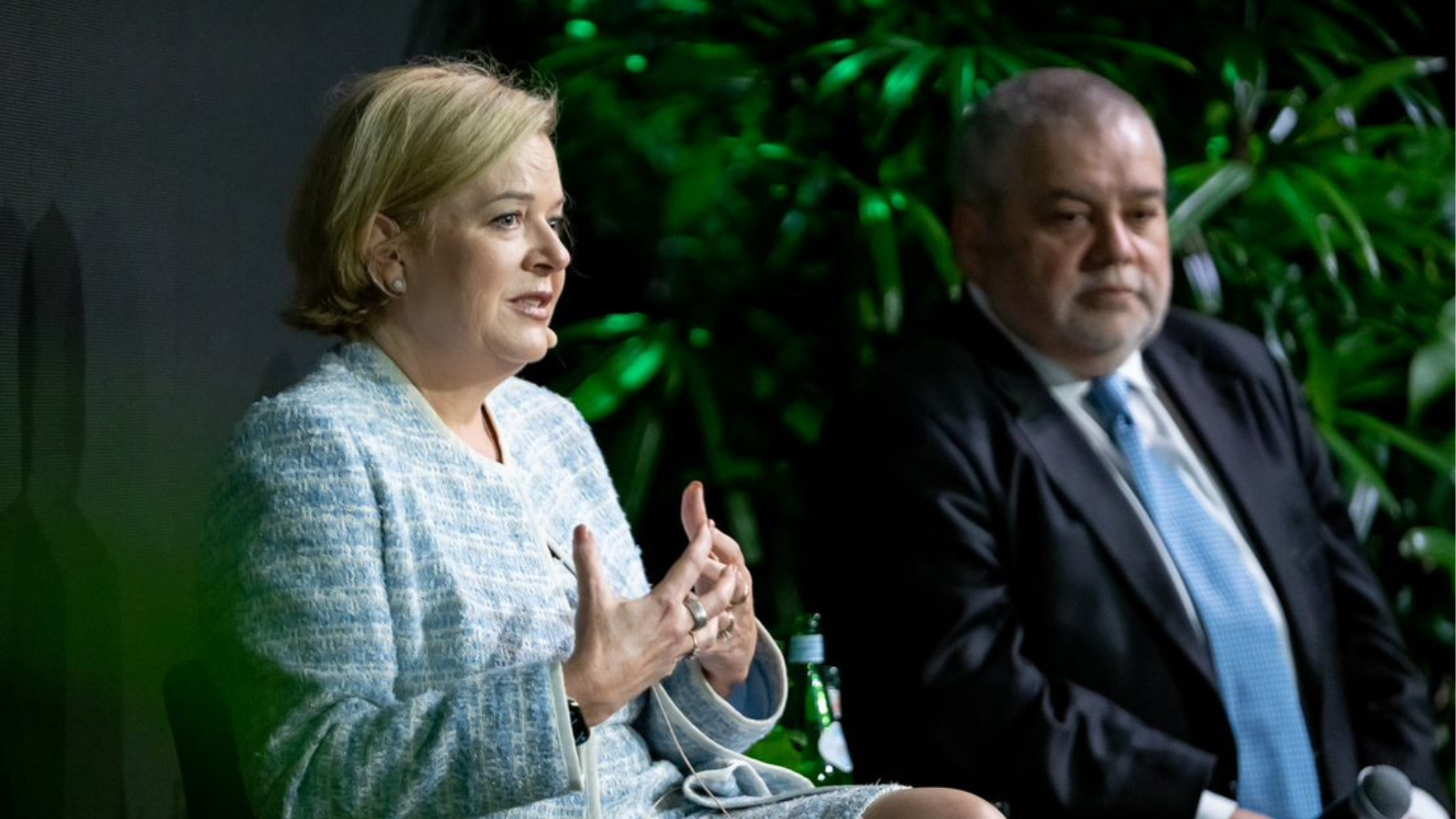
The current economic cycle is too changeable to set any portfolio to autopilot, according to Mason Stevens' Jacqueline Fernley. Counterpoints to conviction are needed, and the devil's advocate should be your friend.
Sharper discernment and higher levels of liquidity will be the necessary goals of money managers in the near-term economic environment, according to a panel led by SQM Research’s head of research, Rob da Silva, and Jacqueline Fernley, chief investment officer at Mason Stevens.
But whatever you do, the analysts warned, don’t fall in love.
Speaking at The Inside Network’s recent Growth Symposium in Sydney, Fernley explained how the current economic cycle makes it a dangerous time to show any undue loyalty to any particular company, stock, investment, style, formula or philosophy. Data can point in one direction, she said, but managers need to look behind the numbers and scour the details.
“Like everything, you can fall in love easily with an investment team or stock or anything else,” Fernley said. “And it’s just important to have the data, but understand the nuances of what’s going on with the people themselves.”
SQM’s da Silva agreed, saying that investors falling “in love” with their position is a common occurrence. Money managers need counterpoints to their conviction, he said, a mechanism to play devil’s advocate to their existing beliefs about the most loved stocks in their portfolio.
“It’s such a dangerous position to be in,” he said. “You want somebody to say, ‘hey, wait a second, I know you love this but there has got to be a great case for it, and how about this, that and the other thing as counterpoints?’ Because you can get blinded by your own relationship to a stock or a bond or a position. It’s important to have those self corrective mechanisms within a risk management process.”
The current economic cycle is too changeable to set any portfolio to autopilot, according to Fernley, who characterised it as a “slow, grinding bear”.
If the kernel of effective money management is to accurately assess the past, current and future environment, she said, the relationship between inflation and growth is key.
The CIO said Mason Stevens looks at that relationship in four periods or “quadrants”. The first “goldilocks” quadrant involved inflation being controlled or falling, while growth was increasing. “That environment was very compelling for equities,” she said.
In the second “reflation quadrant” both inflation and growth increased. Then, in 2022, we saw a switch to inflation, with growth coming down while inflation went up. “And then you shift into the deflation environment, which is where I think we are going, which is obviously inflation coming down but growth coming down,” she said.
“We seem to be moving around all those four things very quickly all the time. And the market is is trying to price different probabilities of those regimes. So that’s quite a difficult environment.”
A few other trends amplify those difficulties, she explained, including the trend towards passive investing and the capital shift to private equity. The upshot for Mason Stevens, Fernley revealed, is that liquidity is king in a deflationary environment.
“So we are shifting out of some of these alternative spaces to ensure that we are not the last to the door,” she said. “Specifically, in private credit, I’m particularly concerned with a lot of new managers who may not have managed through a cycle. And so we are really making sure that in the growth space we are liquid and we are underweight, but we are ensuring that we are attaching to various components of the market with valuations.”
Da Silva concurred with Fernley’s assessment of the danger. “We’re in a new environment,” he said. “‘The trend is your friend’ is not the rule of the day. You need to be a bit more discerning than that. And I think we are seeing that in the approach of managers.”