Wednesday 8th February 2023
The best and worst ETFs from 2022

Exchange-traded funds continued to attract inflows from investors in 2022, albeit at a slower pace thanks to rising interest rates and market volatility. Resources and mining-focused funds were clear standouts in a challenging year.
Resources and mining exchange-traded funds (ETFs) were the star performers of 2022, spurred by strong commodity price action, while cryptocurrency and growth-focussed funds reversed prior years’ gains.
Outside of leveraged short ETFs, which use debt to multiply returns when markets fall, the Betashares Global Energy ETF was the best-performing fund, with an annual increase of 40.8 per cent, data from ETFtracker concluded.
The top performing ETFs from 2022 were:
- Global X Ultra Short Nasdaq 100 ETF
- Betashares US Equities Strong Bear ETF
- Betashares Global Energy ETF
- Betashares Australian Resources ETF
- SPDR S&P/ASX 200 Resources ETF
Speaking to The Insider Investor, Rask founder Owen Raszkiewicz said it’s no surprise energy outperformed given the past year’s supply chain challenges and sanctions against Russia over its invasion of Ukraine. However, he cautioned against extrapolating returns into future years.
“Year-to-year performance of certain funds or themes is a pendulum that swings depending on market sentiment and performance,” Raszkiewicz said.
On the other side of the ledger, the Betashares Crypto Innovators ETF plunged 82 per cent. The fund’s launch coincided with the crypto market’s top in November 2021.
The worst-performing ETFs from 2022 were:
- Betashares Crypto Innovators ETF
- Global X Ultra Long Nasdaq 100 ETF
- Montaka Global Extension Fund
- Betashares Geared US Equity ETF
- Hyperion Global Growth Companies
Growth funds generally posted negative performance in 2022, after years of outperformance. For example, the Hyperion Global Growth fund returned an average of 26.7 per cent annually from 2016 to 2021 before falling 43 per cent in 2022.
Thematic ETFs also struggled, with funds focused on robotics, payments, electric vehicles and cloud computing all posting negative annual performance in excess of 30 per cent.
A total of 52 new ETFs were launched, an all-time high, according to Betashares. Thirteen closed, bringing the total number of listed ETF products to 319.
Market volatility handbrakes inflows
ETFs continued to attract inflows from investors in 2022, albeit at a slower pace than in prior years. Australian-listed ETFs collected $13.5 billion last year, a 42 per cent decline compared with 2021.
Raszkiewicz said higher interest rates and market volatility likely contributed to this year’s inflow slowdown. Conservative investors took the opportunity to de-risk portfolios and capitalise on newfound returns in term deposits and cash. Despite the short-term setback, he remains bullish on the ETF outlook.
“As investors favour more direct, transparent and low-cost allocations, I continue to believe we are still in our infancy when it comes to the investors choosing ETFs and listed funds,” Raszkiewicz said.
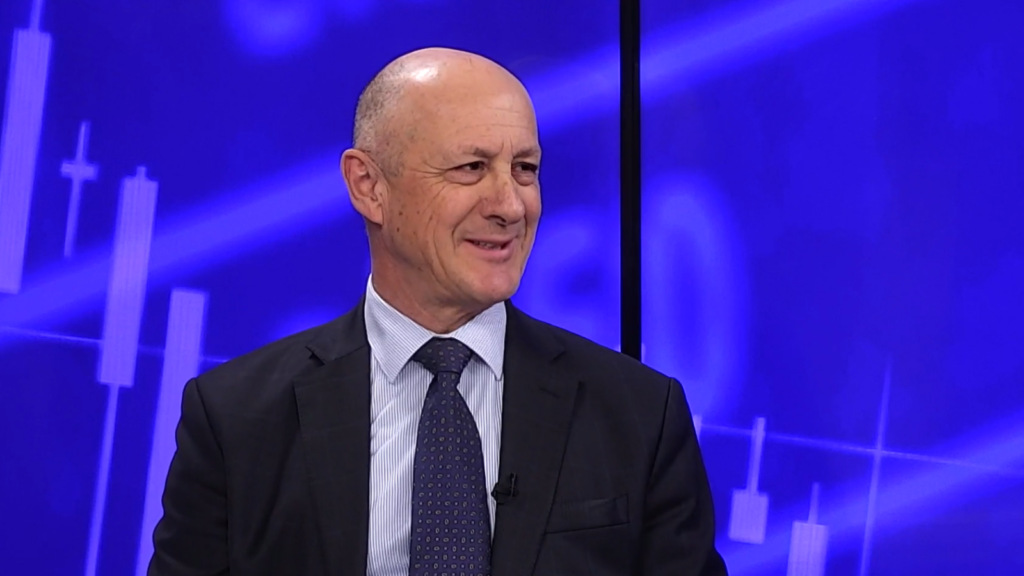
Betashares chief commercial officer Ilan Israelstam (pictured) said investors opted against global funds more than in previous years, with Australian equities leading flows. This was followed by fixed income.
“Fixed income mounted a comeback [compared with] 2021 to become the second most bought category of ETFs in 2022, with investors more willing to invest this asset class as yield rises began to taper off,” Israelstam said.
Overall ETF funds under management (FUM) fell 2 per cent in 2022 to $133.7 billion as a result of negative market movements. Valuations of financial assets, including equities and bonds, fell as central banks rapidly increased interest rates to quell inflation.
Since 2001, the domestic ETF market has compounded annually by 43 per cent as investors opt for accessible and diversified market exposure, usually with lower fees than typical mutual funds.
Unlisted funds, which are typically only available to wholesale and sophisticated investors, incurred net outflows of $26.8 billion, their worst year on record.
Passive funds dominate
The passive Vanguard Australian Shares Index usurped the Magellan Global Fund’s role as the most popular ETF in Australia. Diversified low-cost ETFs now represent eight of the top 10 most popular funds by FUM on the ASX.
The top Australian ETFs by FUM are:
- Vanguard Australian Shares Index ETF
- Magellan Global Fund (Open Class)
- Vanguard MSCI International Shares ETF
- iShares S&P 500 ETF
- SPDR S&P/ASX 200 ETF
As for what could be the best performers going forward, Raszkiewicz takes a long-term view. Over the next five to 10 years, he favours broad-based equity exposure in Australia and international markets.
“The costs of these funds are so low and the companies within them continue to take humanity forward, but patience is required,” he said.
“I don’t need any ETFs to shoot the lights out in 2023.”

Lachlan is an experienced journalist writing across The Inside Investor and The Inside Adviser.