Monday 16th May 2022
Amazon and the value vs. growth challenge

Value investing has been the clear winner of the first third of 2022, with the tech-heavy Nasdaq leading losses in global sharemarkets.
Value investing has been the clear winner of the first third of 2022, with the tech-heavy Nasdaq leading losses in global sharemarkets. Traditional ‘value’ sectors like energy, materials and financials have outperformed in the short-term, but there remains considerable uncertainty around what comes next.
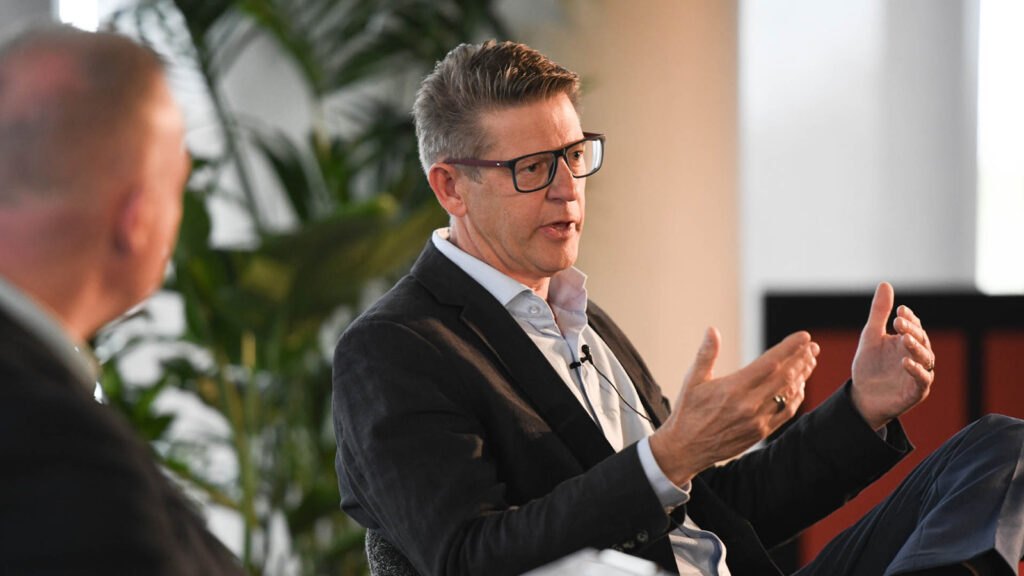
Global asset manager Bailie Gifford, which manages the Vanguard Global Active equity Fund, has weighed into the conversation, highlighting the risk of pigeonholing investors into the value or growth buckets. In a recent post, Investment manager Malcolm MacColl, suggested that such a simple definition can be “quite a dangerous thing” and “unhelpful” at best.
Bailie Gifford is clearly in the growth camp, but MacColl is quick to stress that their focus in on trying to not only identify “businesses where there’s growth” but more importantly where said growth is in the value of that company. “There’s no point in a business growing without the underlying margin structures or the returns and the capital being there to support higher valuations in the future” he says.
Case in point is Amazon Inc, a company that has seemingly moved from growth to value and even a defensive asset in the current environment. “Not all growth companies share the same characteristics. Some of them will be very high growth in nature while others will be more stalwart, with steady but compounding returns” explained MacColl while stressing that investors need to have the flexibility to look for growth in different ways, not just on a pure sales revenue basis as was the case in 2021.
Amazon has been “greatly misunderstood” due to “narrow thinking” around the potential verticals represented by their expansion into cloud computing, streaming and multiple other sectors. “We were paying one cent in the dollar for the assets” of Amazon, he explained but it was more about seeing underappreciated value.
Despite commentary and headlines around the peak of digitalisation, it is clear that technological change will continue with trends like e-commerce on barely touching the surface. The result is that technology will be central to delivering the compounding returns that have been central to wealth creation over decades.
Inflation and the implications of higher rates have naturally been the focus of markets in recent weeks, sending valuations in many high growth technology stocks down as much as 60 to 70 per cent in just a few months. Baillie Gifford’s view is that the interest rate effect has been overwhelmed by the emergence of some highly successful businesses that have been at the forefront of technological change. That is, the suggestion that the growth in technology valuations was driven solely by a lower cost of capital is an oversimplification.
“And I’d much rather be involved in businesses that are on the correct side of that change, rather than businesses which are perhaps optically cheap or lowly valued, which are on the wrong side of that change” he says.
On their approach amid heightened volatility, they are choosing not to fret about inflation but rather remain focused on the operational performance of individual assets. Something that is quite difficult in a market that is making everyone nervous.

Drew is editor of The Inside Network's publications and a principal adviser at Wattle Partners.