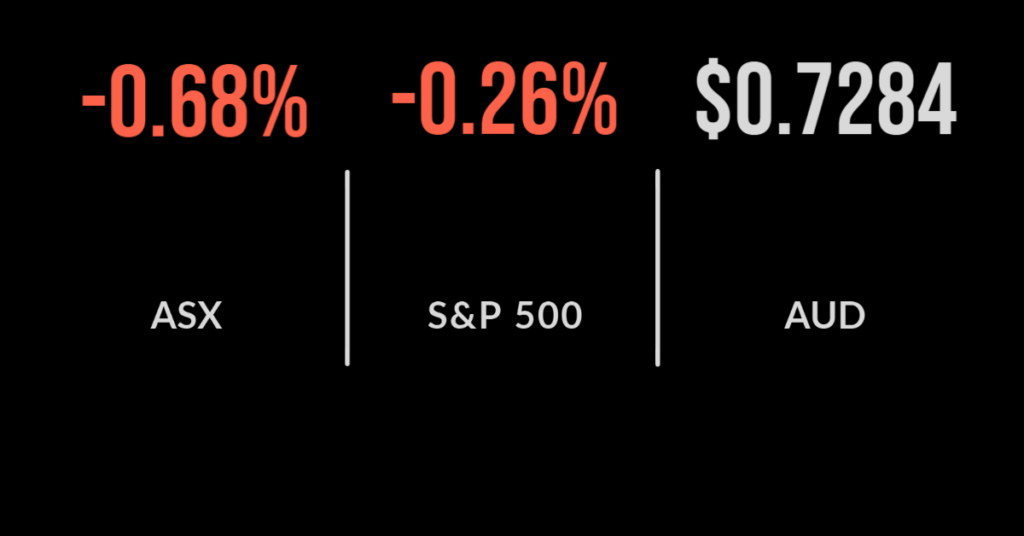
Thursday 3rd February 2022
Banking on the 'other side of the market' amid sell off
Platinum Asset Management’s latest quarterly update makes for difficult reading, with every fund excluding the Japan product underperforming the market over both the last three and 12 months. The story has been almost identical to that of Magellan, with both firms taking a “conservative” approach amid “overvalued” markets.
Where Magellan (ASX: MFG) has erred on the side of perceived quality and certainty of earnings, Platinum (ASX: PTM) has clearly remained steadfast to its value approach, with the recent editions of Barclays Bank (LON: BARC) and Brazilian pulp producer Suzano (BVMF: SUZB3) trading on price-to-earnings ratios of just 6 times. Many investors may well find it nostalgic that Platinum still refers to a P/E ratio in an era when, for better or worse, price-to-sales has become the go-to measure of valuation.
No one could accuse Platinum of style drift, with co-chief investment officer (and chief executive) Andrew Clifford recently highlighting the unique challenge facing all investors, particularly those benefiting from momentum in what has become one of the fastest corrections in history. Clifford says that in recent years, investors facing uncertainty “favoured companies that have a high degree of certainty,” and paid-up for them, ultimately avoiding those more sensitive to economic growth.
Speaking in a less common question and answer format, Clifford was drawn into a discussion on inflation, which has been on Platinum’s agenda for several years now, noting that the progression has been “really quite interesting” particularly the speed at which “transitory” has been removed.
Despite suggestions that pandemic-era restrictions are driving supply-chain issues, he points out that Platinum “has always maintained that the underlying cause of inflation is the amount of money that’s been printed,” but also points to the unique events in the US labour market as a major concern. He flags the growing “anti-work” movement and those fundamental changes are set to occur for workers around the world, with interest rates central to this.
Having really made its name following the dot.com bubble, the firm continues to highlight similarities between the current market position and 2000, identifying similar levels of concentration and a growing gap between the number of stocks falling and rising on any given day, which historically are statistical indicators of a bear market.
With a portfolio that proudly sports an overall P/E ratio of just 13 times, Clifford says “there is very little value in these big-favoured names” like Apple (NASDAQ: AAPL), Alphabet (NASDAQ: GOOGL) and the like, but “pretty good value in the other side of the market,” where there are “real companies that have been ignored and are valued sensibly.”
Given that a market sell-off now appears to be in full swing, the conservatism, which currently means net market exposure of just 67 per cent in the International Fund, the firm’s stock selection process will be on show for all to see. The March quarter report will make for interesting reading.

Drew is editor of The Inside Network's publications and a principal adviser at Wattle Partners.