Wednesday 24th November 2021
Why we don't build our portfolio on macro forecasts
To many people, a portfolio manager who says he doesn’t care about what happens to inflation, Sino-US relations or even the world economy may seem slightly detached from the real world, certainly uncaring, and maybe not someone to whom you wish to trust your savings.
So, when I make these statements at investment conferences, or to journalists, I must explain the context before I am asked to leave the room!
Of course, I do care about all these scenarios. Not only as a concerned and engaged citizen, but as someone who has actually lived through hyper-inflation, I have witnessed first-hand the impact inflation has on human livelihoods. To therefore reiterate, it is only as a portfolio manager that I say, “I don’t care”.
Why is this the case? Because our focus is investing in companies that have proven to be the least susceptible to the swings and roundabouts of macro events and economic conditions.
Like the famous value investor, Ben Graham, our investment process is totally devoid of any economic or market forecasts.
You will not see our daily investment meetings start with an analysis of the latest musings from the Federal Reserve or the latest production numbers from China. This is not to say we don’t read newspapers and have our own personal views, but we deliberately exclude projections about the economy, markets, themes, or sector “bets.”
A focus on quality companies
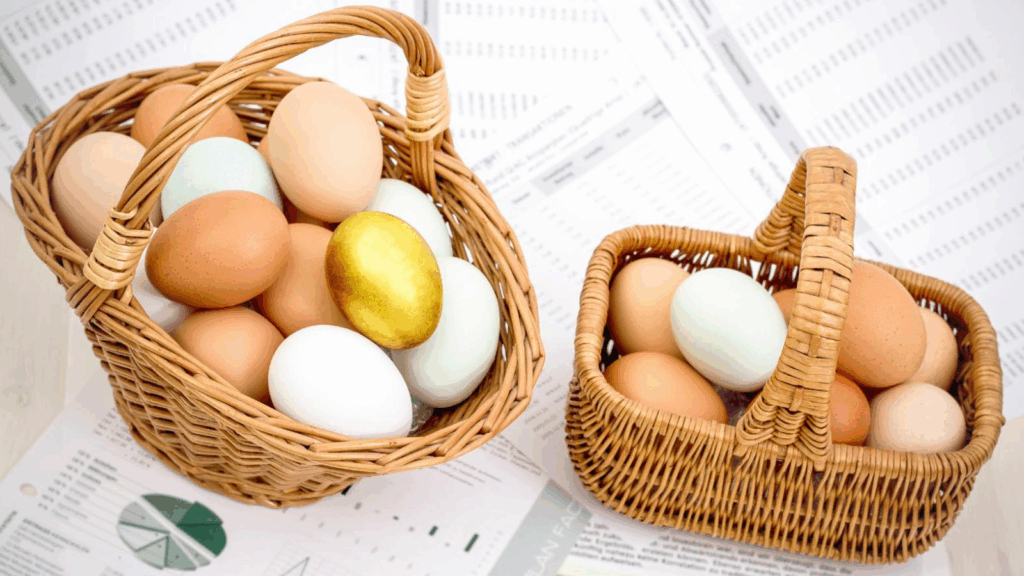
We aim to control our overall risk through the quality of our portfolio companies. Rather than forecasting economics or markets, we simply prefer to focus on earnings power, balance sheet strength and sustainable competitive advantage.
To look forward, we always start by looking backwards, and our first point-of-call is to analyse how our businesses have fared in tough times – the GFC usually provides an excellent case study. Not one of our companies got into any form of financial difficulty, were forced to cut dividends, or raise emergency capital.
Over the last decade, the average earnings growth of the companies in the portfolio has been 12 per cent a year, while our portfolio has debt that is less than one year’s cash flow.
As to sustainable competitive advantage, the operating margin across our portfolio is 25 per cent ― nearly two times the average US-listed business. And the average age of companies in the portfolio is over 80 years, with the oldest dating back to 1866. This does suggest some form of sustainable competitive advantage and resilience!
As a result, this financial resilience and earnings power allows us to be confident that our companies are well-placed to weather the inevitable adverse economic events when they occur. Knowing this, we are free to spend our time looking for companies with long-term sustainable competitive advantage and earnings power ― rather than trying to forecast how economies and markets will affect the short-term cyclical prospects of what we own.
Microsoft provides immense value relative to the cost
A clear example in our portfolio is Microsoft. What company can afford to turn their subscription off to save on costs and how much cost would they really save anyway? The monthly subscription to Office 365 is only $29 a month for an enterprise customer. There is an immense value provided relative to the cost. The worst business to own is one that has:
- low gross margins
- is asset-intensive
- is a large part of a customer’s expenses
- is one where there are plenty of substitute products with low switching costs.
The first thing a CFO is going to do when costs are rising, is look at the list of the largest suppliers and ask them to reduce costs ― just at a time when those suppliers’ own costs are rising. Good luck trying to ask Microsoft to reduce prices!
Putting predictions and pollsters to the test
Finally, some food for thought on the topic of predictions and funds management, if we look at a number ofobvious events that never came to pass. For example:
- In the late 1980s it was “obvious” Japan would come to dominate the global economy, just before it entered a 30-year period of relative economic decline.
- The stock market crash of 1987 that would usher in what some people thought was a new “Great Depression.” In reality, share indices were up in that year and the economy did not experience a recession for another three years.
- The GFC that would lead to a new “Great Depression” and a lost decade. In reality, the US achieved record low unemployment of 3.5 per cent in 2019 and the stock market was up over six times from its 2008 lows.
- The exit of Greece from the Eurozone and the impending collapse of the Euro in 2012.
- The collapse in oil prices by over 60 per cent in 2014, when “experts”, including the Federal Reserve, said oil would remain above US$100 per barrel indefinitely.
- Less than one-third of the “expert” pollsters actually predicted Brexit.
- Only two major polls predicted that Trump would win the US Presidential Election in 2016 and ― even if you got that forecast right ― who then predicted that the market would rise by 14 per cent a year during his Presidency? As an aside, I also remember the narrative ― very similar to now ― that Trump would spend large amounts on infrastructure and reduce the market dominance enjoyed by the large technology companies. This actually provided a very nice buying opportunity for large-cap technology.
- In 2008 I did not see one single economic forecast that suggested in 2021 we would have negative yielding bonds, double-digit budget deficits and people talking about modern monetary theory (MMT).
- The “experts” at the Treasury who forecast that COVID-19 would see the Australian economy shrink by 20 per cent, only to see output at a new record high in Q1.
Que sera sera…what will be, will be…and we will continue to look for great companies at reasonable prices ― regardless of predictions by politicians, economists, commentators, central banks et al.