Monday 15th November 2021
Factor investing 'more science than art'
Is it the chicken, or is it the egg? Does a certain kind of personality gravitate to becoming a “quant” manager, or do quant managers end up thinking in a systematic way?
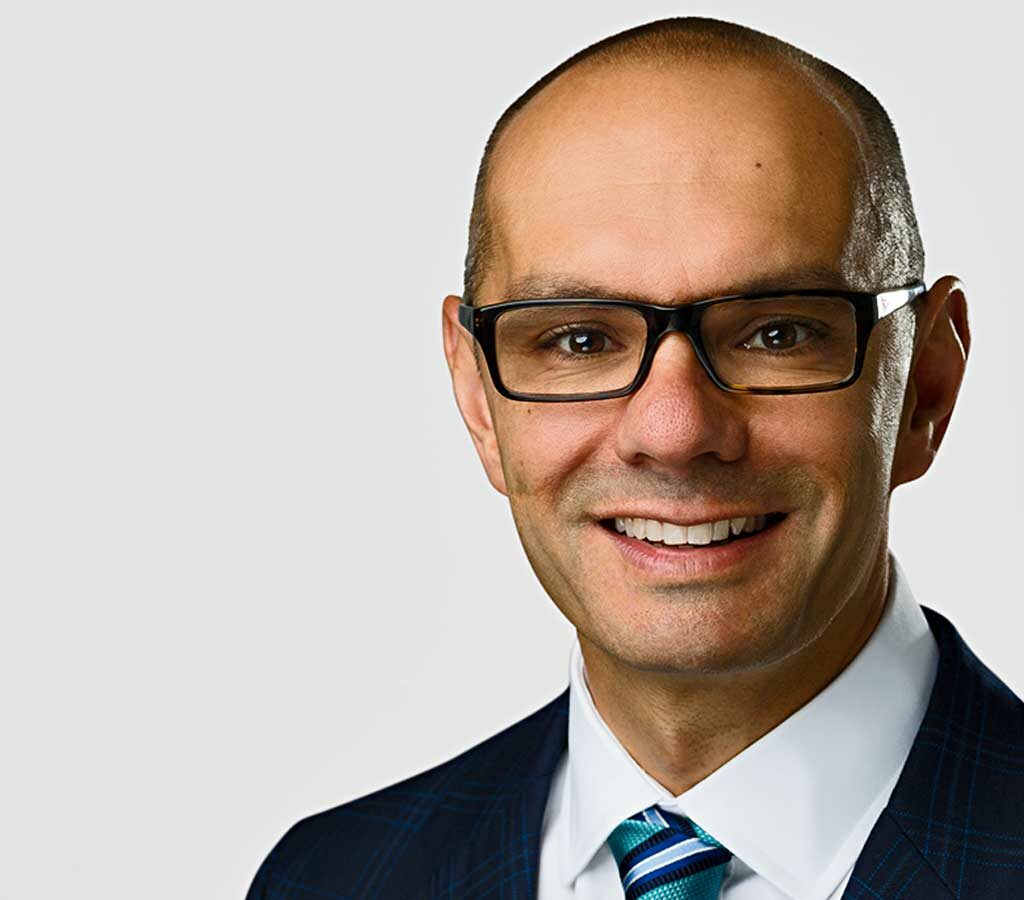
“I’m pretty sure that a large part of it is innate,” says Andre Roberts, senior portfolio manager in the Invesco Quantitative Strategies (IQS) team. “Certainly, my family would tell you that I’m a bit nerdy about processes and efficiency – I’m always looking for ways to make things like having a shower, or loading the dishwasher, more efficient. They all roll their eyes at that.”
Roberts came out of Monash University with a mathematics degree and a major in statistics, and moved into post-graduate study before realising that the logical outcome, as a career statistician, “wasn’t going to be my gig.” He swapped into the economics faculty to study econometrics, where he found that “a dose of finance” was a good complement to the maths skills – and that pushed him into finance.
“My first job was with the Bank of Melbourne, in the treasury team, which is a really great start because it was such a small team – there were only four of us. It spanned such a wide range of functions – bond trading, managing the swaps desk, even looking after the bank’s cash book – and I remember entering the bank’s daily trades in pencil on big A2 sheets of paper, and totalling it up.
“You had to pencil it all in, there were mistakes, and there was no repeatability. I built my first spreadsheet and all the others were amazed. One of them said, ‘you should be a quant,’ and I remember asking, ‘what’s that?’ But I suppose the desire to systematise what we were doing was my inner quant coming out.”
Roberts applied for a job as a quantitative analyst in the Australian equities team at County NatWest, and was surprised, with a fixed-interest background, to get it; but that started him on a 20-years-plus career that proceeded through Merrill Lynch Investment Management, BlackRock and IFM Investors, before joining the Invesco Australian Equities team in January 2018.
“We believe ‘factors,’ specifically those characteristics of stock value, quality and momentum, drive equity markets, and the Invesco Quantitative approach is to build portfolios to systematically get the best exposure to these characteristics, while controlling for unrewarded risks. That’s it in a nutshell,” he says.
Quant investing is “more science than art,” Roberts says. “I crave a little bit more art, but I have to admit that, clearly it’s quite scientific in terms of the numbers. But you do need to have a bit of creativity; that’s often where the best ideas come from in terms of how to innovate the process.”
Funds management is “100%” an intellectually rewarding career, he says. “I find the investment markets fascinating – it’s a microcosm within broader society that is so unpredictable, you think, but there are nice little patterns everywhere that have some predictability.
“I find that a great challenge, markets evolve all the time – one week is not the same as the next. As a systematic investment manager, I find it intellectually rewarding to try to find a path through the dynamics.”
Away from work, Roberts recharges through cycling, and family time with his wife and three children. “I try to mix it up between the physical and creative sides. I ride a bike, and I do that really to connect with friends, foremost, and it’s a bonus that the fitness comes along with that as well. My other big thing is just family time and mucking around on a guitar.
“My youngest daughter is really into the guitar, too, and she and I will sit down and work out a new song. She provides the vocals, thankfully. We have a lot of fun, and we’re hoping to play live, eventually,” Roberts says.
Asked what he would say to the 21-year-old Andre, Roberts simply says, “Mate, slow down. Talk to people about their experiences. Read more books, about people and their experiences and what they are thinking. Just talk and read, to and about people, a lot more.”
James is an experienced senior journalist and editor of The Inside Network's publications.