Tuesday 22nd September 2020
ASX update; second wave hits Europe
Financials, miners hit as the second wave hits Europe, RBA guidance, strong open ahead
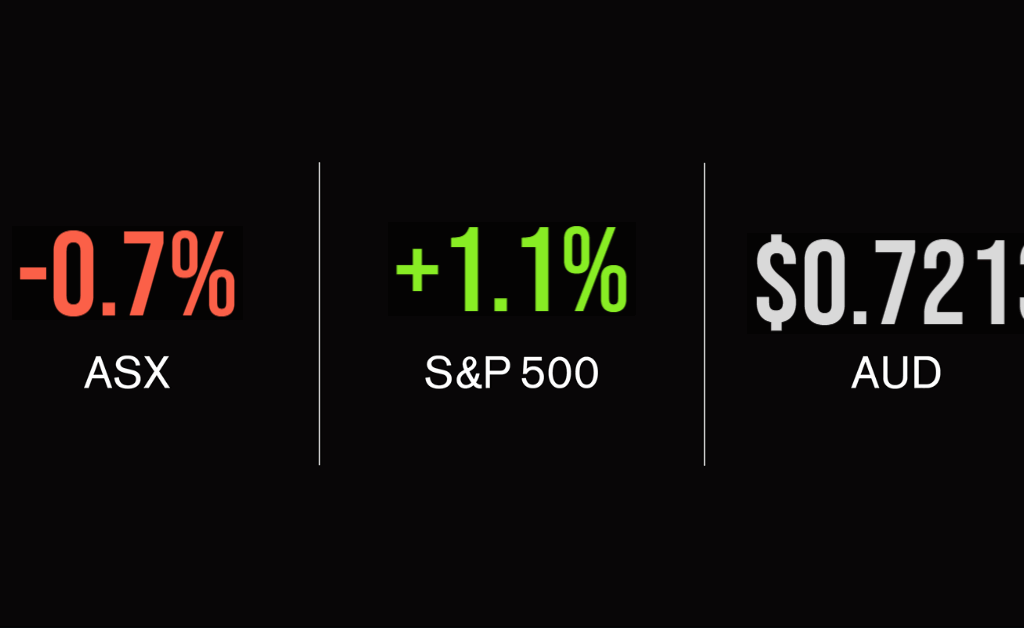
The ASX 200 (ASX:XJO) fell to a three month low on Tuesday, down 0.7%. The sustained sell off has been driven by signs of a second wave engulfing Europe and the potential for another round of economic restrictions.
Materials (-0.2%) was among the hardest hit after the iron ore price continued its fall from $130 per tonne to less than $120, Fortescue Metals Group Ltd (ASX:FMG) dropping 2.0% in the session.
The banking sector followed a negative global yield, National Australia Bank Ltd (ASX:NAB) falling 2.4% as investors fret about the risk of negative interest rates.
The issue being that banks cannot charge depositors for leaving money with them which means their already stretched profit margins reduce even further.
RBA Deputy Governor Guy Debelle delivered a speech on Tuesday, offering little to markets. He highlighted the four remaining options as the RBA seeks to stimulate inflation but didn’t go as far as endorsing negative interest rates. Debelle did, however, confirm the central banks preference for a weaker AUD.
Redcape (ASX:RDC) reinstates dividend, travel stocks sell off, payrolls weaker than expected
As a Victorian, news that Redcape Hotels Group (ASX:RDC) which owns 32 pubs and hotels in Queensland and New South Wales had delivered a record quarter came with some jealously. The group reinstated its dividend and confirmed first quarter earnings would be at record levels, up 20% to $24 million.
Global selling in travel and entertainment stocks send the likes of Webjet Ltd (ASX:WEB) and Flight Centre Ltd (ASX:FLT) down 6.0% and 4.1% respectively, amid signs the recovery may be even slower than anticipated.
In economic news, payroll jobs have reduced 4.5% since March, with total wages also slumping 4.3%; it was much worse in Victoria where jobs were down 8.3% since the start of March.
All eyes are on the Federal Budget in October, with tax cuts all but confirmed following comments by Mathias Cormann on Tuesday.
US markets bounce, tech pushes higher, new restrictions in the UK, bank pressure spreads
US markets pushed higher overnight, with investors clearly buying the dips after a sustained sell off; the Nasdaq up 1.7% and the S&P 500 1.1%. Retailers and technology companies lead the way, behind Amazon (NASDAQ:AMZN) and Facebook Inc. (NASDAQ:FB), despite any real positive news entering the market.
The UK has reinstated work from home and curfew measures, which we know have an outsized impact on travel and hospitality, the FTSE 100 managing to finish 0.3%, as the currency weakened on the news.
Chinese leader Xi Jinping went public with the country’s target to become net carbon zero by 2060; this despite also predicting emissions would continue growing until at least 2030 due to China’s reliance on coal.
Today sees Telsa Inc’s (NASDAQ:TSLA) battery day which sets the scene of the year ahead and will go along way to confirming whether the 400% share price rally in 2020 has been sustainable.

Drew is editor of The Inside Network's publications and a principal adviser at Wattle Partners.