Wednesday 5th August 2020
Financial Planner's morning report - risk on, gold down, more clarity on Victoria's state of disaster
Risk on, gold down, more clarity on Victoria’s state of disaster
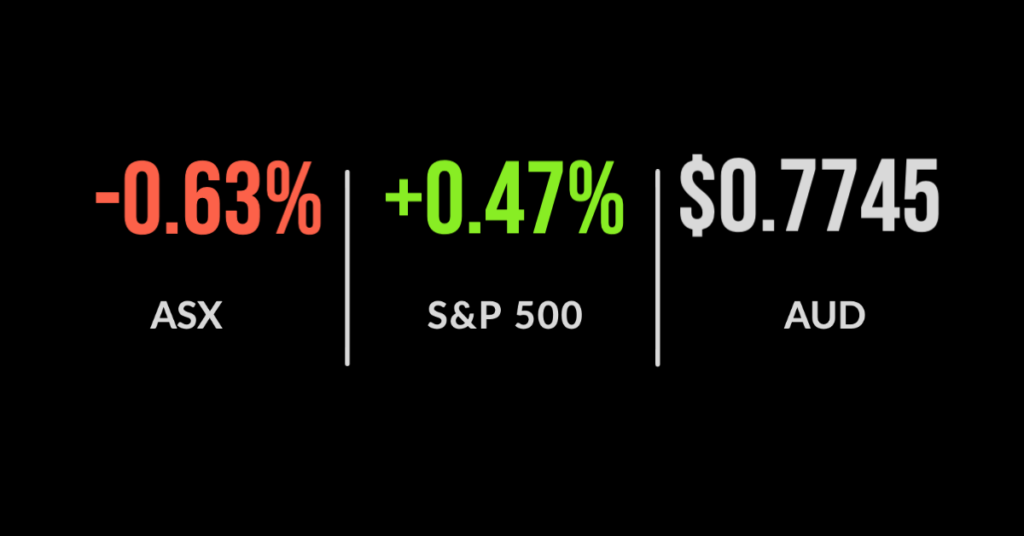
The ASX 200 (ASX:XJO) followed a global lead higher, adding close to 200 points to finish up 1.9% for the day. Every sector was positive, with IT and energy particular standouts adding 3.2% and 2.6% respectively, following better than expected manufacturing data in the US, Europe and the UK, with all indices once again in expansion mode.
President Trump has upped the rhetoric around the imposition of further lock-downs, heading in the opposite direction of Australia, as the country seeks to hold on to economic gains. The implications of the near full economic shutdown in Victoria won’t be fully felt for several months, but estimates suggest it will reduce September quarter GDP by a full 1%.
Among the hardest hit will be JB Hi-Fi Ltd (ASX:JBH), who announced 67 stores will be closed, and Wesfarmers Ltd (ASX:WES) after closing 168 of its Bunnings, Target, Kmart and Officeworks site to on-site customers; both stocks ended higher by 1.2% and 0.8%. Despite the short-term impact, WES stands out as one of the great Australian capital allocators and a must-have in portfolios.
No sign of stimulus, but a positive lead for the ASX on Wednesday
The S&P 500 managed to deliver another small gain, 0.5%, on the back of a continued recovery in the energy sector. Investors are keenly awaiting an announcement on a much-needed second round of stimulus measures in the US, similarly to us in Victoria; in both cases we may be waiting some time.
The financial sector was among the weakest after insurance company American International Group Inc. (NYSE:AIG) announced an $8 billion loss with shares finishing down 7.5% and likely putting pressure on our own banking sector.
If there is ever a sign that the world is changing it came on the 4th of August; BP Plc (LON:BP) announced it would increase its investment in low carbon energy tenfold, to $5 billion. The company announced its first dividend cut for over a decade after announcing a $17.7 billion quarterly loss.
In my view, the sustainability revolution represents one of the most powerful investment themes for the decade ahead, with this decision another validation of the trend.
Money, money, money
The Reserve Bank of Australia kept interest rates on hold at 0.25% and announced it would be increasing secondary market purchases of Australian Government bonds in order to keep the three-year bond yield at 0.25%.
Despite protestations by Governor Philip Lowe that the RBA would not engage in Modern Monetary Theory (MMT), there seems to be little difference between buying bonds on the secondary market (ok) or primary market (not ok), given both effectively result in the same thing; more demand for new bond issues.
Australia reported another strong surplus, $8.2 billion, with exports up another 3%, whilst retail sales in June continued to recover, up 2.7%, with 28% growth in the beaten down café and restaurant sector.
The Bunnings Warehouse Property Trust (ASX:BWP) was the only report of substance, announcing a 1% increase in profit excluding, to $117 million, and a $93 million appreciation in property values; 4% higher than 2019.
The company quoted a capitalisation or valuation rate of 6.1% for its property assets, which compares to 3.7% for Vicinity Centre’s Chadstone property, suggesting a 40% like for like discount.

Drew is editor of The Inside Network's publications and a principal adviser at Wattle Partners.