


Sunday 25th January 2026
Process first: The compounding power of consistency and curiosity
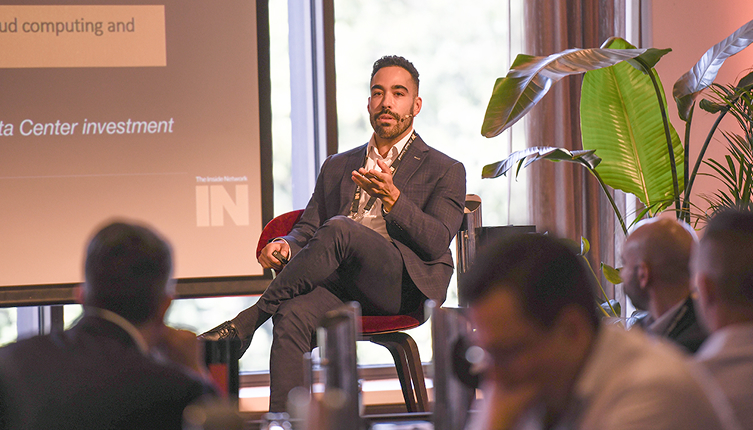


In a profession where egos inflate as easily as bubbles, Trent Masters, portfolio manager at Alphinity Investment Management, brings a refreshing combination of humility, process discipline, and wide-eyed curiosity.
In a world awash with narrative investing, it’s the numbers that lead. At least, that’s how Alphinity Investment Management sees it.
Speaking at the Investment Leaders Forum in Byron Bay, Trent Masters, portfolio manager at Alphinity, delivered an unvarnished account of how Alphinity’s global equity strategy is built — not on market timing or thematic bravado — but on a systematised process that seeks out earnings leadership, quality, and valuation discipline.
The foundation of Alphinity’s process, with a team of four portfolio managers for this international equities fund, is its focus on earnings surprise and momentum. “Share price follows earnings surprises,” Masters noted simply. Identifying companies poised to beat consensus expectations is the cornerstone of the fund’s alpha generation. But this is not momentum investing as it’s traditionally understood.
Instead, Alphinity combines quantitative signals with rigorous fundamental analysis, forming a three-pronged framework: earnings revisions, quality metrics (like return on equity and cash flow), and valuation. The fund’s quant engine identifies where to hunt — “with the wind at our back,” as Masters puts it — but it’s the fundamental work that confirms conviction.
Masters brings a technologist’s eye to investing — unsurprising, given his sector responsibility in global technology — and a civil engineer’s analytical bent. But he also credits his family and two daughters for teaching him openness and humility, qualities he believes are vital to managing cognitive biases in investing. “I live in a house of women,” he quipped. “I’m probably going to be wrong.” That willingness to admit fallibility underpins Alphinity’s process. If a stock ceases to meet their criteria, there’s no debate: it gets cut. “The process takes the emotion out of the decision.”
This mechanical rigour is paired with deep global engagement. Masters is a staunch advocate of on-the-ground research, and he makes no apologies for the extensive travel it entails. He described, with palpable excitement, riding in autonomous vehicles in San Francisco, watching AI models evolve in China, and observing shifts in urban office culture firsthand. “You’ve got to get out there. You’ve got to hold the products, see the technology,” he said. “That’s when you build genuine conviction.”
Yet for all the excitement around AI, Masters cautioned against myopic focus. “Some of the leading companies could be the biggest beneficiaries — or get completely disintermediated,” he said, pointing to Google’s AI challenge from new players like Perplexity. While investors might be tempted to chase the theme, Alphinity’s approach is agnostic: it follows the earnings data, not the hype. “We track inflections in earnings — that’s the hard signal that you can’t fudge,” he said. The recent drop in earnings momentum among the ‘Magnificent Seven’ led Alphinity to reduce exposure in 2024, re-allocating to sectors like construction materials and corporate real estate where leadership is emerging.
Masters’ view of markets is structurally dynamic. He rejects rigid style boxes — ‘value,’ ‘growth,’ ‘core’ — in favour of a portfolio that morphs with market conditions. “We’re not tied to a label,” he said. “If the macro changes, the portfolio changes.” This flexibility is not an excuse for underperformance in the wrong cycle; it’s a commitment to staying aligned with market leadership. The result is a fund that institutional clients use as a core holding, confident in its adaptability and the process that underpins it.
Importantly, that process extends to knowing when to walk away. Masters described Alphinity’s infamous “dead box” — a quadrant in the team’s matrix where stocks with deteriorating metrics end up. “If you can’t articulate how it’s going to improve and become an Alphinity stock again, it gets sold,” he said. This rules-based approach avoids the all-too-human temptation to cling to under-performers in the hope of a turnaround. “Hope is not a strategy,” he reminded the advisers present.
Alphinity’s process also helps cut through the narrative fog spun by charismatic management teams. Masters was candid about the dangers of falling for a well-polished pitch. “You don’t become a CEO if you can’t tell a good story,” he said. Instead, the team evaluates whether management is executing on its stated plans over time. “The biggest red flag is when the story changes completely six months later.”
Recent opportunities have emerged from unlikely places. Alphinity added Netflix, for example, not because of a thematic bet on streaming, but because the metrics began to signal structural improvement. “Profitability was finally coming through, ROE was climbing into the 20s, margins were expanding — it ticked every box,” Masters said. That discipline has paid off, making Netflix one of the fund’s best alpha contributors over the past year.
Ultimately, the essence of Masters’ message is that process and consistency are the antidotes to a complex and emotionally charged market. It’s a perspective that resonates with institutional investors, but Masters also has a soft spot for advisers and retail clients. “They’re closer to the actual people making decisions. You get a real sense of what’s resonating in the world,” he said. Regardless of client type, the expectation is the same: “Just execute to the process you’ve promised.”