


Sunday 25th January 2026
Back in black: the new rules of fixed income


in Fixed Income, Markets
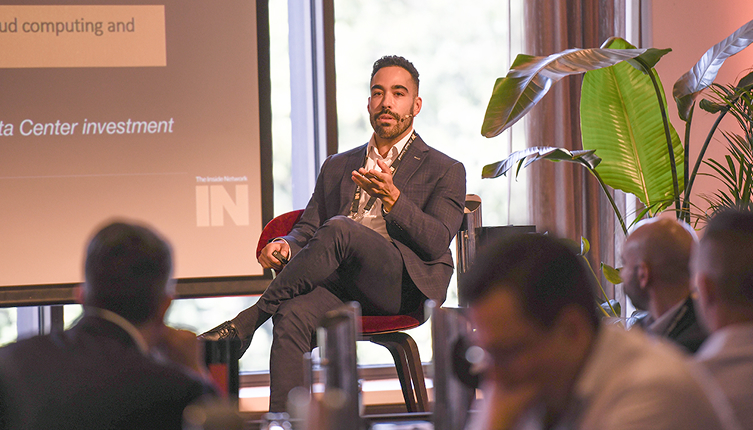
At the recent Investment Leaders Forum in Byron Bay, Dr. Christian Baylis, the founder and CIO of Fortlake Asset Management, delivered a dense, high-speed exposition of credit markets today: what’s broken, what’s misunderstood, and what’s ripe for reinvention.
Baylis’ thesis is deceptively simple. “The fixed income market has fundamentally changed,” he said. “Liquidity isn’t where it used to be. Bonds don’t behave the way they used to. And yet, most people are still using pre-2008 strategies in a post-2020 world.” It’s not an indictment of the asset class, but of how the industry interacts with it. Turnover-based alpha, Baylis argued, is a myth that’s long outlived its usefulness. “If you hear someone selling their strategy on turnover, run.”
Baylis’s core message is about innovation – specifically, how to use an old, even boring asset class like credit to create non-correlated returns, preserve liquidity, and actually profit from volatility. In his view, fixed income should be a volatility hedge, not a casualty. “Markets are flaring up all over – equities, rates, currencies. That’s not something to fear. That’s something to work with,” he said. His toolkit includes strategies that tap into credit default swaps, relative value across rating bands, and emerging microstructure advantages in cleared markets.
The presentation was packed with examples. In Europe, Baylis highlighted the widening gulf between CCC and BB-rated debt, the largest it’s ever been. “Europe’s Triple-C market is essentially a junk drawer of everything that couldn’t pass as investment-grade elsewhere,” he said. Many of these issuers, dressed up as infrastructure during zero-rate mania, are now unwinding. Some of the bonds are down 30 to 40 per cent. “They marked them high, then the redemptions hit, and suddenly reality arrives,” Baylis explained. “That’s not just a public market problem – it’s a warning shot for private credit, too.”
He took aim at another dangerous assumption: the idea that high yield recoveries average 30 to 40 cents in the dollar. “That’s historical fantasy,” he said. “The assets today are intangible-heavy. Tech-dominant. When they default, there’s nothing left.” Baylis pointed to current recovery levels closer to five or ten cents. The arbitrage between market assumptions and reality, he argued, is where opportunity lives.
But finding that opportunity requires abandoning the liquidity myths of traditional bond markets. “If you try to sell a BHP bond today, it might not be there,” he said. Unlike equities, which trade continuously across exchanges, credit markets are fragmented and inventory-light. The clearing houses, not the banks, now provide the safety net. “Banks don’t want to hold balance-sheet risk. They want to transact, rotate capital, move fast,” Baylis explained. “If you don’t adapt to that, you’ll be locked out when it matters most.”
This structural shift is one of Baylis’s obsessions. He believes the evolution of clearing houses – ICE, LCH, CME – has created a parallel system that offers better liquidity, more stable pricing, and, critically, a way to trade through dislocations. During COVID, when buy-sell spreads on corporate bonds ballooned to 300 basis points, Fortlake was still transacting in cleared markets at 30 or 40. “That’s the future,” Baylis said. “Not trying to chase BHP bonds from desk to desk.”
Beyond liquidity and volatility, Baylis also sees opportunity in default arbitrage. The process of default resolution, he argued, has become faster, more transparent, and more standardised. “It’s systematised. The cashflows are guaranteed. This isn’t the messy legal quagmire of 15 years ago.” For managers willing to engage with the structure, it’s a deep, uncorrelated return stream.
None of this is theoretical. Fortlake is already deploying these ideas, often in small slices—Baylis recommends volatility-based strategies make up five to six per cent of a portfolio, enough to buffer shocks without hijacking risk profiles. He’s not asking investors to go all-in. But he is asking them to evolve. “You don’t have to abandon the bond market,” he said. “You just have to stop treating it like it’s 2006.”
For all the technical firepower, there’s a steady conviction at the heart of Baylis’s philosophy. Fixed income still matters. Not as ballast, but as active defence. Not for yield alone, but for optionality and protection. And crucially, not in isolation, but as part of a system that reflects how markets actually work today. “Volatility is here. Liquidity is different. Defaults are coming. And there are ways to turn all of that into a strength,” he concluded.
In a room full of asset allocators who’ve seen more cycles than social media trends, Baylis didn’t just hold the room – he rewired it. His message was both technical and deeply practical. The market has changed. Your playbook should, too.